Merli M Giovanna, Moody James, Smith Jeffrey, Li Jing, Weir Sharon, Chen Xiangsheng
Sanford School of Public Policy & Duke Global Health Institute, Duke Population Research Institute, Duke University, Box 90312, Durham, NC 27708, USA; Department of Sociology, Duke University, Durham, NC 27708, USA.
Department of Sociology, Duke University, Durham, NC 27708, USA.
Soc Sci Med. 2015 Jan;125:79-93. doi: 10.1016/j.socscimed.2014.04.022. Epub 2014 Apr 30.
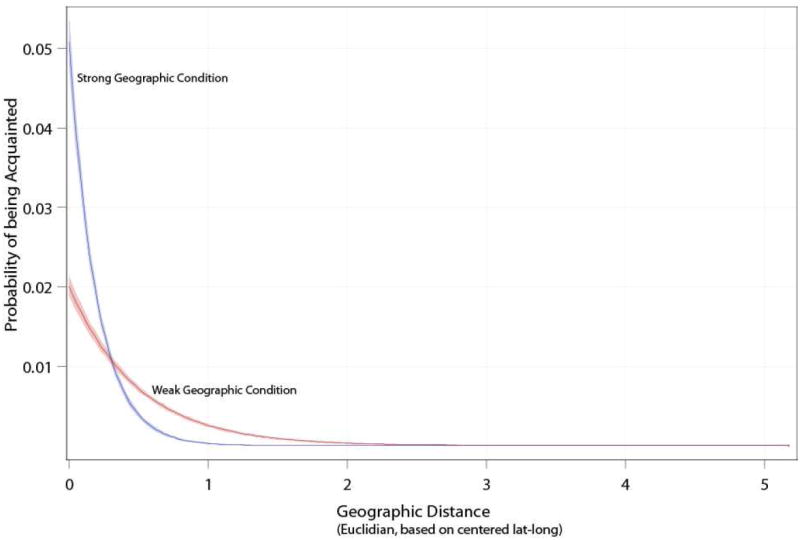
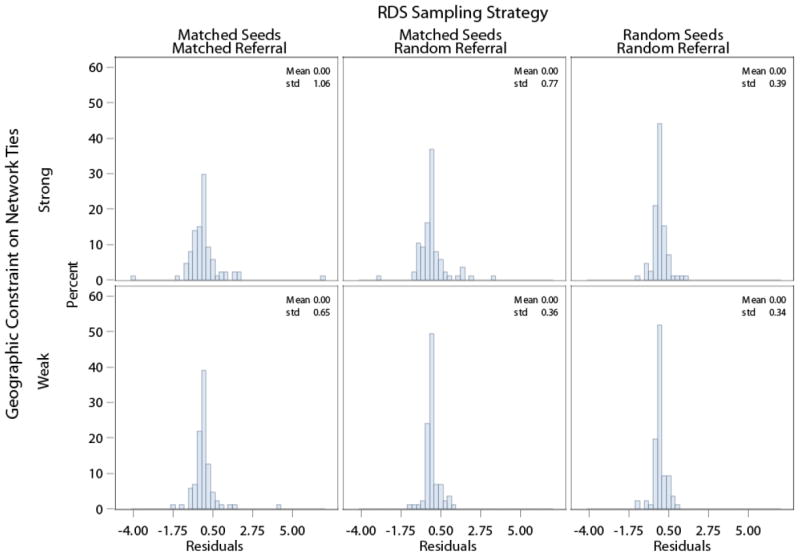
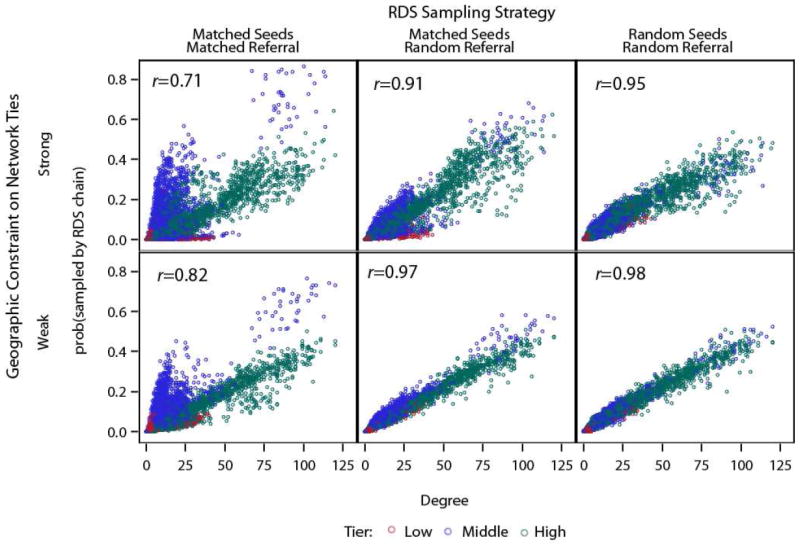
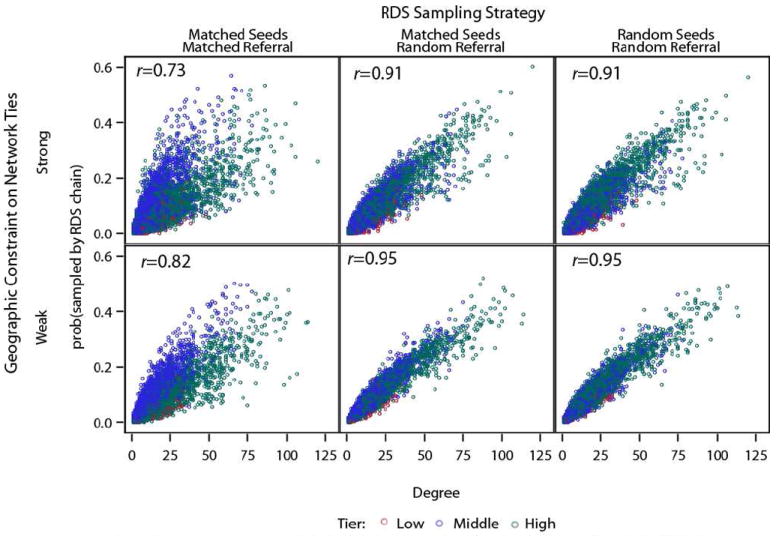
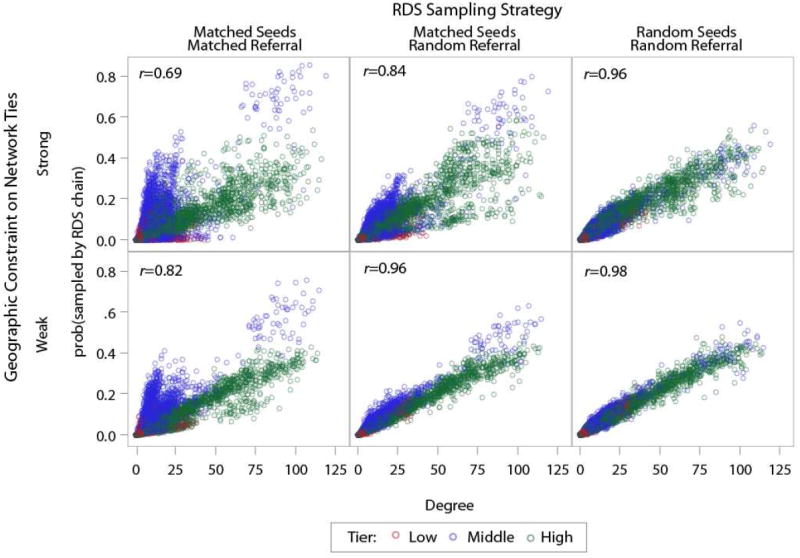
We explore the network coverage of a sample of female sex workers (FSWs) in China recruited through Respondent Drive Sampling (RDS) as part of an effort to evaluate the claim of RDS of population representation with empirical data. We take advantage of unique information on the social networks of FSWs obtained from two overlapping studies--RDS and a venue-based sampling approach (PLACE)--and use an exponential random graph modeling (ERGM) framework from local networks to construct a likely network from which our observed RDS sample is drawn. We then run recruitment chains over this simulated network to assess the assumption that the RDS chain referral process samples participants in proportion to their degree and the extent to which RDS satisfactorily covers certain parts of the network. We find evidence that, contrary to assumptions, RDS oversamples low degree nodes and geographically central areas of the network. Unlike previous evaluations of RDS which have explored the performance of RDS sampling chains on a non-hidden population, or the performance of simulated chains over previously mapped realistic social networks, our study provides a robust, empirically grounded evaluation of the performance of RDS chains on a real-world hidden population.
我们通过回应者驱动抽样(RDS)方法对中国女性性工作者(FSW)样本的网络覆盖范围进行了探索,以此作为利用实证数据评估RDS在人口代表性方面主张的一部分努力。我们利用了从两项重叠研究(RDS和基于场所的抽样方法(PLACE))中获得的关于FSW社交网络的独特信息,并使用指数随机图模型(ERGM)框架从局部网络构建一个可能的网络,从中抽取我们观察到的RDS样本。然后,我们在这个模拟网络上运行招募链,以评估RDS链推荐过程是否按参与者的度数比例对参与者进行抽样,以及RDS在多大程度上令人满意地覆盖了网络的某些部分这一假设。我们发现有证据表明,与假设相反,RDS对低度节点和网络的地理中心区域进行了过度抽样。与之前对RDS的评估不同,之前的评估要么探讨了RDS抽样链在非隐藏人群中的表现,要么探讨了模拟链在先前绘制的现实社交网络上的表现,而我们的研究对RDS链在现实世界隐藏人群中的表现提供了一个有力的、基于实证的评估。