Department of Neuroscience and Pharmacology, Faculty of Health Sciences, University of Copenhagen Copenhagen, Denmark.
Department of Computational Neuroscience, University Medical Center Hamburg-Eppendorf Hamburg, Germany ; Department of Health Sciences, Boston University Boston, MA, USA.
Front Syst Neurosci. 2014 May 5;8:19. doi: 10.3389/fnsys.2014.00019. eCollection 2014.
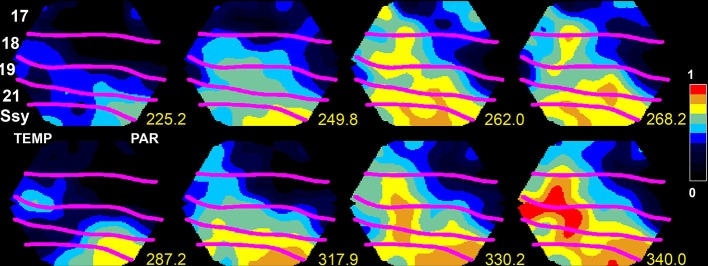
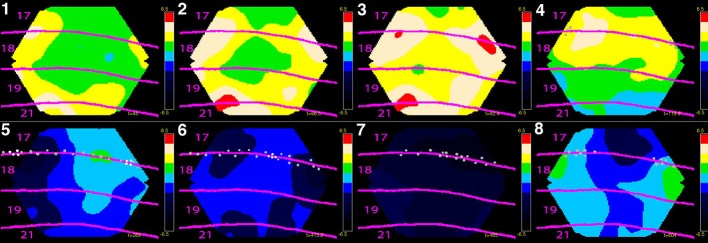
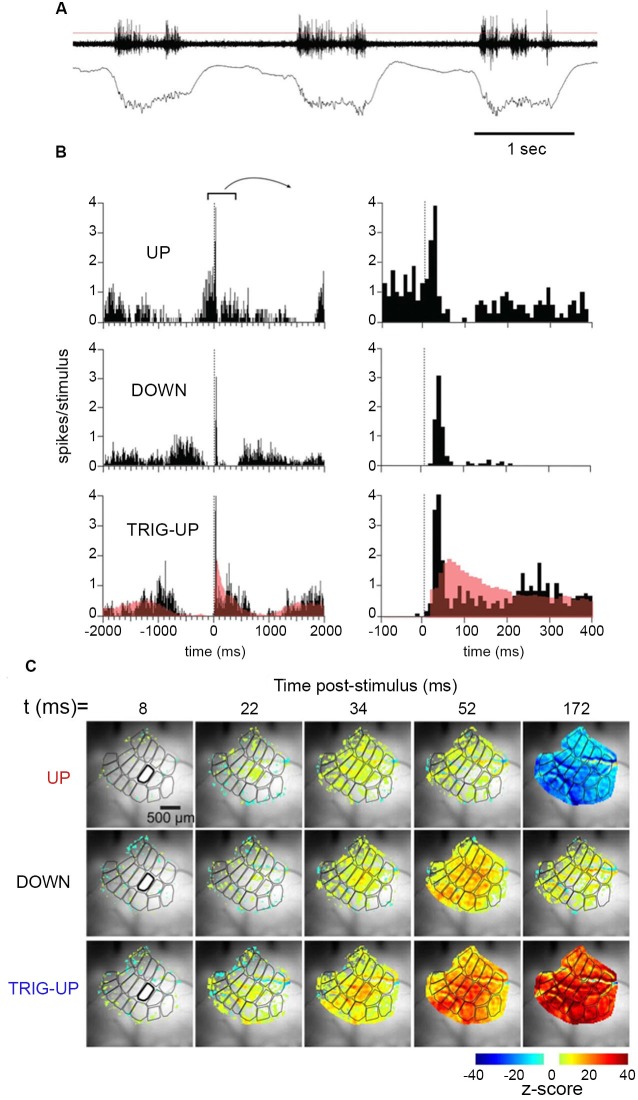
In principle, cortico-cortical communication dynamics is simple: neurons in one cortical area communicate by sending action potentials that release glutamate and excite their target neurons in other cortical areas. In practice, knowledge about cortico-cortical communication dynamics is minute. One reason is that no current technique can capture the fast spatio-temporal cortico-cortical evolution of action potential transmission and membrane conductances with sufficient spatial resolution. A combination of optogenetics and monosynaptic tracing with virus can reveal the spatio-temporal cortico-cortical dynamics of specific neurons and their targets, but does not reveal how the dynamics evolves under natural conditions. Spontaneous ongoing action potentials also spread across cortical areas and are difficult to separate from structured evoked and intrinsic brain activity such as thinking. At a certain state of evolution, the dynamics may engage larger populations of neurons to drive the brain to decisions, percepts and behaviors. For example, successfully evolving dynamics to sensory transients can appear at the mesoscopic scale revealing how the transient is perceived. As a consequence of these methodological and conceptual difficulties, studies in this field comprise a wide range of computational models, large-scale measurements (e.g., by MEG, EEG), and a combination of invasive measurements in animal experiments. Further obstacles and challenges of studying cortico-cortical communication dynamics are outlined in this critical review.
原则上,皮质-皮质通讯动力学很简单:一个皮质区域的神经元通过发送动作电位来进行通讯,这些动作电位释放谷氨酸并兴奋其他皮质区域的靶神经元。实际上,人们对皮质-皮质通讯动力学的了解很少。原因之一是,目前没有任何技术可以以足够的空间分辨率捕捉到动作电位传递和膜电导的快速时空皮质-皮质演变。光遗传学和病毒的单突触示踪相结合可以揭示特定神经元及其靶标在空间和时间上的皮质动力学,但不能揭示在自然条件下动力学如何演变。自发的持续动作电位也会在皮质区域传播,并且很难与结构诱发和内在的大脑活动(如思考)区分开来。在进化的某个阶段,动力学可能会涉及更大的神经元群体,从而促使大脑做出决策、感知和行为。例如,成功进化的对感觉瞬变的动力学可以在介观尺度上显现出瞬变是如何被感知的。由于这些方法学和概念上的困难,该领域的研究包括广泛的计算模型、大规模测量(例如,MEG、EEG)以及动物实验中的侵入性测量的结合。本文批判性地综述了研究皮质-皮质通讯动力学的进一步障碍和挑战。