Seo Hyo-Hyoun, Park Sangkyu, Park Soomin, Oh Byung-Jun, Back Kyoungwhan, Han Oksoo, Kim Jeong-Il, Kim Young Soon
Medicinal Nanomaterial Institute, BIO-FD&C Co. Ltd., Incheon, Korea.
Department of Biotechnology, Chonnam National University, Gwangju, Korea.
PLoS One. 2014 May 21;9(5):e97936. doi: 10.1371/journal.pone.0097936. eCollection 2014.
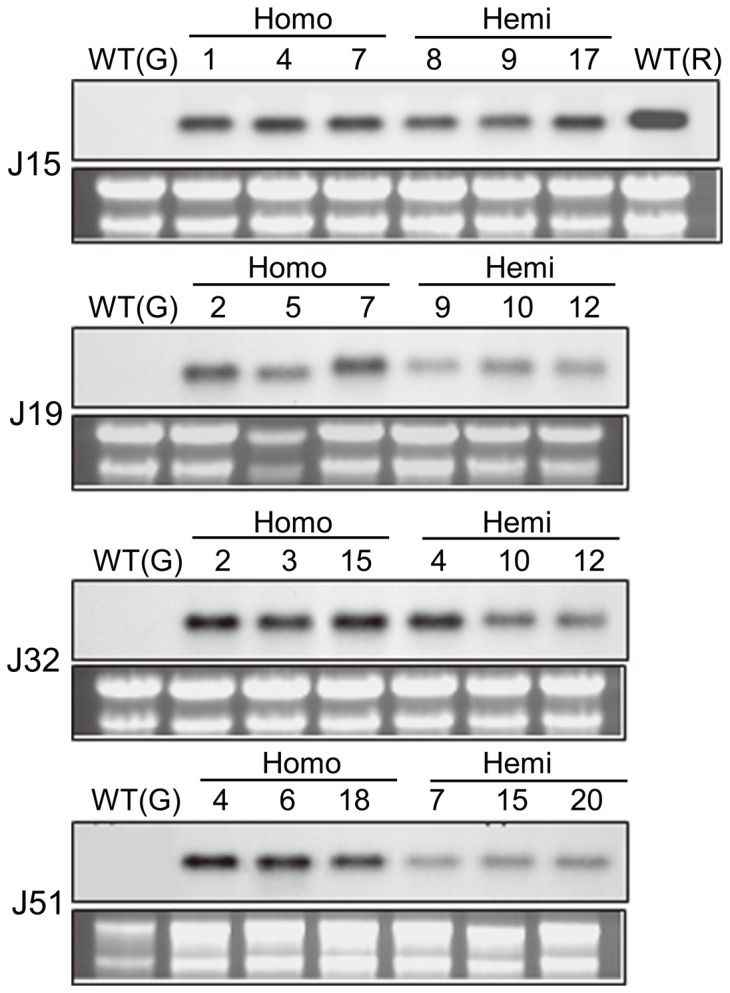
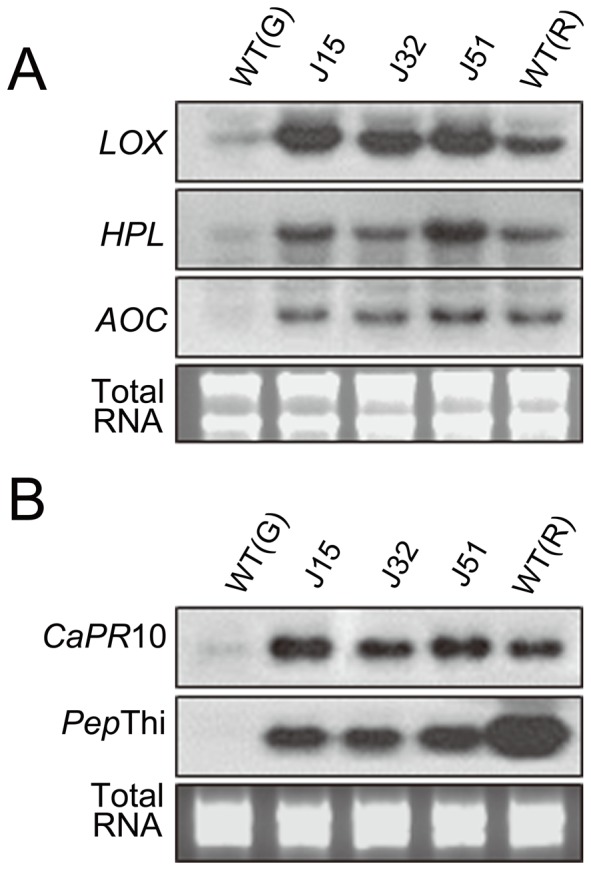
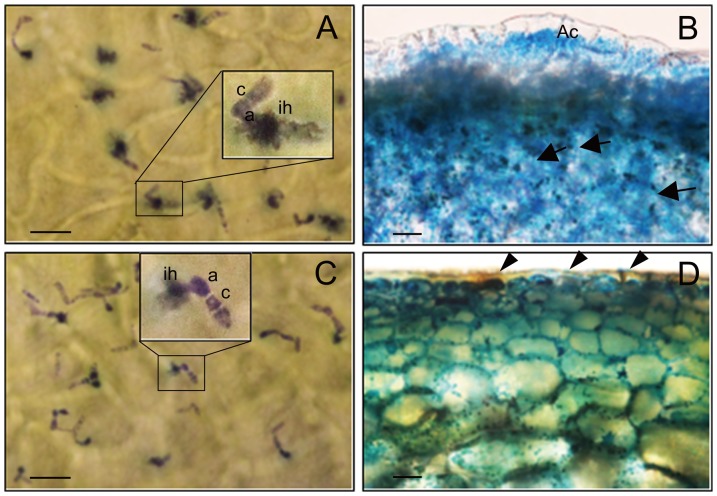
Functional characterization of a defensin, J1-1, was conducted to evaluate its biotechnological potentiality in transgenic pepper plants against the causal agent of anthracnose disease, Colletotrichum gloeosporioides. To determine antifungal activity, J1-1 recombinant protein was generated and tested for the activity against C. gloeosporioides, resulting in 50% inhibition of fungal growth at a protein concentration of 0.1 mg·mL-1. To develop transgenic pepper plants resistant to anthracnose disease, J1-1 cDNA under the control of 35S promoter was introduced into pepper via Agrobacterium-mediated genetic transformation method. Southern and Northern blot analyses confirmed that a single copy of the transgene in selected transgenic plants was normally expressed and also stably transmitted to subsequent generations. The insertion of T-DNA was further analyzed in three independent homozygous lines using inverse PCR, and confirmed the integration of transgene in non-coding region of genomic DNA. Immunoblot results showed that the level of J1-1 proteins, which was not normally accumulated in unripe fruits, accumulated high in transgenic plants but appeared to differ among transgenic lines. Moreover, the expression of jasmonic acid-biosynthetic genes and pathogenesis-related genes were up-regulated in the transgenic lines, which is co-related with the resistance of J1-1 transgenic plants to anthracnose disease. Consequently, the constitutive expression of J1-1 in transgenic pepper plants provided strong resistance to the anthracnose fungus that was associated with highly reduced lesion formation and fungal colonization. These results implied the significance of the antifungal protein, J1-1, as a useful agronomic trait to control fungal disease.
对一种防御素J1-1进行了功能表征,以评估其在转基因辣椒植株中针对炭疽病病原体胶孢炭疽菌的生物技术潜力。为了确定抗真菌活性,制备了J1-1重组蛋白并测试其对胶孢炭疽菌的活性,结果表明在蛋白浓度为0.1 mg·mL-1时真菌生长受到50%的抑制。为了培育抗炭疽病的转基因辣椒植株,通过农杆菌介导的遗传转化方法将受35S启动子控制的J1-1 cDNA导入辣椒。Southern和Northern印迹分析证实,所选转基因植株中的单个转基因拷贝正常表达,并且也稳定地遗传给后代。使用反向PCR在三个独立的纯合系中进一步分析了T-DNA的插入情况,并证实转基因整合到基因组DNA的非编码区。免疫印迹结果表明,J1-1蛋白水平在未成熟果实中通常不积累,在转基因植株中积累较高,但不同转基因系之间似乎存在差异。此外,茉莉酸生物合成基因和病程相关基因在转基因系中上调表达,这与J1-1转基因植株对炭疽病的抗性相关。因此,J1-1在转基因辣椒植株中的组成型表达赋予了对炭疽病菌的强大抗性,这与病变形成和真菌定殖的高度减少相关。这些结果表明抗真菌蛋白J1-1作为控制真菌病害的有用农艺性状具有重要意义。