Zeidán-Chuliá F, de Oliveira B-H N, Salmina A B, Casanova M F, Gelain D P, Noda M, Verkhratsky A, Moreira J C F
Centro de Estudos em Estresse Oxidativo, Departamento de Bioquímica, Instituto de Ciências Básicas da Saúde, Universidade Federal do Rio Grande do Sul, Porto Alegre, Brazil.
Department of Biochemistry, Medical, Pharmaceutical and Toxicological Chemistry, Krasnoyarsk State Medical University, Krasnoyarsk, Russia.
Cell Death Dis. 2014 May 22;5(5):e1250. doi: 10.1038/cddis.2014.227.
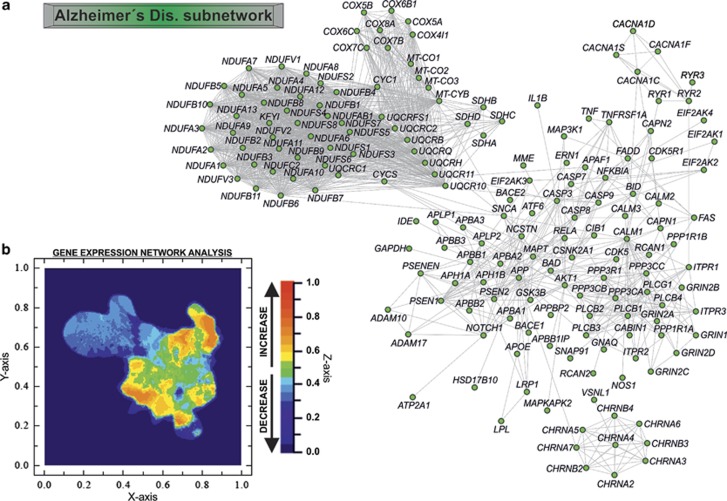
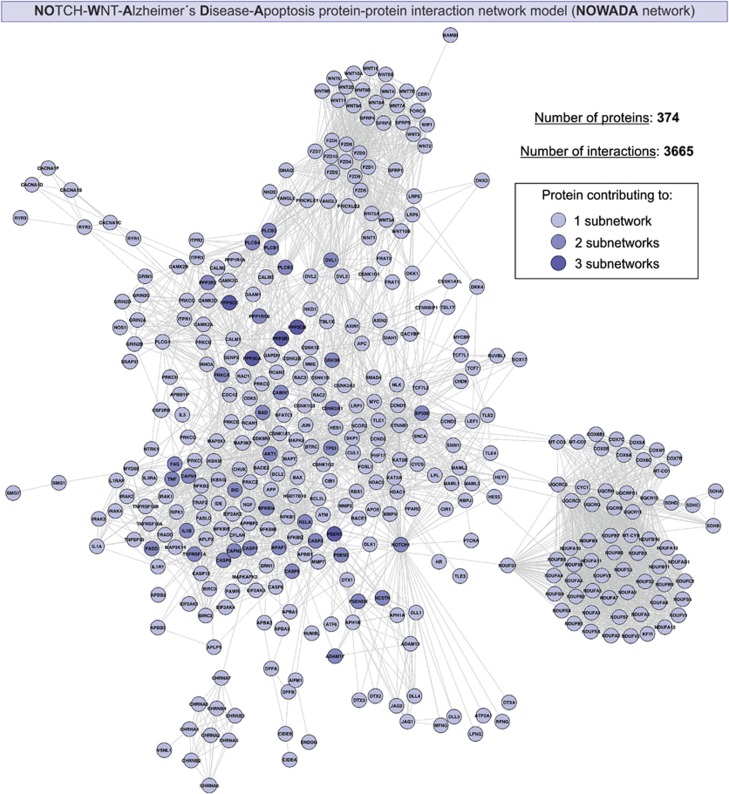
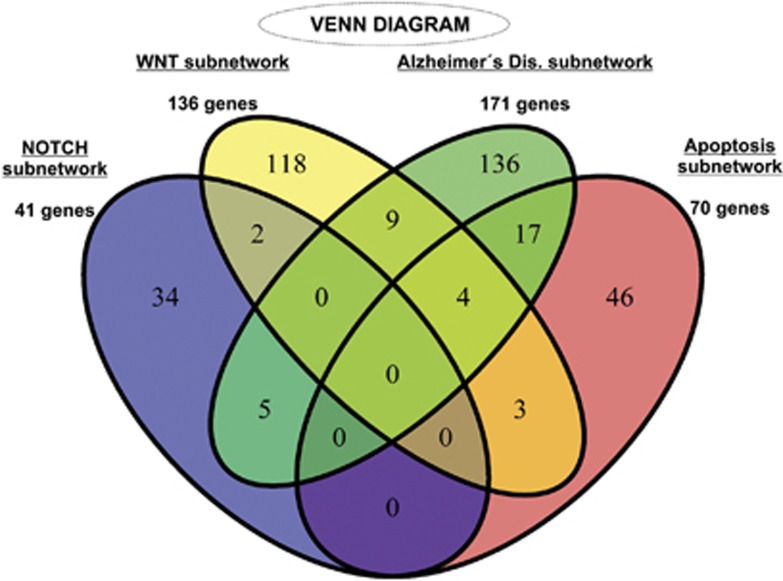
Autism and Alzheimer's disease (AD) are, respectively, neurodevelopmental and degenerative diseases with an increasing epidemiological burden. The AD-associated amyloid-β precursor protein-α has been shown to be elevated in severe autism, leading to the 'anabolic hypothesis' of its etiology. Here we performed a focused microarray analysis of genes belonging to NOTCH and WNT signaling cascades, as well as genes related to AD and apoptosis pathways in cerebellar samples from autistic individuals, to provide further evidence for pathological relevance of these cascades for autism. By using the limma package from R and false discovery rate, we demonstrated that 31% (116 out of 374) of the genes belonging to these pathways displayed significant changes in expression (corrected P-values <0.05), with mitochondria-related genes being the most downregulated. We also found upregulation of GRIN1, the channel-forming subunit of NMDA glutamate receptors, and MAP3K1, known activator of the JNK and ERK pathways with anti-apoptotic effect. Expression of PSEN2 (presinilin 2) and APBB1 (or F65) were significantly lower when compared with control samples. Based on these results, we propose a model of NMDA glutamate receptor-mediated ERK activation of α-secretase activity and mitochondrial adaptation to apoptosis that may explain the early brain overgrowth and disruption of synaptic plasticity and connectome in autism. Finally, systems pharmacology analyses of the model that integrates all these genes together (NOWADA) highlighted magnesium (Mg(2+)) and rapamycin as most efficient drugs to target this network model in silico. Their potential therapeutic application, in the context of autism, is therefore discussed.
自闭症和阿尔茨海默病(AD)分别是神经发育性疾病和退行性疾病,流行病学负担日益加重。已表明与AD相关的淀粉样前体蛋白-α在重度自闭症中升高,从而产生了其病因的“合成代谢假说”。在此,我们对自闭症个体小脑样本中属于NOTCH和WNT信号级联的基因以及与AD和凋亡途径相关的基因进行了聚焦微阵列分析,以提供这些级联与自闭症病理相关性的进一步证据。通过使用R语言的limma软件包和错误发现率,我们证明属于这些途径的基因中有31%(374个中的116个)表达有显著变化(校正P值<0.05),其中与线粒体相关的基因下调最为明显。我们还发现NMDA谷氨酸受体的通道形成亚基GRIN1和具有抗凋亡作用的JNK和ERK途径的已知激活剂MAP3K1上调。与对照样本相比,PSEN2(早老素2)和APBB1(或F65)的表达显著降低。基于这些结果,我们提出了一种NMDA谷氨酸受体介导的α-分泌酶活性的ERK激活和线粒体对凋亡的适应性模型,该模型可能解释自闭症中早期大脑过度生长以及突触可塑性和连接组的破坏。最后,对整合所有这些基因的模型(NOWADA)进行的系统药理学分析突出了镁(Mg(2+))和雷帕霉素是在计算机模拟中针对该网络模型最有效的药物。因此,讨论了它们在自闭症背景下的潜在治疗应用。