Gonzalez Constancio, Conde Silvia V, Gallego-Martín Teresa, Olea Elena, Gonzalez-Obeso Elvira, Ramirez Maria, Yubero Sara, Agapito Maria T, Gomez-Niñno Angela, Obeso Ana, Rigual Ricardo, Rocher Asunción
Departamento de Bioquímica y Biología Molecular y Fisiología, Instituto de Biología y Genética Molecular, Consejo Superior de Investigaciones Científicas, Universidad de Valladolid Valladolid, España ; CIBER de Enfermedades Respiratorias, Instituto de Salud Carlos III, Facultad de Medicina, Universidad de Valladolid Valladolid, España.
Front Neuroanat. 2014 May 12;8:25. doi: 10.3389/fnana.2014.00025. eCollection 2014.
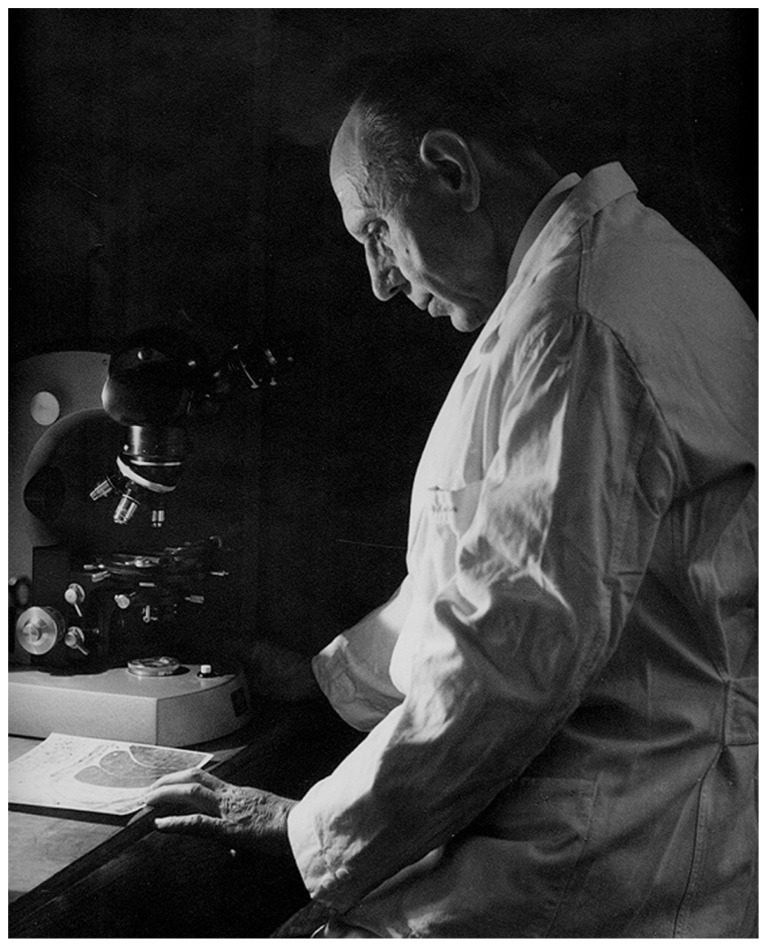
When de Castro entered the carotid body (CB) field, the organ was considered to be a small autonomic ganglion, a gland, a glomus or glomerulus, or a paraganglion. In his 1928 paper, de Castro concluded: "In sum, the Glomus caroticum is innervated by centripetal fibers, whose trophic centers are located in the sensory ganglia of the glossopharyngeal, and not by centrifugal [efferent] or secretomotor fibers as is the case for glands; these are precisely the facts which lead to suppose that the Glomus caroticum is a sensory organ." A few pages down, de Castro wrote: "The Glomus represents an organ with multiple receptors furnished with specialized receptor cells like those of other sensory organs [taste buds?]…As a plausible hypothesis we propose that the Glomus caroticum represents a sensory organ, at present the only one in its kind, dedicated to capture certain qualitative variations in the composition of blood, a function that, possibly by a reflex mechanism would have an effect on the functional activity of other organs… Therefore, the sensory fiber would not be directly stimulated by blood, but via the intermediation of the epithelial cells of the organ, which, as their structure suggests, possess a secretory function which would participate in the stimulation of the centripetal fibers." In our article we will recreate the experiments that allowed Fernando de Castro to reach this first conclusion. Also, we will scrutinize the natural endowments and the scientific knowledge that drove de Castro to make the triple hypotheses: the CB as chemoreceptor (variations in blood composition), as a secondary sensory receptor which functioning involves a chemical synapse, and as a center, origin of systemic reflexes. After a brief account of the systemic reflex effects resulting from the CB stimulation, we will complete our article with a general view of the cellular-molecular mechanisms currently thought to be involved in the functioning of this arterial chemoreceptor.
当德·卡斯特罗进入颈动脉体(CB)研究领域时,该器官被认为是一个小型自主神经节、一个腺体、一个小球或肾小球,或者是一个副神经节。在他1928年的论文中,德·卡斯特罗总结道:“总之,颈动脉小球由向心纤维支配,其营养中心位于舌咽神经的感觉神经节,而不像腺体那样由离心(传出)或分泌运动纤维支配;正是这些事实让人推测颈动脉小球是一个感觉器官。” 再往后几页,德·卡斯特罗写道:“小球代表一个具有多种感受器的器官,配备有像其他感觉器官(味蕾?)那样的特殊感受器细胞……作为一个合理的假设,我们提出颈动脉小球代表一个感觉器官,目前是同类中唯一的一个,专门用于捕捉血液成分中的某些定性变化,这一功能可能通过反射机制对其他器官的功能活动产生影响……因此,感觉纤维不会直接受到血液刺激,而是通过该器官的上皮细胞介导,从其结构来看,上皮细胞具有分泌功能,会参与对向心纤维的刺激。” 在我们的文章中,我们将重现那些使费尔南多·德·卡斯特罗得出这一初步结论的实验。此外,我们将审视促使德·卡斯特罗提出这三个假设的天赋和科学知识:CB作为化学感受器(血液成分变化)、作为一个二级感觉感受器,其功能涉及化学突触,以及作为一个中心,即全身反射的起源。在简要阐述CB刺激产生的全身反射效应之后,我们将以目前认为参与这种动脉化学感受器功能的细胞 - 分子机制的概述来完成我们的文章。