Department of Neuro- and Sensory Physiology; European Neuroscience Institute; and InnerEarLab and Molecular Biology of Cochlear Neurotransmission Group, Department of Otolaryngology; University Medical Center Göttingen, 37099 Göttingen, GermanyDepartment of Neuro- and Sensory Physiology; European Neuroscience Institute; and InnerEarLab and Molecular Biology of Cochlear Neurotransmission Group, Department of Otolaryngology; University Medical Center Göttingen, 37099 Göttingen, Germany International Max Planck Research School for Neurosciences, 37077 Göttingen, Germany Collaborative Research Center 889 and Cluster of Excellence Nanoscale Microscopy and Molecular Physiology of the Brain, University of Göttingen, 37099 Göttingen, Germany.
Department of Neuro- and Sensory Physiology; European Neuroscience Institute; and InnerEarLab and Molecular Biology of Cochlear Neurotransmission Group, Department of Otolaryngology; University Medical Center Göttingen, 37099 Göttingen, GermanyDepartment of Neuro- and Sensory Physiology; European Neuroscience Institute; and InnerEarLab and Molecular Biology of Cochlear Neurotransmission Group, Department of Otolaryngology; University Medical Center Göttingen, 37099 Göttingen, Germany
J Cell Biol. 2014 May 26;205(4):591-606. doi: 10.1083/jcb.201402066.
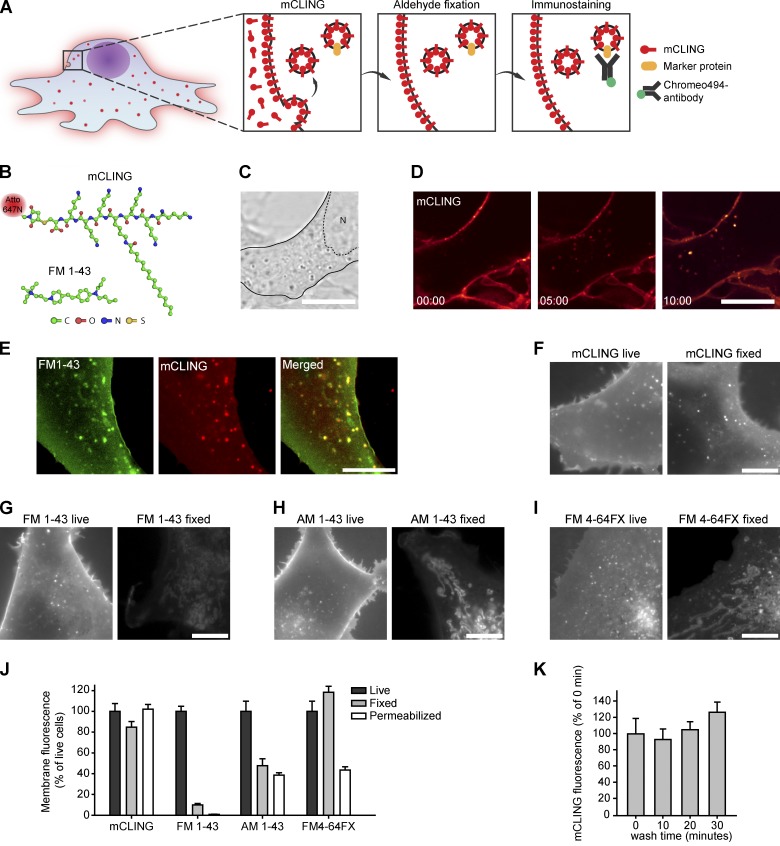
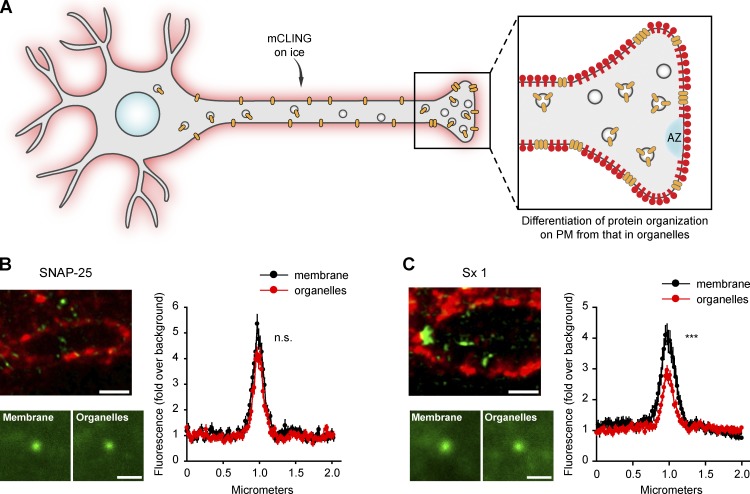
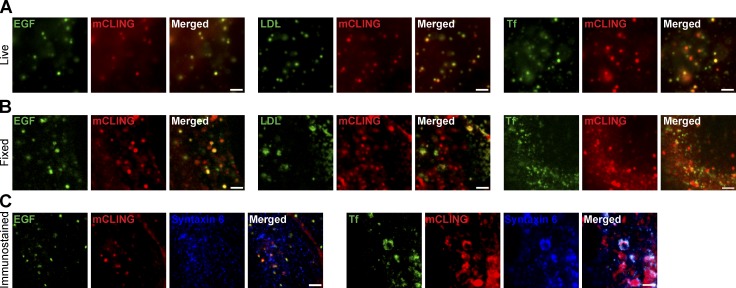
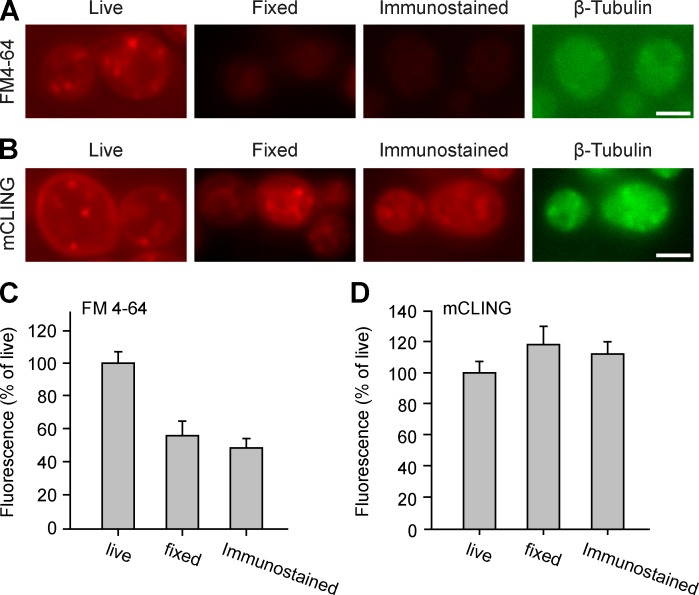
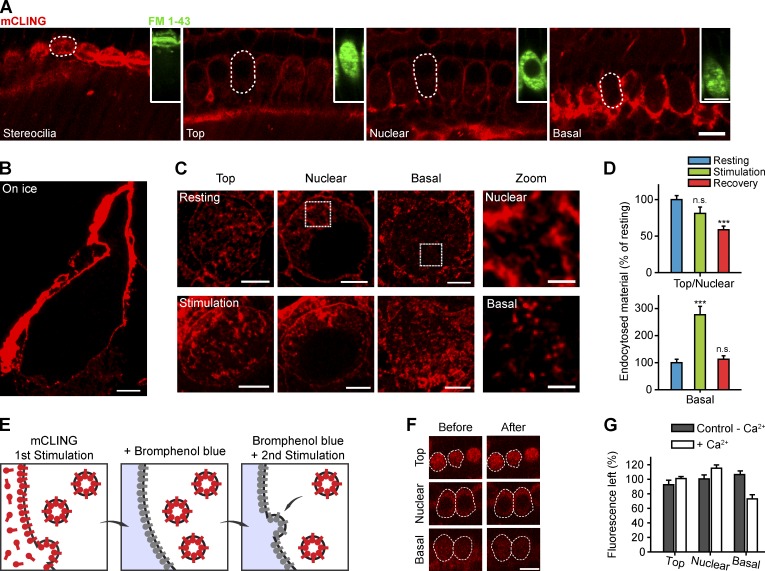
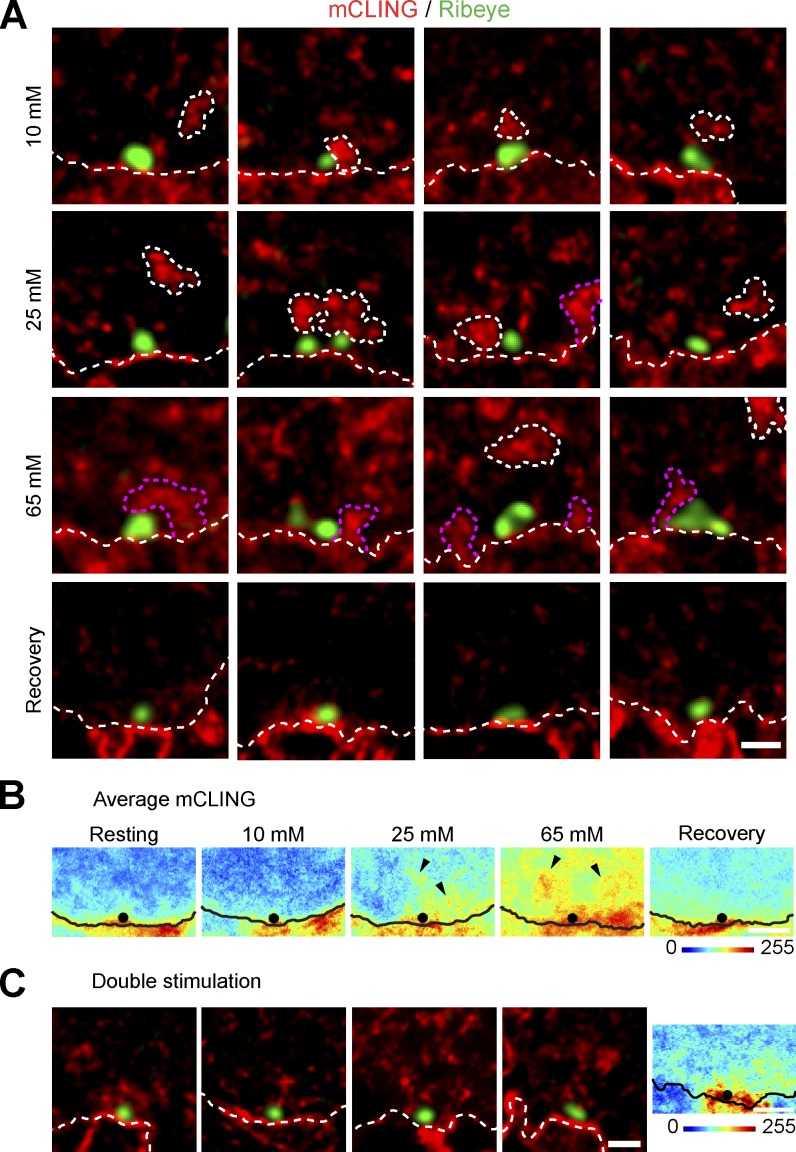
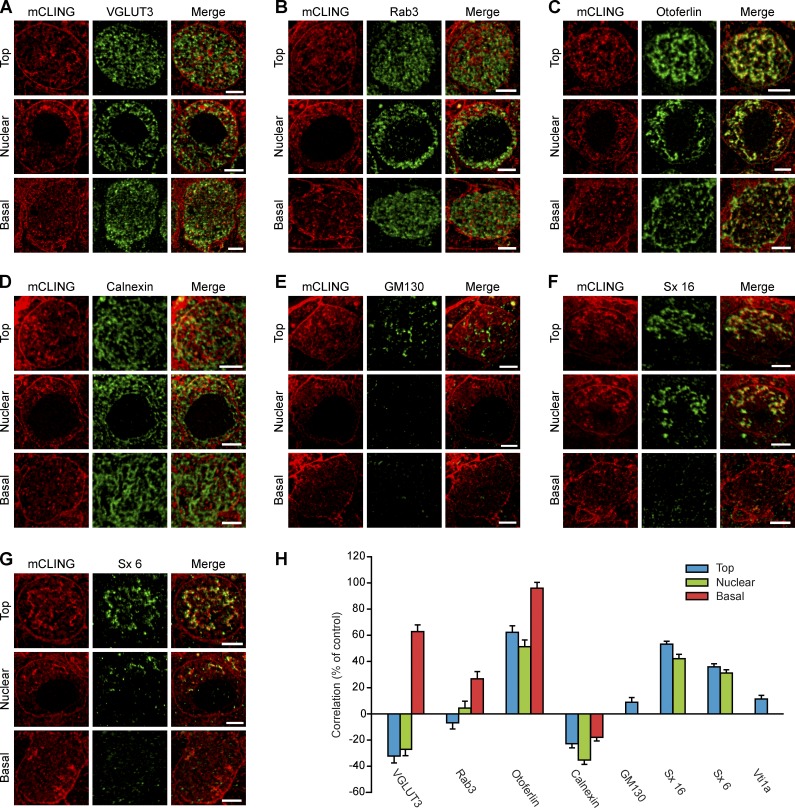
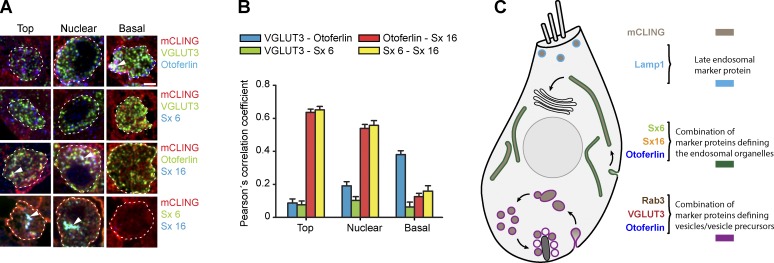
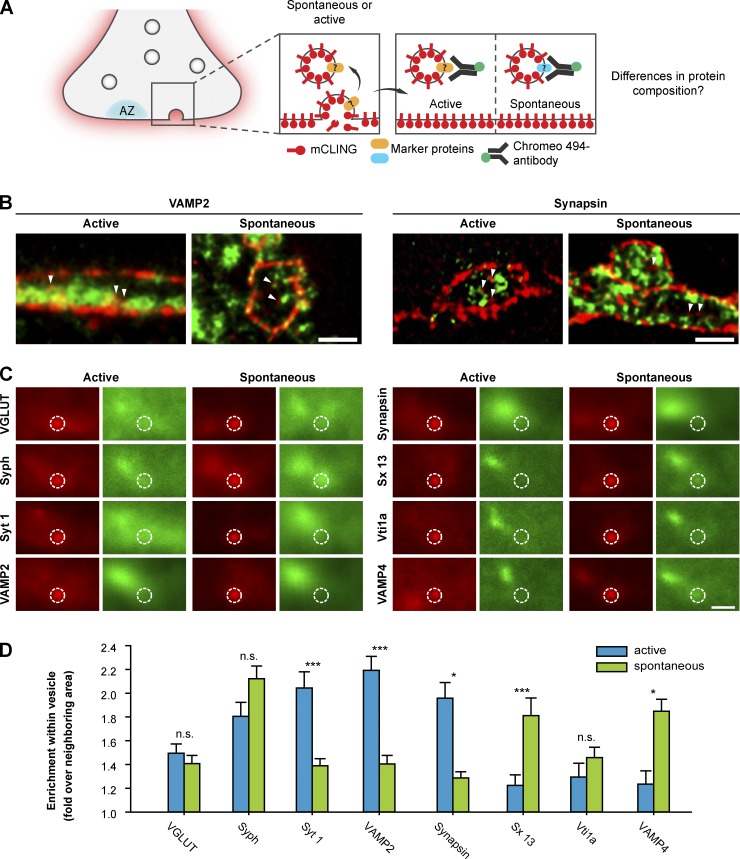
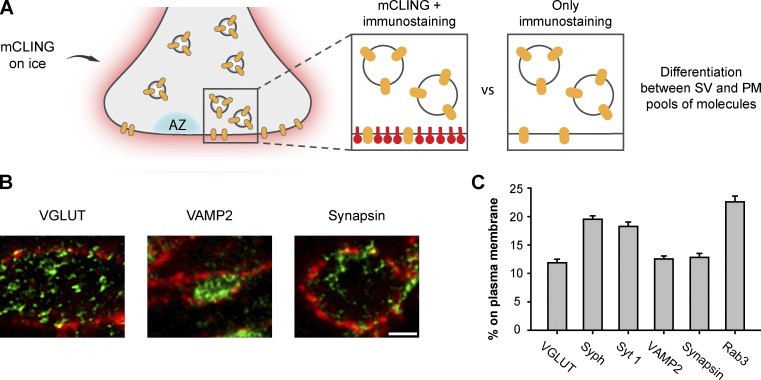
The molecular composition of the organelles involved in membrane recycling is difficult to establish as a result of the absence of suitable labeling tools. We introduce in this paper a novel probe, named membrane-binding fluorophore-cysteine-lysine-palmitoyl group (mCLING), which labels the plasma membrane and is taken up during endocytosis. It remains attached to membranes after fixation and permeabilization and can therefore be used in combination with immunostaining and super-resolution microscopy. We applied mCLING to mammalian-cultured cells, yeast, bacteria, primary cultured neurons, Drosophila melanogaster larval neuromuscular junctions, and mammalian tissue. mCLING enabled us to study the molecular composition of different trafficking organelles. We used it to address several questions related to synaptic vesicle recycling in the auditory inner hair cells from the organ of Corti and to investigate molecular differences between synaptic vesicles that recycle actively or spontaneously in cultured neurons. We conclude that mCLING enables the investigation of trafficking membranes in a broad range of preparations.
由于缺乏合适的标记工具,参与膜回收的细胞器的分子组成难以确定。本文介绍了一种新的探针,命名为膜结合荧光素-半胱氨酸-赖氨酸-棕榈酰基(mCLING),它标记质膜并在胞吞作用期间被摄取。它在固定和透化后仍附着在膜上,因此可以与免疫染色和超分辨率显微镜结合使用。我们将 mCLING 应用于哺乳动物培养细胞、酵母、细菌、原代培养神经元、黑腹果蝇幼虫肌神经节和哺乳动物组织。mCLING 使我们能够研究不同运输细胞器的分子组成。我们使用它来解决与耳蜗毛细胞中突触囊泡回收相关的几个问题,并研究培养神经元中主动或自发回收的突触囊泡之间的分子差异。我们得出结论,mCLING 使我们能够在广泛的制剂中研究运输膜。