
关于实验室规模一次性搅拌生物反应器的流体动力学
On the fluid dynamics of a laboratory scale single-use stirred bioreactor.
作者信息
Odeleye A O O, Marsh D T J, Osborne M D, Lye G J, Micheletti M
机构信息
Department of Biochemical Engineering, University College London, Torrington Place, London WC1E 7JE, United Kingdom.
Department of Biochemical Engineering, University College London, Torrington Place, London WC1E 7JE, United Kingdom ; Eli Lilly S.A. Irish Branch, Dunderrow, Kinsale, Co. Cork, Ireland.
出版信息
Chem Eng Sci. 2014 May 24;111(100):299-312. doi: 10.1016/j.ces.2014.02.032.
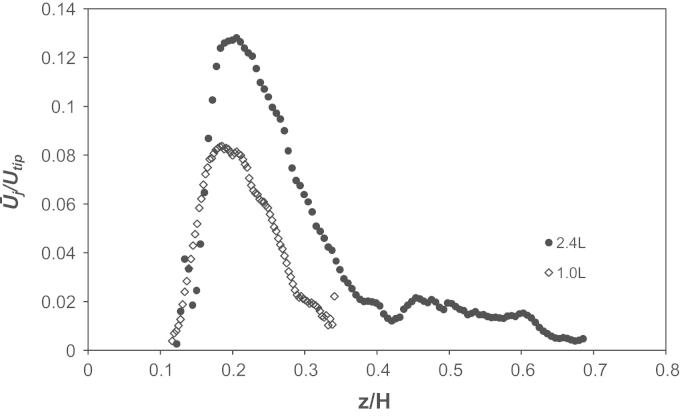
The commercial success of mammalian cell-derived recombinant proteins has fostered an increase in demand for novel single-use bioreactor (SUB) systems that facilitate greater productivity, increased flexibility and reduced costs (Zhang et al., 2010). These systems exhibit fluid flow regimes unlike those encountered in traditional glass/stainless steel bioreactors because of the way in which they are designed. With such disparate hydrodynamic environments between SUBs currently on the market, traditional scale-up approaches applied to stirred tanks should be revised. One such SUB is the Mobius 3 L CellReady, which consists of an upward-pumping marine scoping impeller. This work represents the first experimental study of the flow within the CellReady using a Particle Image Velocimetry (PIV) approach, combined with a biological study into the impact of these fluid dynamic characteristics on cell culture performance. The PIV study was conducted within the actual vessel, rather than using a purpose-built mimic. PIV measurements conveyed a degree of fluid compartmentalisation resulting from the up-pumping impeller. Both impeller tip speed and fluid working volume had an impact upon the fluid velocities and spatial distribution of turbulence within the vessel. Cell cultures were conducted using the GS-CHO cell-line (Lonza) producing an IgG antibody. Disparity in cellular growth and viability throughout the range of operating conditions used (80-350 rpm and 1-2.4 L working volume) was not substantial, although a significant reduction in recombinant protein productivity was found at 350 rpm and 1 L working volume (corresponding to the highest Reynolds number tested in this work). The study shows promise in the use of PIV to improve understanding of the hydrodynamic environment within individual SUBs and allows identification of the critical hydrodynamic parameters under the different flow regimes for compatibility and scalability across the range of bioreactor platforms.
哺乳动物细胞衍生的重组蛋白在商业上的成功推动了对新型一次性生物反应器(SUB)系统的需求增长,这些系统有助于提高生产力、增加灵活性并降低成本(Zhang等人,2010年)。由于其设计方式,这些系统呈现出与传统玻璃/不锈钢生物反应器不同的流体流动状态。鉴于目前市场上的SUB之间存在如此不同的流体动力学环境,应用于搅拌罐的传统放大方法应予以修订。其中一种SUB是Mobius 3 L CellReady,它由一个向上泵送的海洋式定域叶轮组成。这项工作是首次使用粒子图像测速(PIV)方法对CellReady内的流动进行实验研究,并结合生物学研究,探讨这些流体动力学特性对细胞培养性能的影响。PIV研究是在实际容器内进行的,而不是使用专门构建的模拟物。PIV测量显示了由向上泵送叶轮导致的一定程度的流体分隔。叶轮尖端速度和流体工作体积都对容器内的流体速度和湍流空间分布有影响。使用产生IgG抗体的GS-CHO细胞系(Lonza)进行细胞培养。在所使用的整个操作条件范围内(80 - 350 rpm和1 - 2.4 L工作体积),细胞生长和活力的差异并不显著,尽管在350 rpm和1 L工作体积下(对应于本研究中测试的最高雷诺数)发现重组蛋白生产力显著降低。该研究表明,使用PIV有望增进对单个SUB内流体动力学环境的理解,并有助于确定不同流动状态下的关键流体动力学参数,以实现生物反应器平台范围内的兼容性和可扩展性。




 Zotero 插件