Agarwal Ashok, Virk Gurpriya, Ong Chloe, du Plessis Stefan S
Center for Reproductive Medicine, Cleveland Clinic, Cleveland, OH, USA.
Medical Physiology, Faculty of Medicine and Health Sciences, Stellenbosch University, Tygerberg, South Africa.
World J Mens Health. 2014 Apr;32(1):1-17. doi: 10.5534/wjmh.2014.32.1.1. Epub 2014 Apr 25.
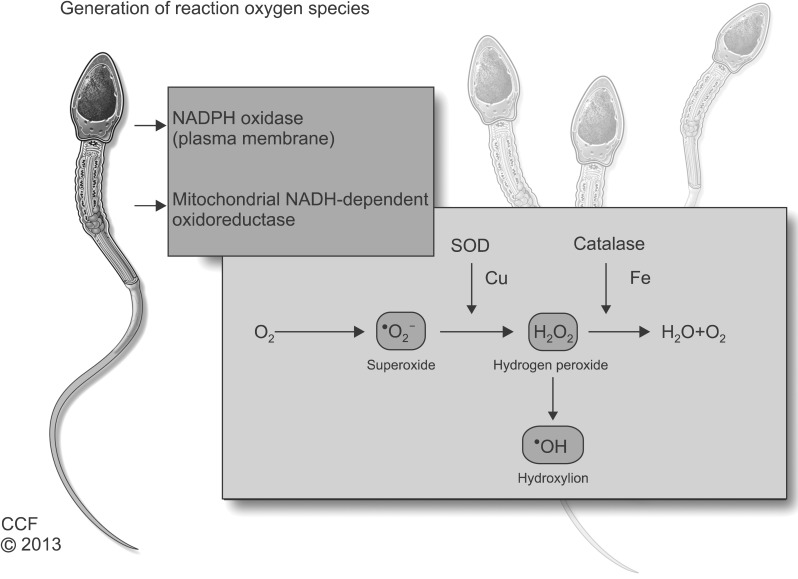
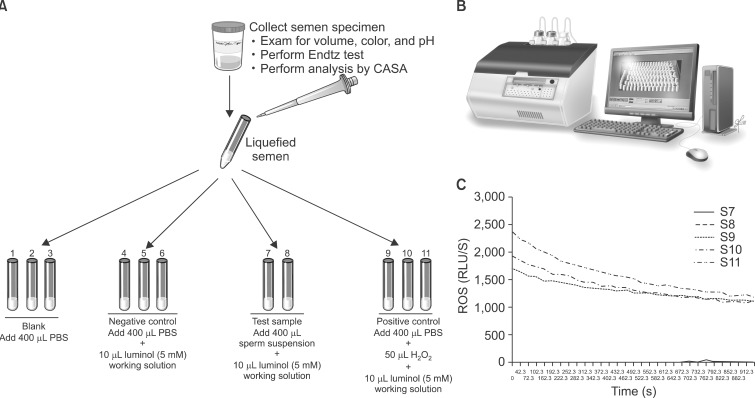
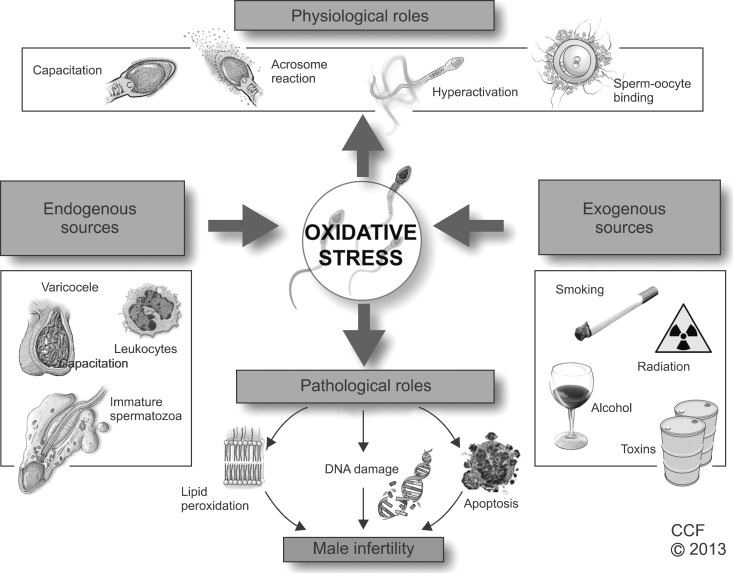
Infertility affects approximately 15% of couples trying to conceive, and a male factor contributes to roughly half of these cases. Oxidative stress (OS) has been identified as one of the many mediators of male infertility by causing sperm dysfunction. OS is a state related to increased cellular damage triggered by oxygen and oxygen-derived free radicals known as reactive oxygen species (ROS). During this process, augmented production of ROS overwhelms the body's antioxidant defenses. While small amounts of ROS are required for normal sperm functioning, disproportionate levels can negatively impact the quality of spermatozoa and impair their overall fertilizing capacity. OS has been identified as an area of great attention because ROS and their metabolites can attack DNA, lipids, and proteins; alter enzymatic systems; produce irreparable alterations; cause cell death; and ultimately, lead to a decline in the semen parameters associated with male infertility. This review highlights the mechanisms of ROS production, the physiological and pathophysiological roles of ROS in relation to the male reproductive system, and recent advances in diagnostic methods; it also explores the benefits of using antioxidants in a clinical setting.
不孕症影响着约15%试图受孕的夫妇,其中约一半病例存在男性因素。氧化应激(OS)已被确认为导致精子功能障碍的众多男性不育介导因素之一。OS是一种与由氧和称为活性氧(ROS)的氧衍生自由基引发的细胞损伤增加相关的状态。在此过程中,ROS的过量产生超过了身体的抗氧化防御能力。虽然正常精子功能需要少量ROS,但不成比例的水平会对精子质量产生负面影响并损害其整体受精能力。由于ROS及其代谢产物可攻击DNA、脂质和蛋白质;改变酶系统;产生无法修复的改变;导致细胞死亡;并最终导致与男性不育相关的精液参数下降,OS已成为一个备受关注的领域。本综述重点介绍了ROS产生的机制、ROS在男性生殖系统中的生理和病理生理作用以及诊断方法的最新进展;还探讨了在临床环境中使用抗氧化剂的益处。