Katanosaka Yuki, Iwasaki Keiichiro, Ujihara Yoshihiro, Takatsu Satomi, Nishitsuji Koki, Kanagawa Motoi, Sudo Atsushi, Toda Tatsushi, Katanosaka Kimiaki, Mohri Satoshi, Naruse Keiji
Department of Cardiovascular Physiology, Graduate School of Medicine, Dentistry and Pharmaceutical Sciences, Okayama University, Shikata-cho 2-5-1, Okayama city, Okayama 700-8558, Japan.
1] Department of Cardiovascular Physiology, Graduate School of Medicine, Dentistry and Pharmaceutical Sciences, Okayama University, Shikata-cho 2-5-1, Okayama city, Okayama 700-8558, Japan [2] Department of Physiology, Kawasaki Medical School, Matsushima 577, Kurashiki, Okayama 701-0192, Japan.
Nat Commun. 2014 May 29;5:3932. doi: 10.1038/ncomms4932.
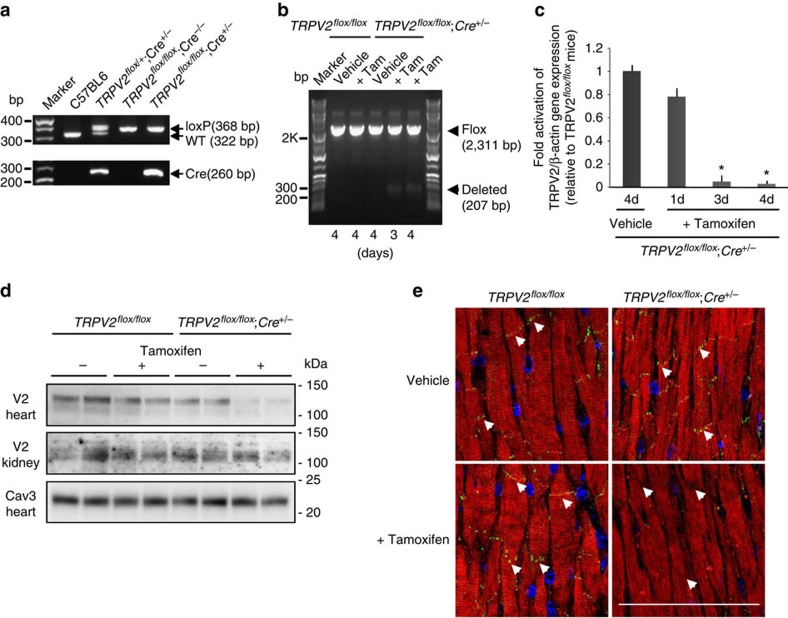
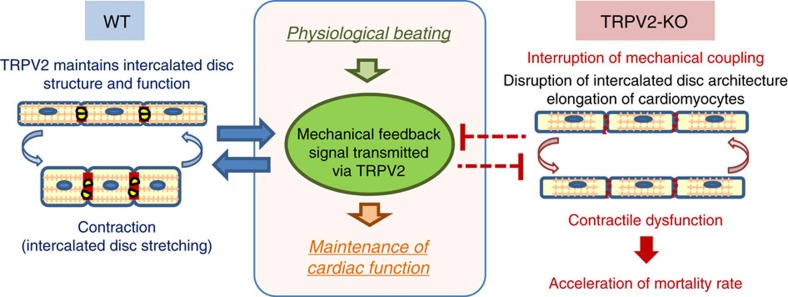
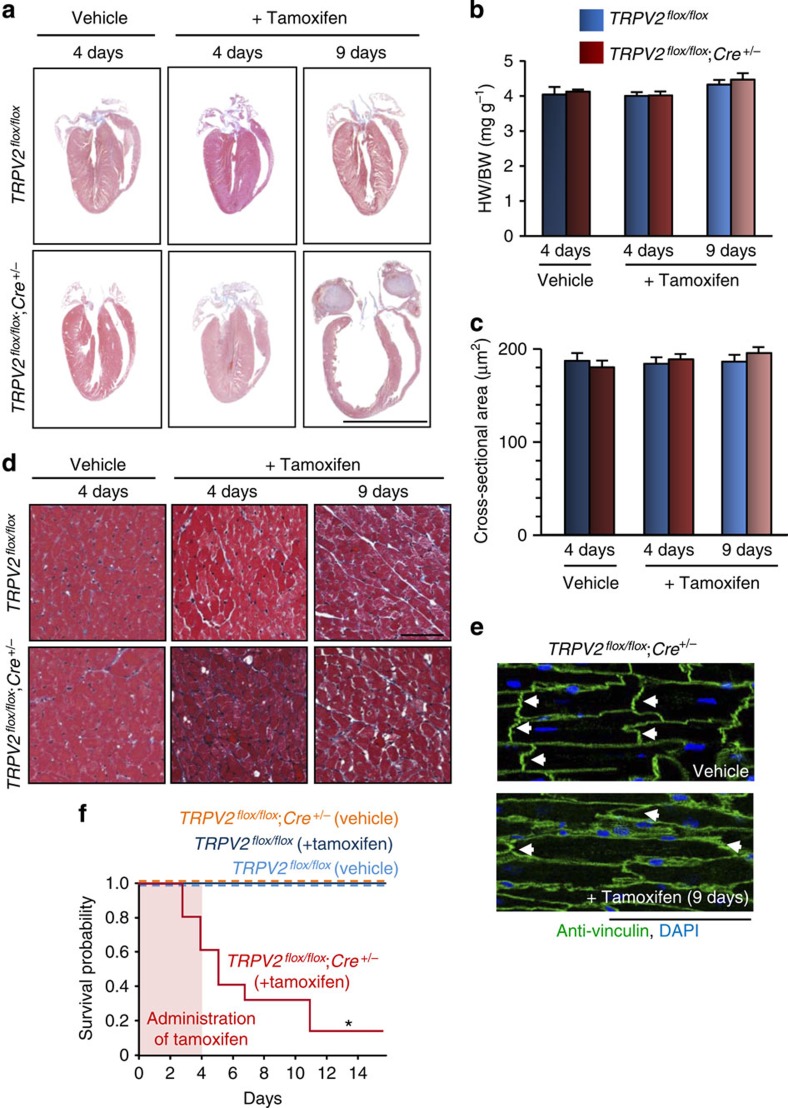
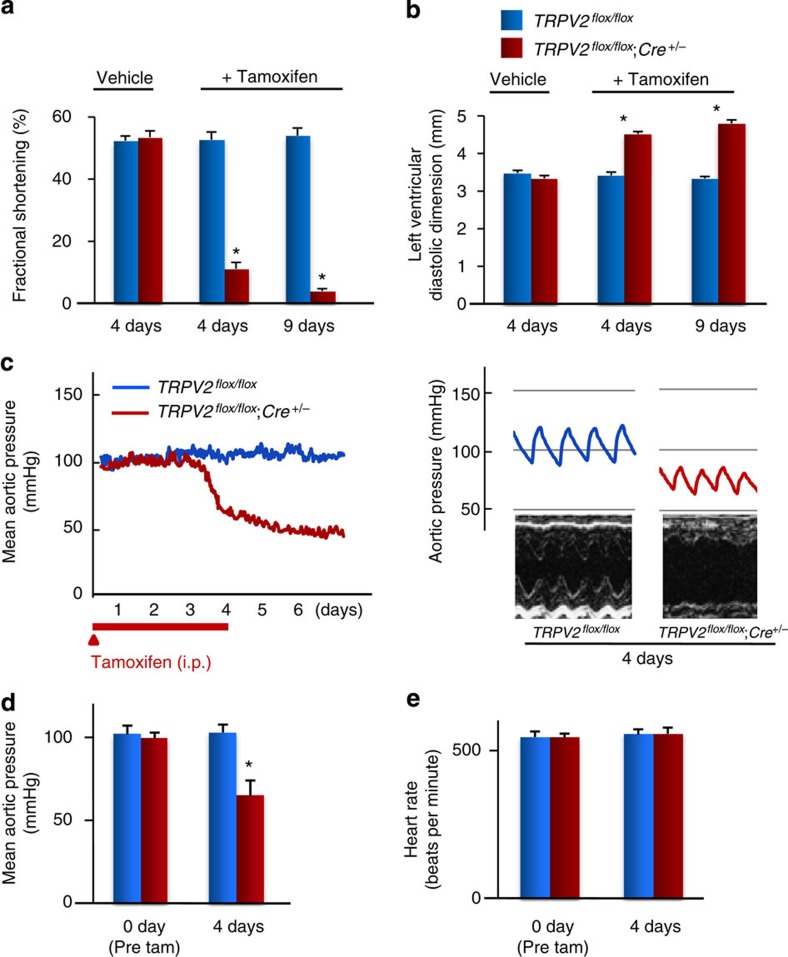
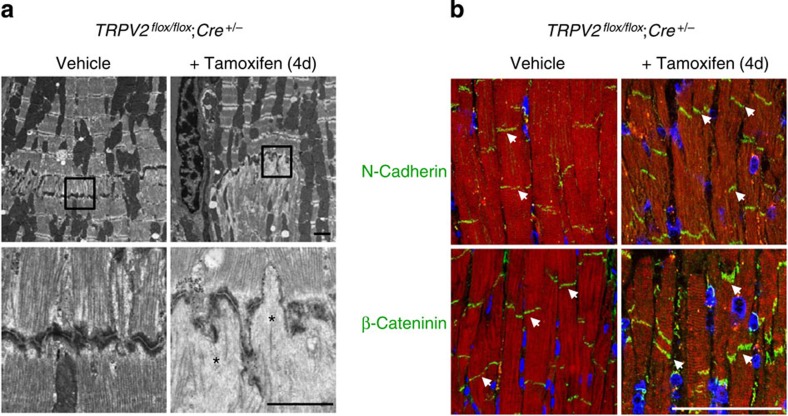
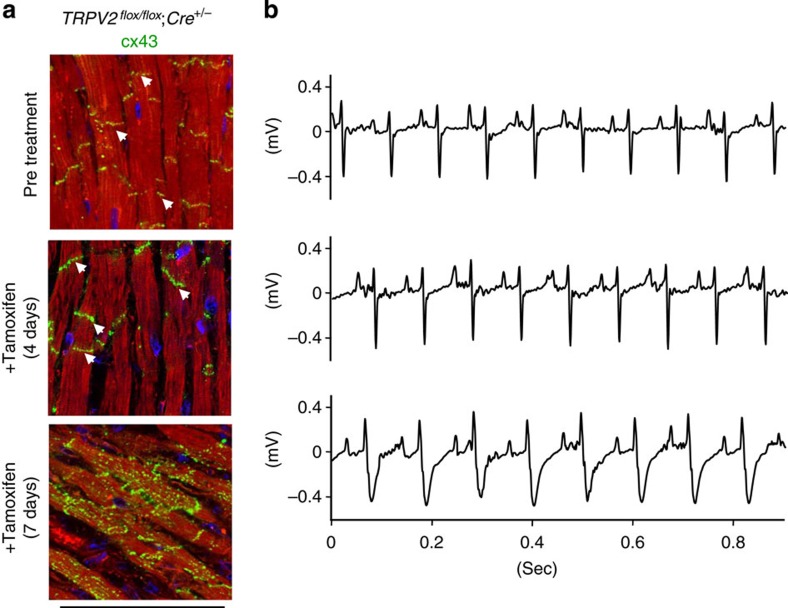
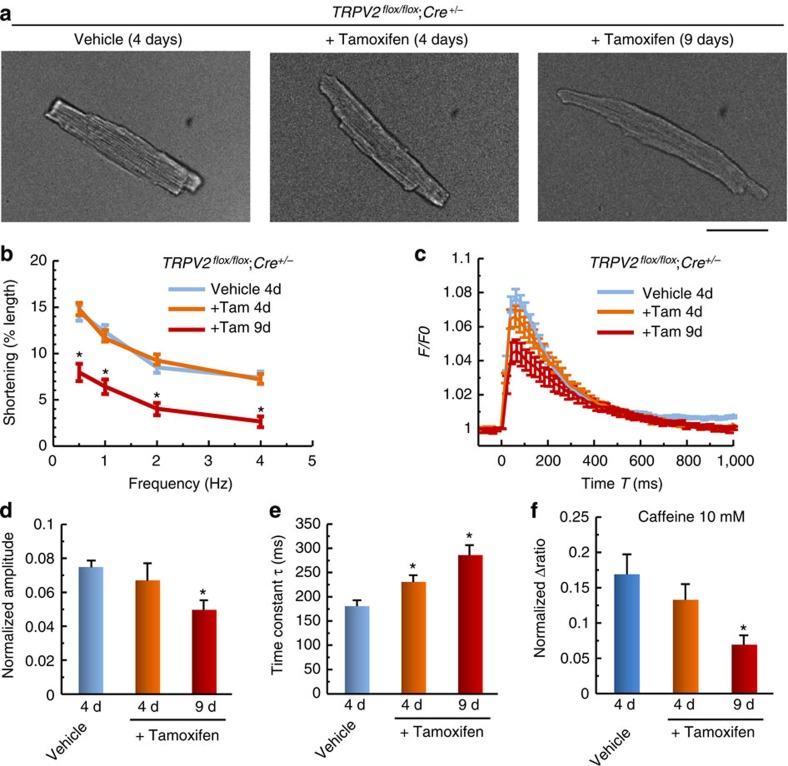
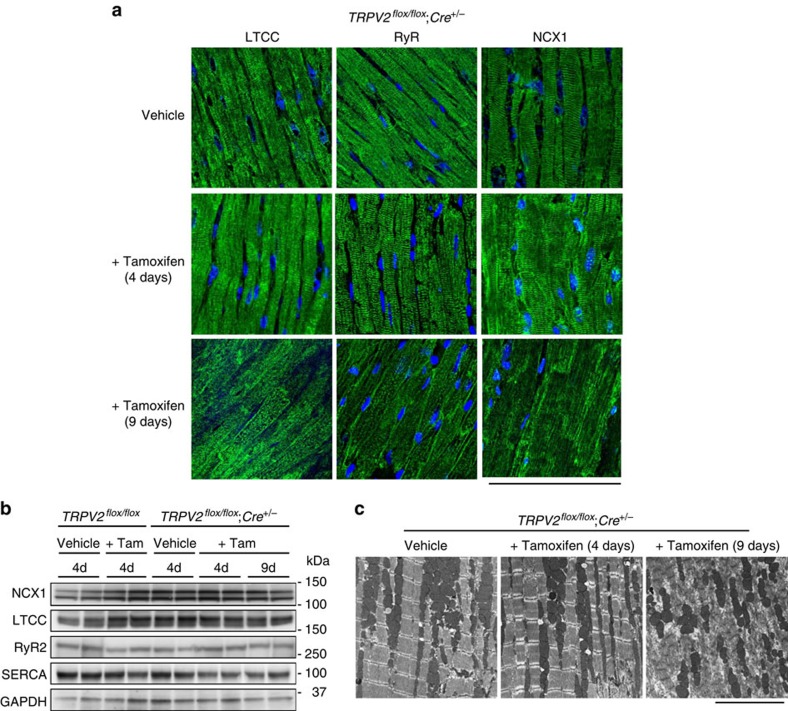
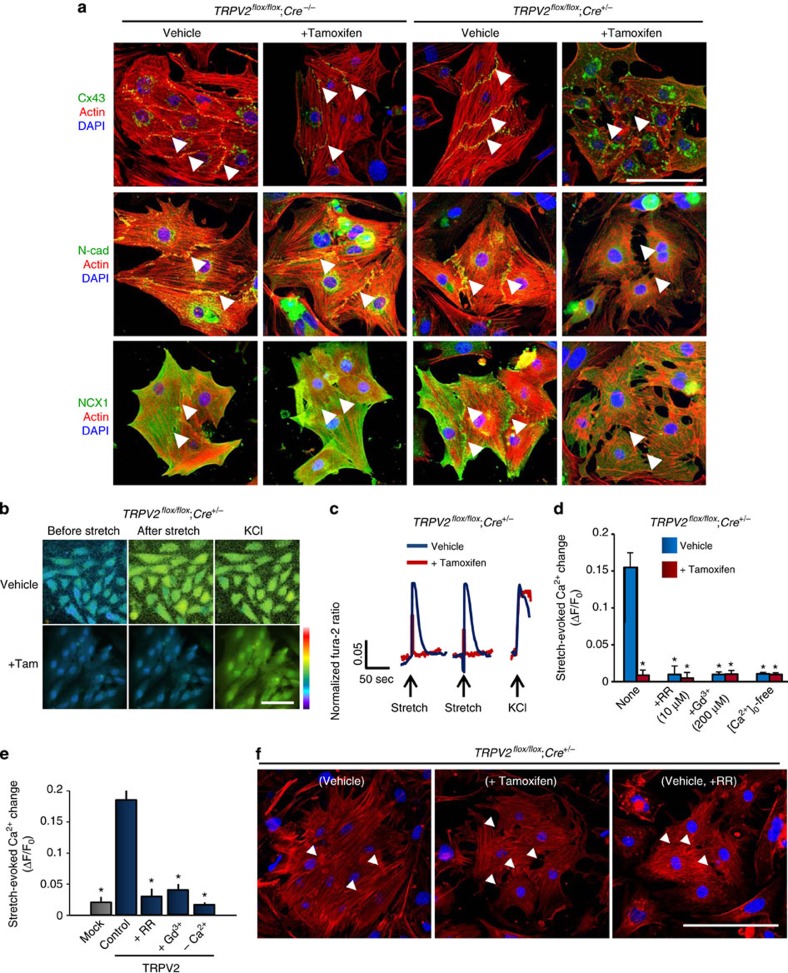
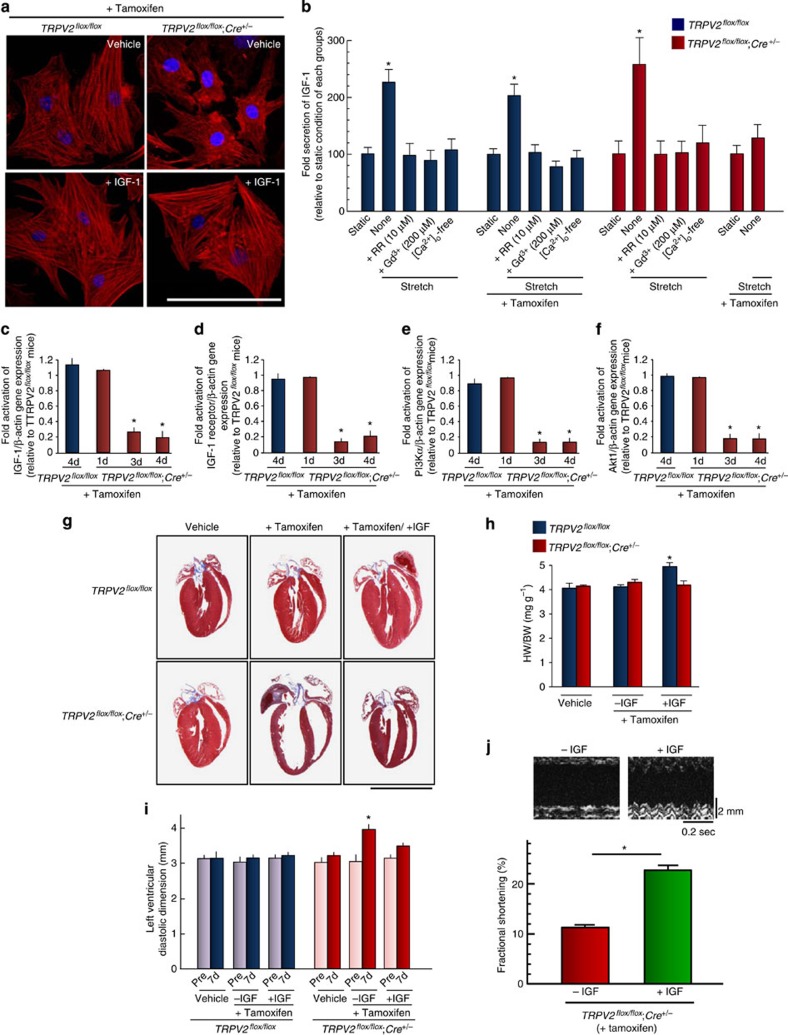
The heart has a dynamic compensatory mechanism for haemodynamic stress. However, the molecular details of how mechanical forces are transduced in the heart are unclear. Here we show that the transient receptor potential, vanilloid family type 2 (TRPV2) cation channel is critical for the maintenance of cardiac structure and function. Within 4 days of eliminating TRPV2 from hearts of the adult mice, cardiac function declines severely, with disorganization of the intercalated discs that support mechanical coupling with neighbouring myocytes and myocardial conduction defects. After 9 days, cell shortening and Ca(2+) handling by single myocytes are impaired in TRPV2-deficient hearts. TRPV2-deficient neonatal cardiomyocytes form no intercalated discs and show no extracellular Ca(2+)-dependent intracellular Ca(2+) increase and insulin-like growth factor (IGF-1) secretion in response to stretch stimulation. We further demonstrate that IGF-1 receptor/PI3K/Akt pathway signalling is significantly downregulated in TRPV2-deficient hearts, and that IGF-1 administration partially prevents chamber dilation and impairment in cardiac pump function in these hearts. Our results improve our understanding of the molecular processes underlying the maintenance of cardiac structure and function.
心脏具有针对血流动力学应激的动态代偿机制。然而,机械力在心脏中如何传导的分子细节尚不清楚。在此我们表明,瞬时受体电位香草酸受体2型(TRPV2)阳离子通道对于维持心脏结构和功能至关重要。在从成年小鼠心脏中去除TRPV2后的4天内,心脏功能严重下降,支持与相邻心肌细胞机械偶联的闰盘紊乱,且出现心肌传导缺陷。9天后,TRPV2缺陷型心脏中的单个心肌细胞的细胞缩短和Ca(2+)处理受损。TRPV2缺陷型新生心肌细胞不形成闰盘,并且在受到拉伸刺激时不显示细胞外Ca(2+)依赖性细胞内Ca(2+)增加以及胰岛素样生长因子(IGF-1)分泌。我们进一步证明,IGF-1受体/PI3K/Akt途径信号在TRPV2缺陷型心脏中显著下调,并且给予IGF-1可部分预防这些心脏中的心室扩张和心脏泵功能受损。我们的结果增进了我们对维持心脏结构和功能的分子过程的理解。