Lee Donghoon M, Harris Tony J C
Department of Cell and Systems Biology; University of Toronto; Toronto, ON CA.
Bioarchitecture. 2014 Mar-Apr;4(2):68-74. doi: 10.4161/bioa.28949. Epub 2014 Apr 23.
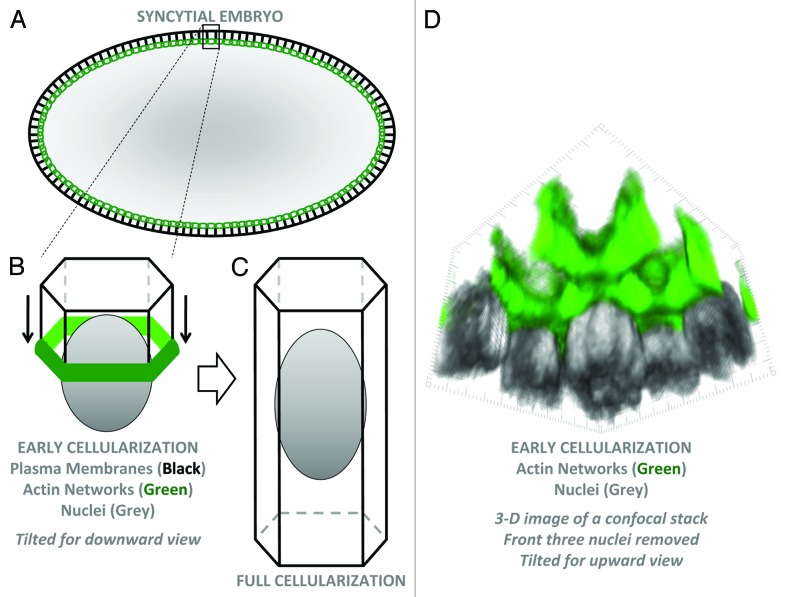
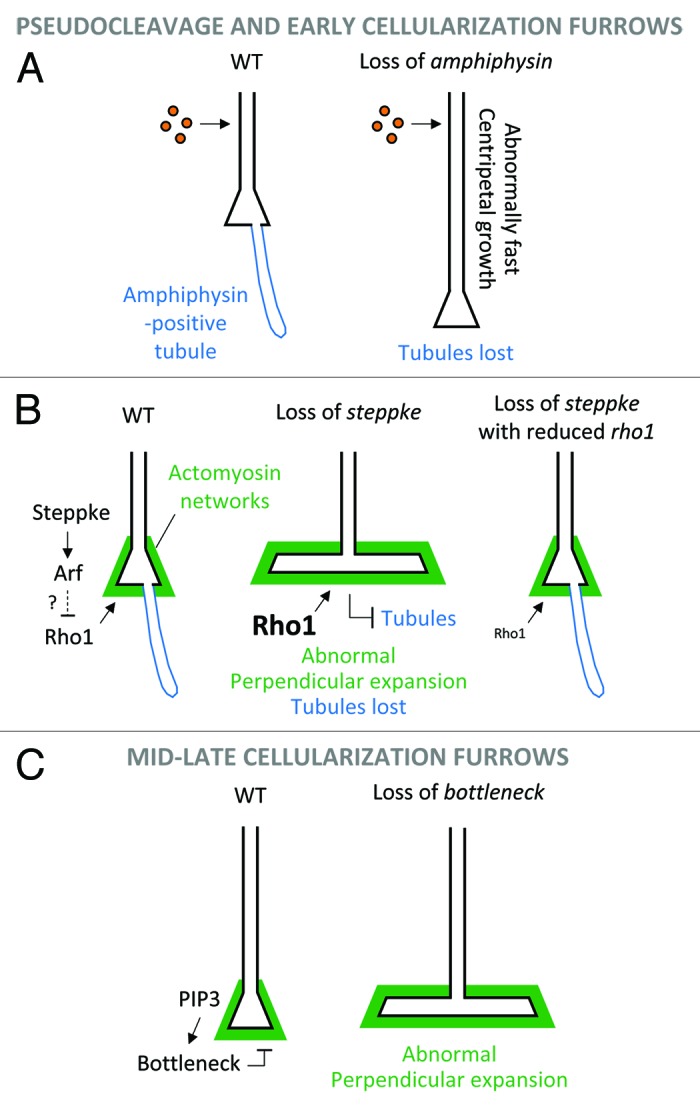
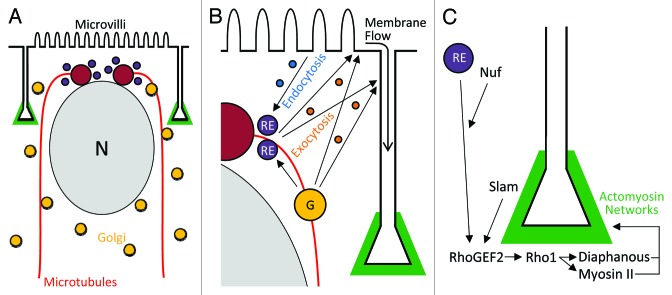
Plasma membrane organization is under the control of cytoskeletal networks and endocytic mechanisms, and a growing literature is showing how closely these influences are interconnected. Here, we review how plasma membranes are formed around individual nuclei of the syncytial Drosophila embryo. Specifically, we outline the pathways that promote and maintain the growth of pseudocleavage and cellularization furrows, as well as specific pathways that keep furrow growth in check. This system has become important for studies of actin regulators, such as Rho1, Diaphanous, non-muscle myosin II and Arp2/3, and endocytic regulators, such as a cytohesin Arf-GEF (Steppke), clathrin, Amphiphysin and dynamin. More generally, it provides a model for understanding how cytoskeletal-endocytic cross-talk regulates the assembly of a cell.
质膜组织受细胞骨架网络和内吞机制的控制,越来越多的文献表明这些影响之间的联系是多么紧密。在这里,我们回顾了合胞体果蝇胚胎单个细胞核周围的质膜是如何形成的。具体来说,我们概述了促进和维持假分裂和细胞化沟生长的途径,以及控制沟生长的特定途径。这个系统对于研究肌动蛋白调节因子(如Rho1、Diaphanous、非肌肉肌球蛋白II和Arp2/3)和内吞调节因子(如细胞鸟苷酸交换因子Arf-GEF(Steppke)、网格蛋白、发动蛋白和发动蛋白)变得很重要。更普遍地说,它为理解细胞骨架-内吞相互作用如何调节细胞组装提供了一个模型。