Department of Environment Health Engineering, Faculty of Health, Shiraz University of Medical Sciences, Shiraz, Iran.
Department of Environment Health Engineering, Faculty of Medical, Tarbiat Modares University, Tehran, Iran.
J Environ Health Sci Eng. 2014 Apr 28;12:77. doi: 10.1186/2052-336X-12-77. eCollection 2014.
Discharging the oily wastewater in the environment causes serious problems, because of the oil compounds and organic materials presence. Applying biological methods using the lipase enzyme producer microorganisms can be an appropriate choice for treatment of these wastewaters. The aim of this study is to treat those oil wastewaters having high concentration of oil by applying lipase enzyme producer bacteria.
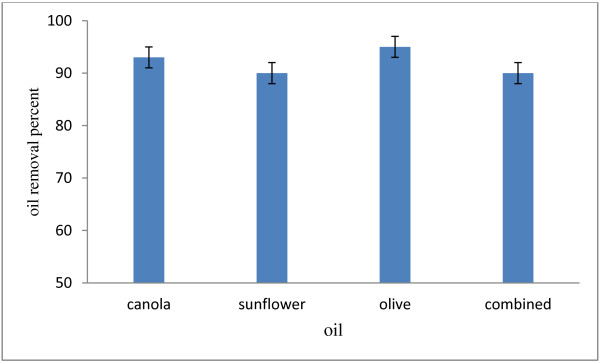
Oil concentration measurement was conducted using the standard method of gravimetric and the wastewater under study was synthetically made and contained olive, canola and sunflower oil. The strain used in this study was Pseudomonas strain isolated from compost fertilizer. The oil under study had concentration of 1.5 to 22 g/l.
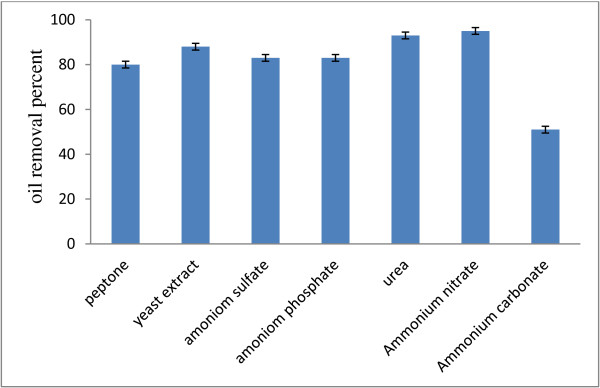
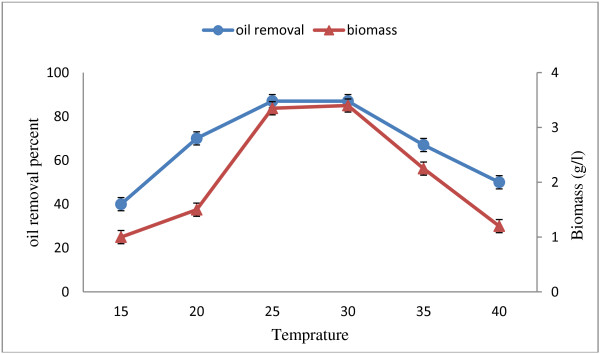
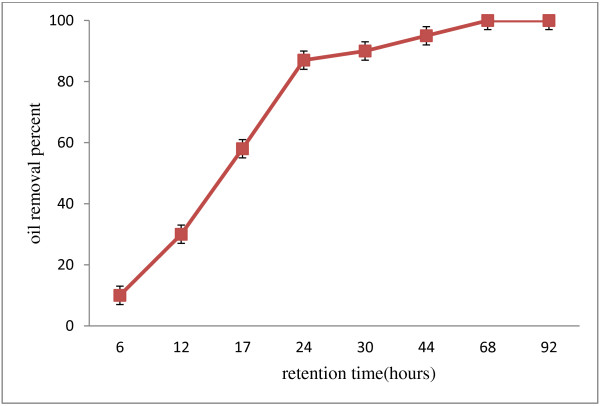
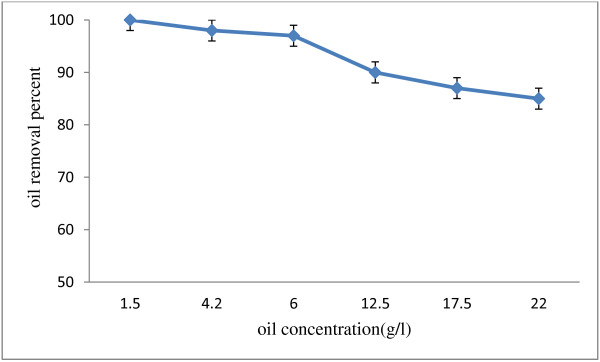
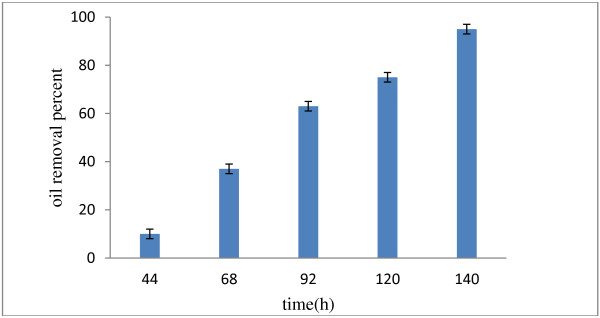
The oil removal amount in concentrations lower than 8.4 g/l was over 95 ± 1.5%. Increase of the oil's concentration to 22 g/l decreases the amount of removal in retention time of 44 hours to 85 ± 2.5%. The best yield of removing this strain in retention time of 44 hours and temperature of 30°C was achieved using Ammonium Nitrate as the nitrogen resource which yield was about 95 percent.
The findings of the research showed that Pseudomonas bacteria isolated from the compost fertilizer can degrade high concentration oils.
将含油污水排放到环境中会引发严重的问题,因为其中含有油类化合物和有机物质。应用微生物产生的脂肪酶来处理这些废水是一种合适的生物方法。本研究旨在应用脂肪酶产生菌来处理高浓度含油废水。
采用标准重量法对油浓度进行测量,所研究的废水为人工合成的,包含橄榄油、菜籽油和葵花籽油。本研究中使用的菌株是从堆肥肥料中分离出来的假单胞菌。研究中的油浓度为 1.5 至 22 g/l。
在油浓度低于 8.4 g/l 的情况下,去除率超过 95%±1.5%。当油浓度增加到 22 g/l 时,在 44 小时的保留时间内,去除率下降到 85%±2.5%。在 44 小时的保留时间和 30°C 的温度下,该菌株使用硝酸铵作为氮源时的最佳去除率约为 95%。
研究结果表明,从堆肥肥料中分离出的假单胞菌可以降解高浓度的油。