Lobo Michele A, Kokkoni Elena, de Campos Ana Carolina, Galloway James C
Department of Physical Therapy, The University of Delaware, United States.
Department of Physical Therapy, The University of Delaware, United States.
Infant Behav Dev. 2014 Aug;37(3):334-51. doi: 10.1016/j.infbeh.2014.05.003. Epub 2014 May 28.
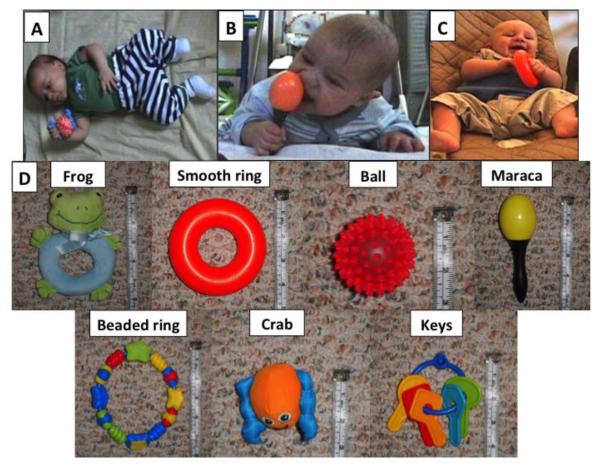
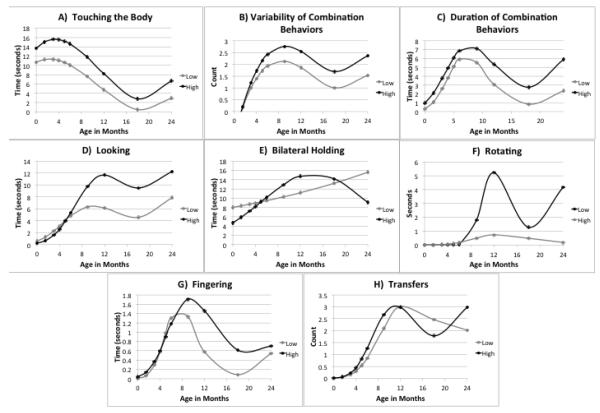
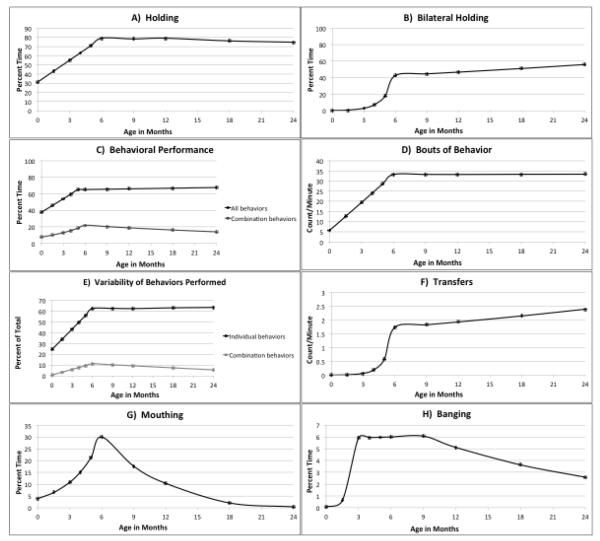
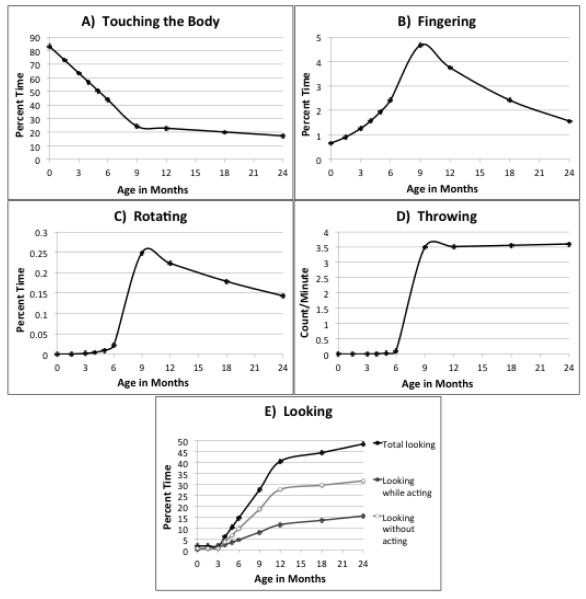
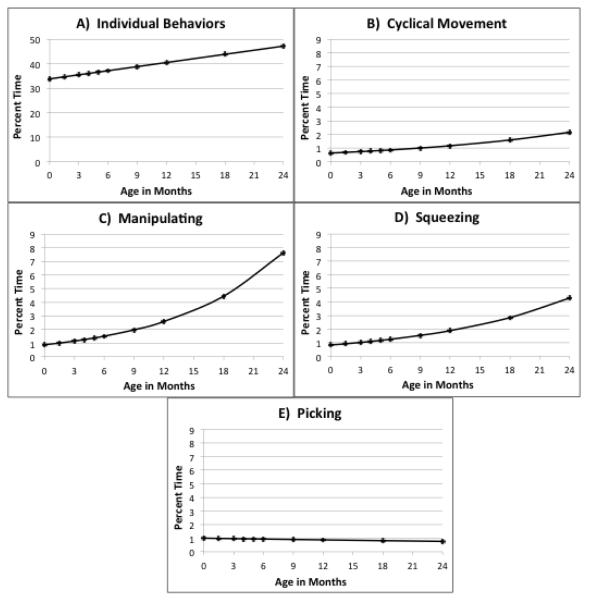
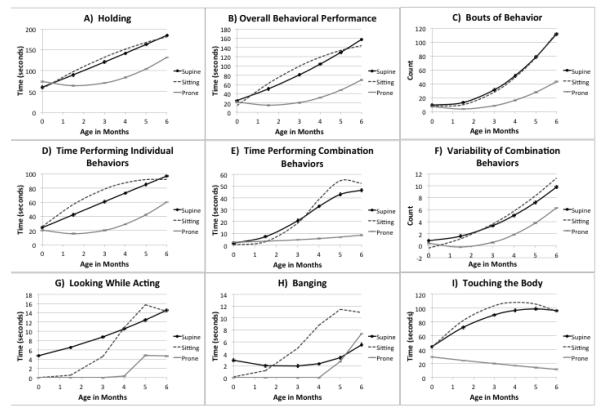
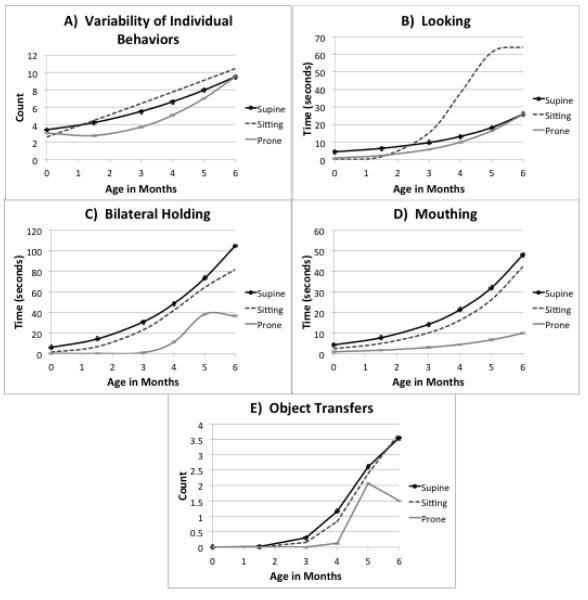
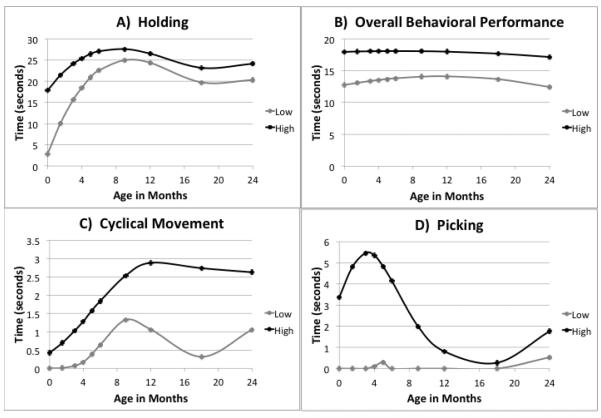
This study describes infants' behaviors with objects in relation to age, body position, and object properties. Object behaviors were assessed longitudinally in 22 healthy infants supine, prone, and sitting from birth through 2 years. Results reveal: (1) infants learn to become intense and sophisticated explorers within the first 6 months of life; (2) young infants dynamically and rapidly shift among a variety of behavioral combinations to gather information; (3) behaviors on objects develop along different trajectories so that behavioral profiles vary across time; (4) object behaviors are generally similar in supine and sitting but diminished in prone; and (5) infants begin matching certain behaviors to object properties as newborns. These data demonstrate how infants learn to match their emerging behaviors with changing positional constraints and object affordances.
本研究描述了婴儿与物体相关的行为,这些行为与年龄、身体姿势和物体属性有关。对22名健康婴儿从出生到2岁期间仰卧、俯卧和坐姿时的物体行为进行了纵向评估。结果显示:(1)婴儿在生命的前6个月内学会成为积极且复杂的探索者;(2)幼儿会动态且迅速地在各种行为组合之间转换以收集信息;(3)物体上的行为沿着不同轨迹发展,因此行为特征随时间而变化;(4)仰卧和坐姿时的物体行为通常相似,但俯卧时会减少;(5)婴儿从新生儿期就开始将某些行为与物体属性相匹配。这些数据表明了婴儿如何学会将其新出现的行为与不断变化的位置限制和物体可供性相匹配。