Department of Molecular Biology, University of Texas Southwestern Medical Center, Dallas, Texas 75390, USA;
Department of Molecular Biology, University of Texas Southwestern Medical Center, Dallas, Texas 75390, USA; Tianjin Research Center of Basic Medical Science, Tianjin Medical University, Tianjin 300070, China;
Genes Dev. 2014 Jun 1;28(11):1159-64. doi: 10.1101/gad.237479.114.
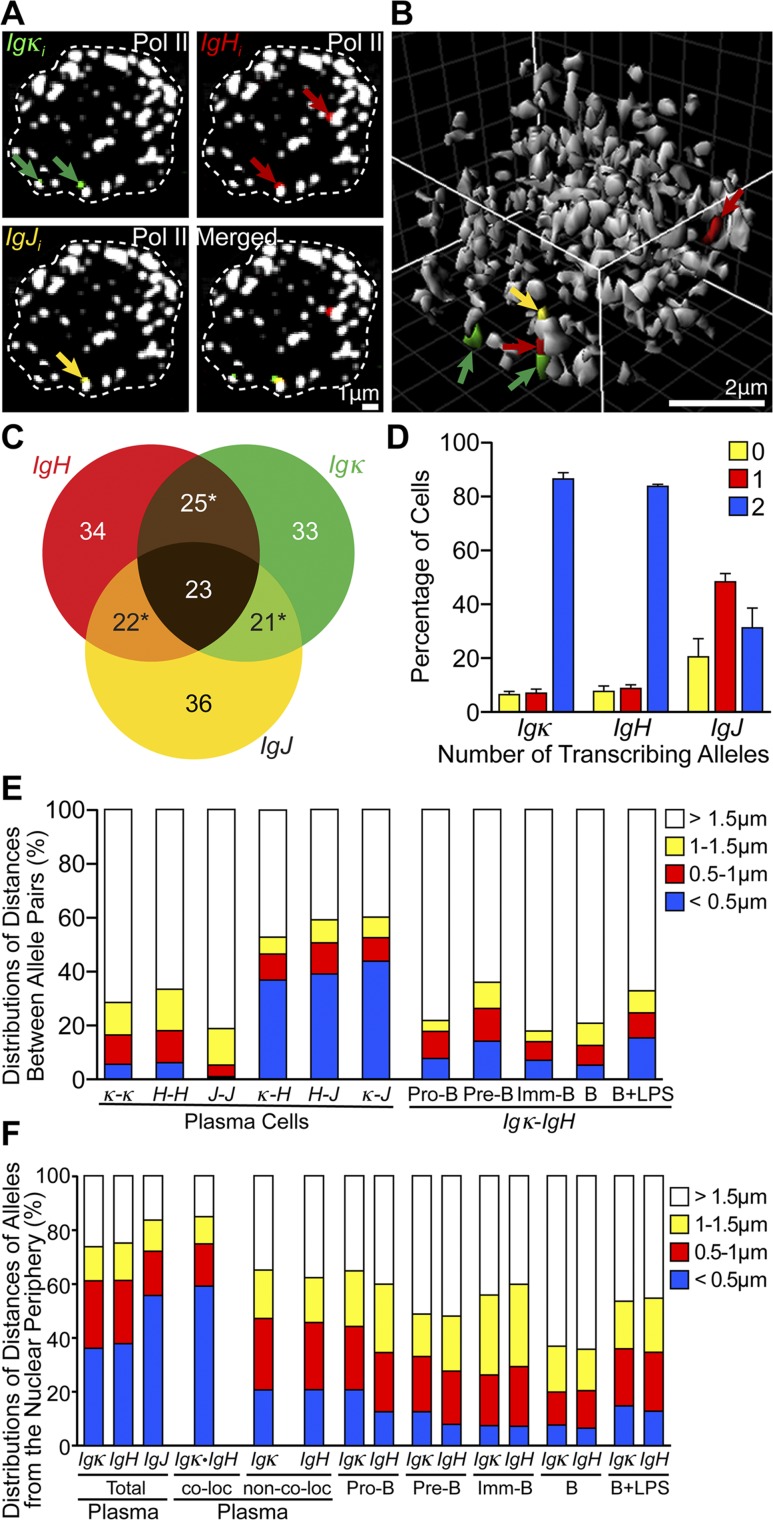
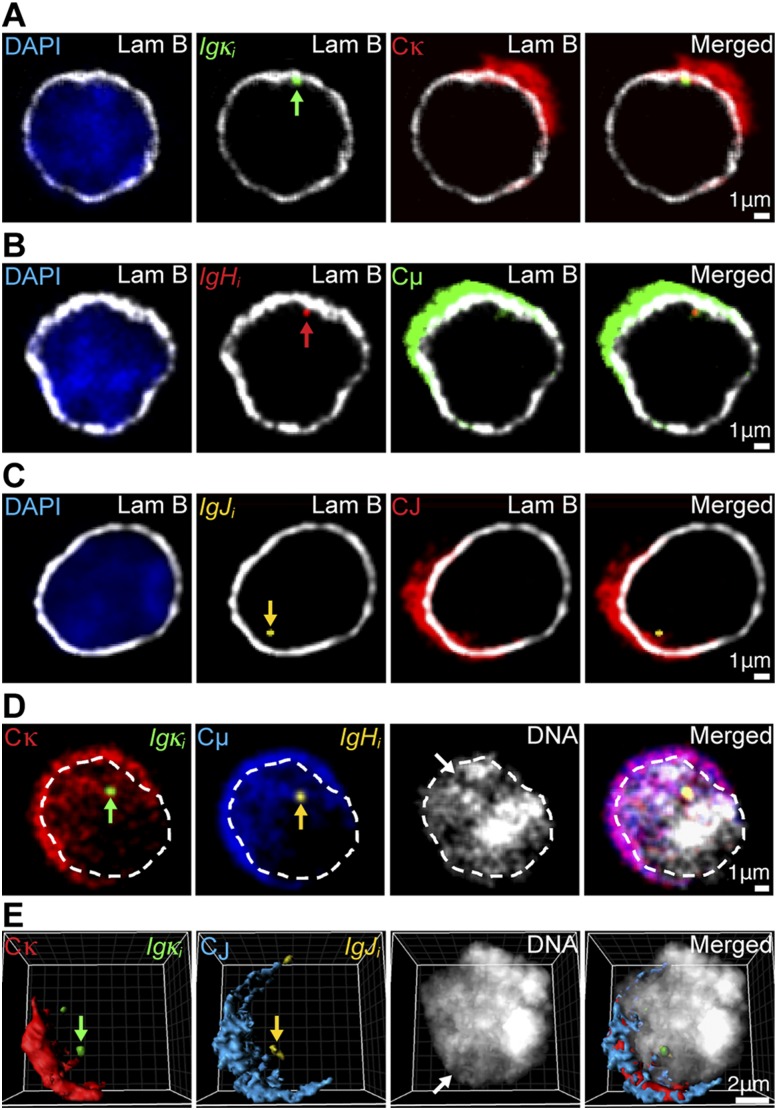
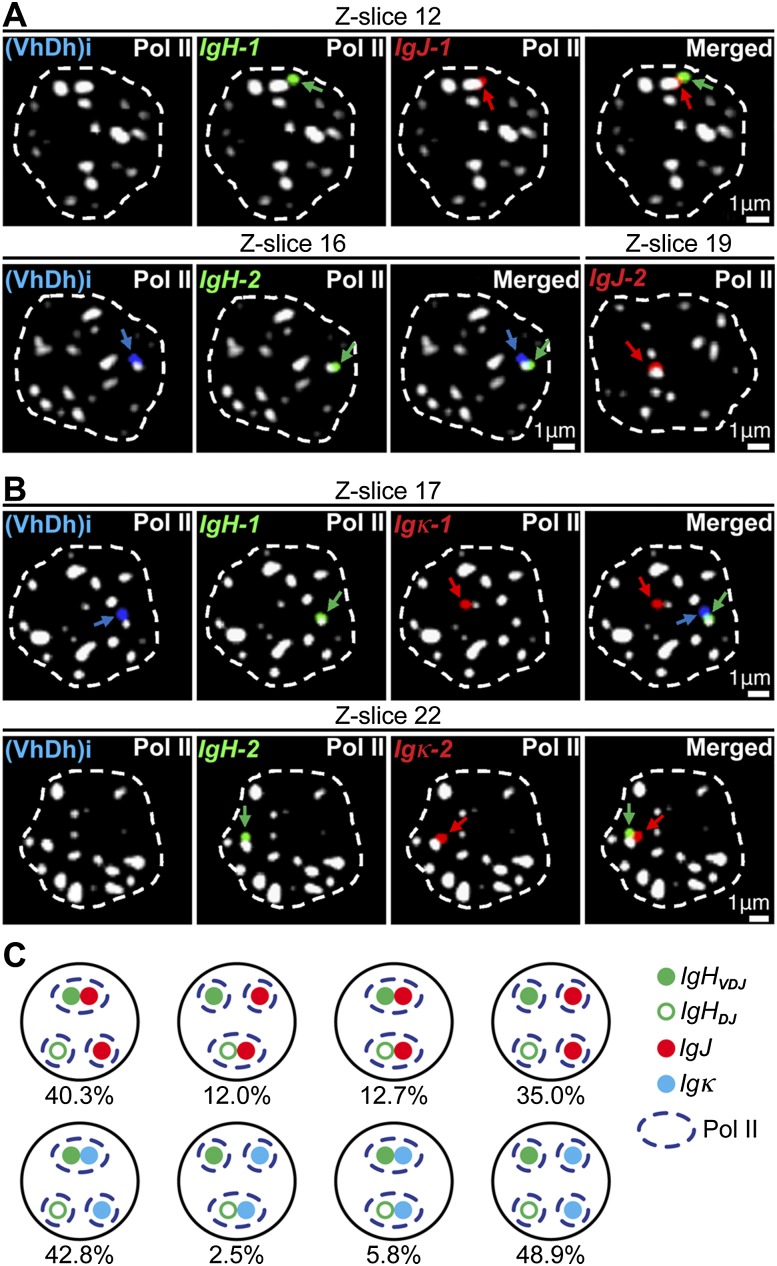
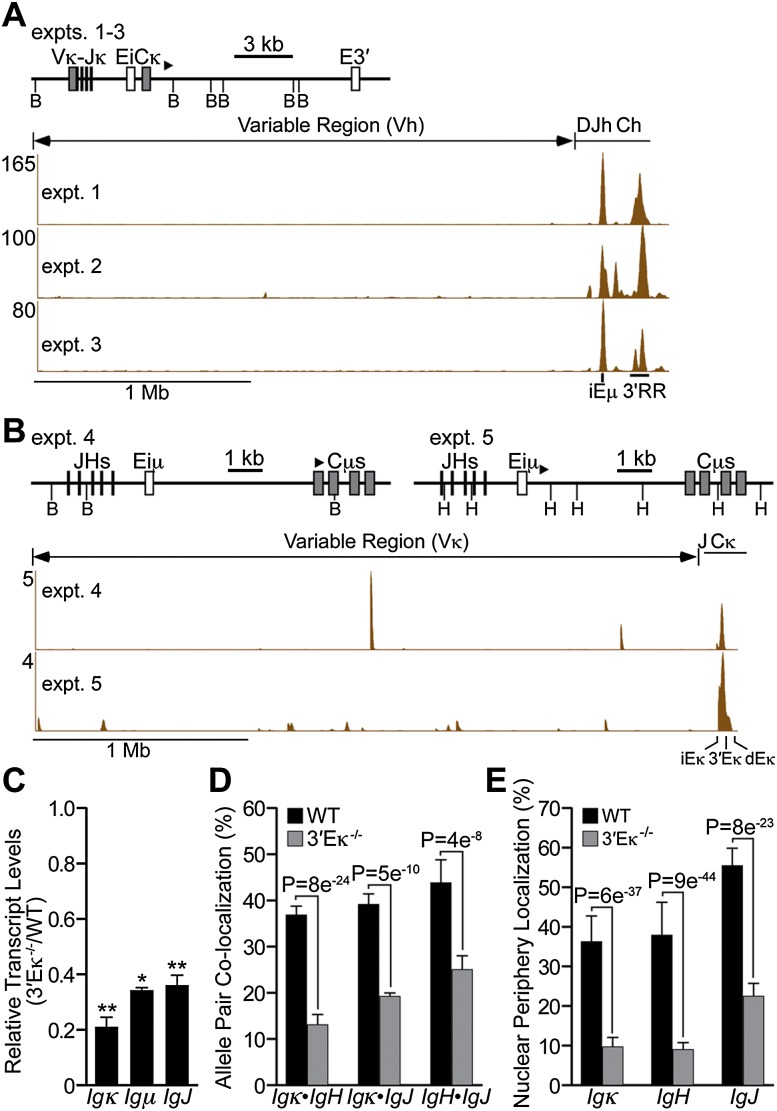
To understand the relationships between nuclear organization and gene expression in a model system, we employed three-dimensional imaging and chromatin immunoprecipitation (ChIP)-chromosome conformation capture (3C) techniques to investigate the topographies of the immunoglobulin (Ig) genes and transcripts during B-cell development. Remarkably, in plasma cells, when antibody synthesis peaks, active Ig genes residing on three different chromosomes exhibit pronounced colocalizations in transcription factories, often near the nuclear periphery, and display trans-chromosomal enhancer interactions, and their transcripts frequently share interchromatin trafficking channels. Conceptually, these features of nuclear organization maximize coordinated transcriptional and transcript trafficking control for potentiating the optimal cytoplasmic assembly of the resulting translation products into protein multimers.
为了在模型系统中理解核组织与基因表达之间的关系,我们采用三维成像和染色质免疫沉淀(ChIP)-染色质构象捕获(3C)技术,研究了 B 细胞发育过程中免疫球蛋白(Ig)基因和转录本的拓扑结构。值得注意的是,在浆细胞中,当抗体合成达到峰值时,位于三条不同染色体上的活性 Ig 基因在转录工厂中表现出明显的共定位,通常靠近核边缘,并显示跨染色体增强子相互作用,它们的转录本经常共享染色质间运输通道。从概念上讲,这些核组织的特征最大化了协调转录和转录物运输控制,以促进翻译产物在细胞质中的最佳组装,形成蛋白质多聚体。