Xia Wentong, Bai Jing, Wu Xingmei, Wei Yi, Feng Shaoyan, Li Lei, Zhang Jia, Xiong Guanxia, Fan Yunping, Shi Jianbo, Li Huabin
Allergy and Cancer Center, Otorhinolarygology Hospital, The First Affiliated Hospital of Sun Yat-sen University, Guangzhou, China; Department of Otolaryngology, Head and Neck Surgery, Xinhua Hospital, Shanghai Jiaotong University School of Medicine, Shanghai, China.
Allergy and Cancer Center, Otorhinolarygology Hospital, The First Affiliated Hospital of Sun Yat-sen University, Guangzhou, China.
PLoS One. 2014 Jun 3;9(6):e98915. doi: 10.1371/journal.pone.0098915. eCollection 2014.
Recent studies demonstrated that nasal polyps (NP) patients in China and other Asian regions possessed distinct Th17-dominant inflammation and enhanced tissue remodeling. However, the mechanism underlying these observations is not fully understood. This study sought to evaluate the association of interleukin (IL)-17A with MUC5AC expression and goblet cell hyperplasia in Chinese NP patients and to characterize the signaling pathway underlying IL-17A-induced MUC5AC expression in vitro.
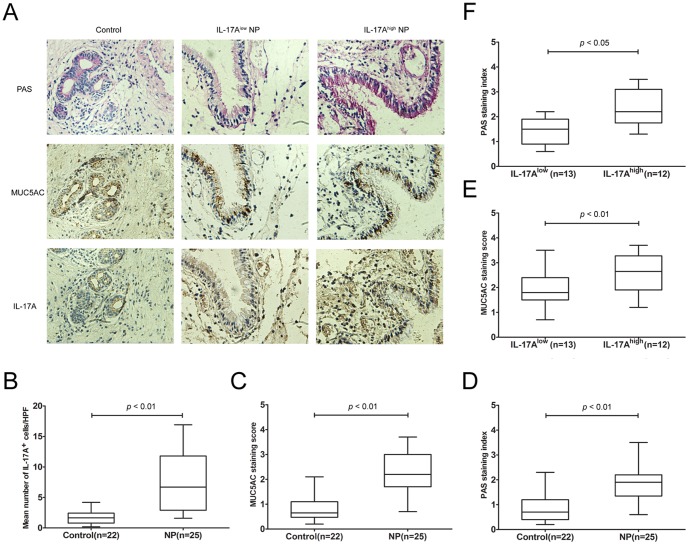
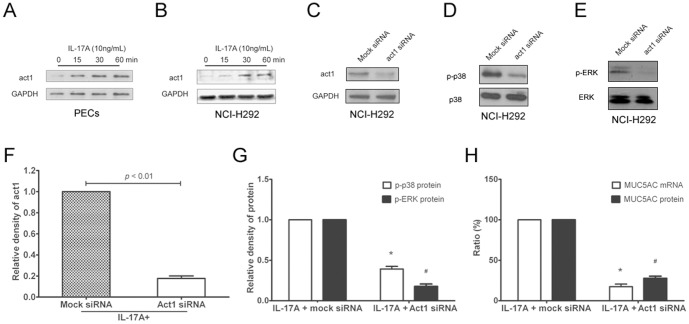
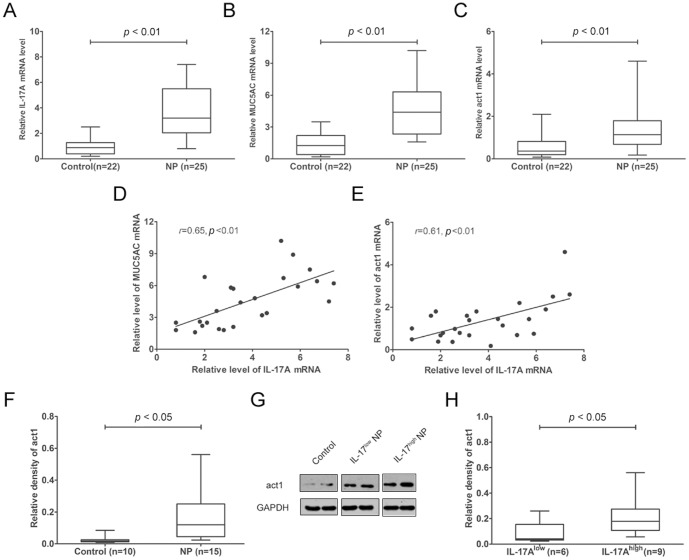
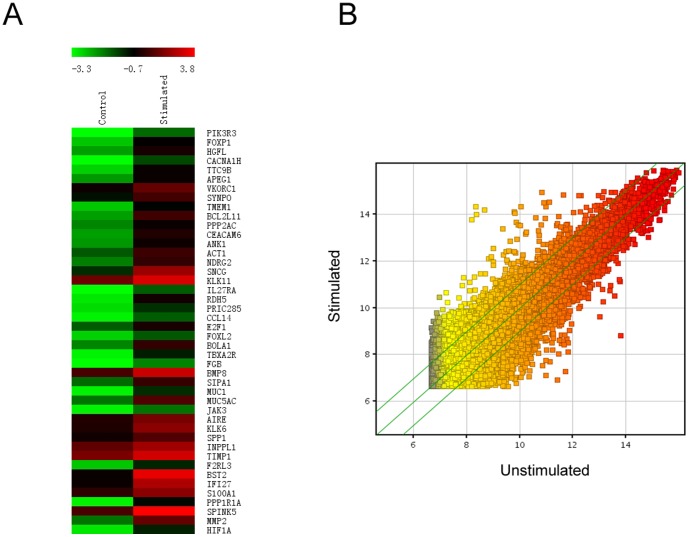
We enrolled 25 NP patients and 22 normal controls and examined the expression of IL-17A, MUC5AC and act1 in polyp tissues by immunohistochemical (IHC) staining, quantitative polymerase chain reaction (qPCR) and western blot. Moreover, by using an in vitro culture system of polyp epithelial cells (PECs), IL-17A-induced gene expression was screened in cultured PECs by DNA microarray. The expression of IL-17RA, IL-17RC, act1 and MUC5AC and the activation of the MAPK pathway (ERK, p38 and JNK), were further examined in cultured PECs and NCI-H292 cells by qPCR and western blotting, respectively.
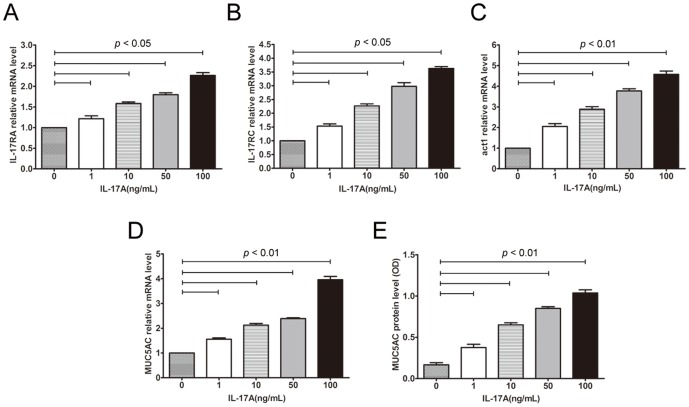
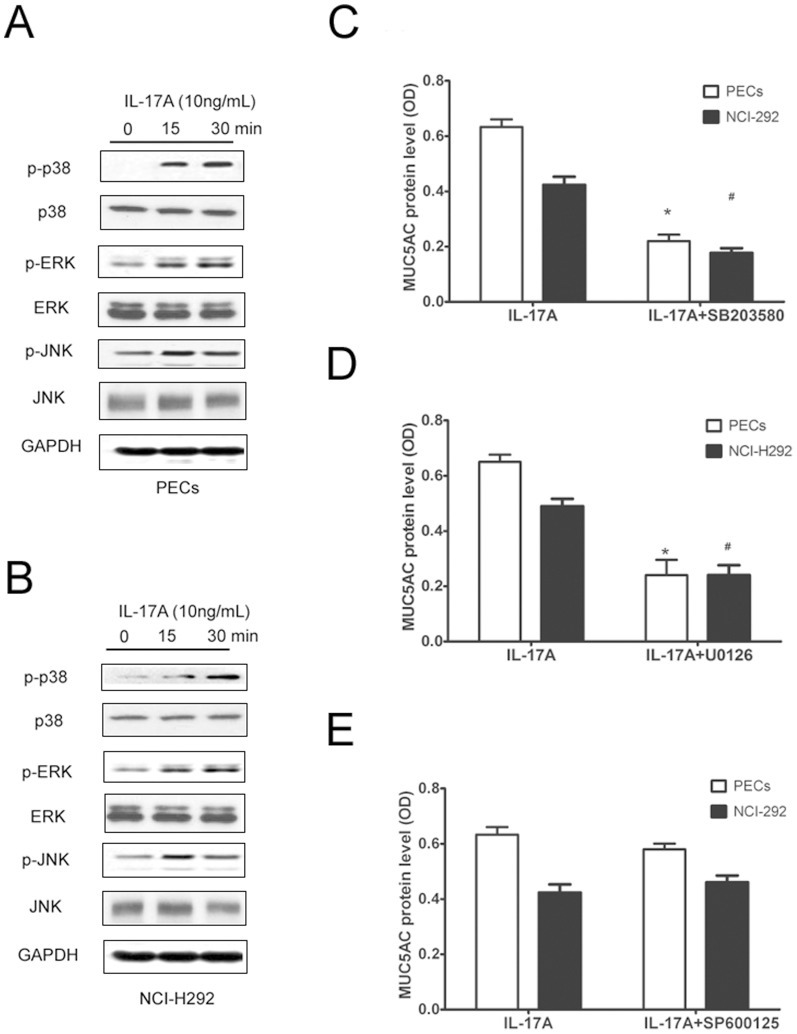
We found that increased IL-17A production was significantly correlated with MUC5AC and act1 expression and goblet cell hyperplasia in polyp tissues (p<0.05). IL-17A significantly stimulated the expression of IL-17RA, IL-17RC, act1 and MUC5AC, and the activation of the MAPK pathway in cultured PECs and NCI-H292 cells (p<0.05). In addition, IL-17RA, IL-17RC and act1 siRNA significantly blocked IL-17A-induced MUC5AC production in vitro (p<0.05).
Our results suggest that IL-17A plays a crucial role in stimulating the production of MUC5AC and goblet cell hyperplasia through the act1-mediated signaling pathway and may suggest a promising strategy for the management of Th17-dominant NP patients.
近期研究表明,中国及其他亚洲地区的鼻息肉(NP)患者存在明显的以Th17为主导的炎症反应及增强的组织重塑。然而,这些现象背后的机制尚未完全明确。本研究旨在评估白细胞介素(IL)-17A与中国NP患者中MUC5AC表达及杯状细胞增生的相关性,并在体外阐明IL-17A诱导MUC5AC表达的信号通路。
我们招募了25例NP患者和22例正常对照,通过免疫组织化学(IHC)染色、定量聚合酶链反应(qPCR)和蛋白质印迹法检测息肉组织中IL-17A、MUC5AC和act1的表达。此外,利用息肉上皮细胞(PEC)的体外培养系统,通过DNA微阵列筛选培养的PEC中IL-17A诱导的基因表达。分别通过qPCR和蛋白质印迹法进一步检测培养的PEC和NCI-H292细胞中IL-17RA、IL-17RC、act1和MUC5AC的表达以及丝裂原活化蛋白激酶(MAPK)通路(ERK、p38和JNK)的激活情况。
我们发现息肉组织中IL-17A产生增加与MUC5AC和act1表达及杯状细胞增生显著相关(p<0.05)。IL-17A显著刺激培养的PEC和NCI-H292细胞中IL-17RA、IL-17RC、act1和MUC5AC的表达以及MAPK通路的激活(p<0.05)。此外,IL-17RA、IL-17RC和act1的小干扰RNA(siRNA)在体外显著阻断IL-17A诱导的MUC5AC产生(p<0.05)。
我们的结果表明,IL-17A通过act1介导的信号通路在刺激MUC5AC产生和杯状细胞增生中起关键作用,这可能为Th17主导的NP患者的治疗提供一种有前景的策略。