Li Siying, Wang Wenjuan, Niu Ting, Wang Hui, Li Bin, Shao Lei, Lai Yimu, Li Huanjie, Janicki Joseph S, Wang Xing Li, Tang Dongqi, Cui Taixing
Shandong University Qilu Hospital Research Center for Cell Therapy, Key Laboratory of Cardiovascular Remodeling and Function Research, Qilu Hospital of Shandong University, Jinan 250012, China ; Department of Cell Biology and Anatomy, University of South Carolina, School of Medicine, Columbia, SC 29208, USA.
Shandong University Qilu Hospital Research Center for Cell Therapy, Key Laboratory of Cardiovascular Remodeling and Function Research, Qilu Hospital of Shandong University, Jinan 250012, China.
Oxid Med Cell Longev. 2014;2014:748524. doi: 10.1155/2014/748524. Epub 2014 May 6.
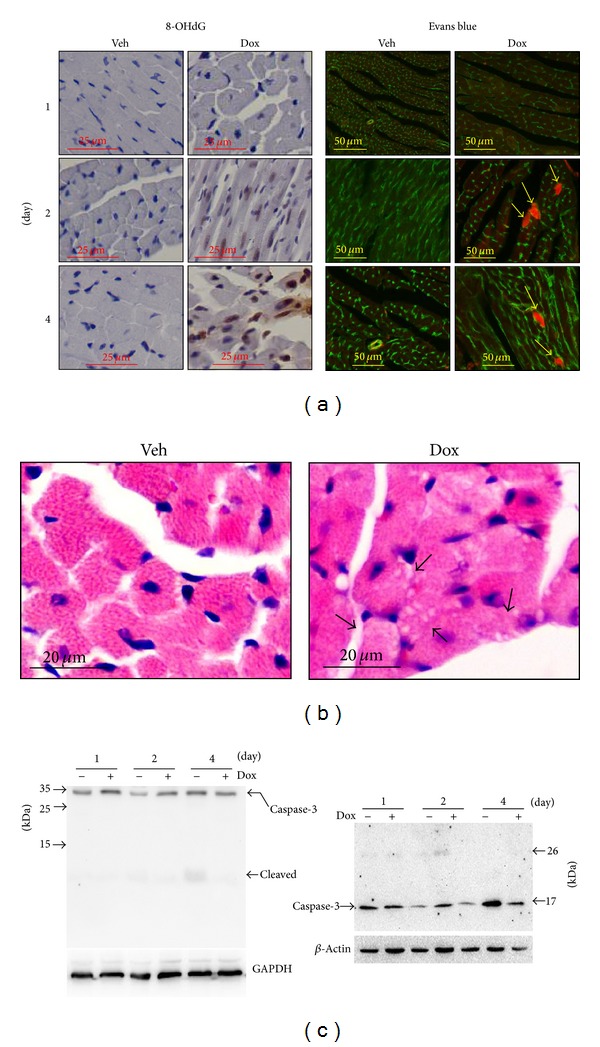
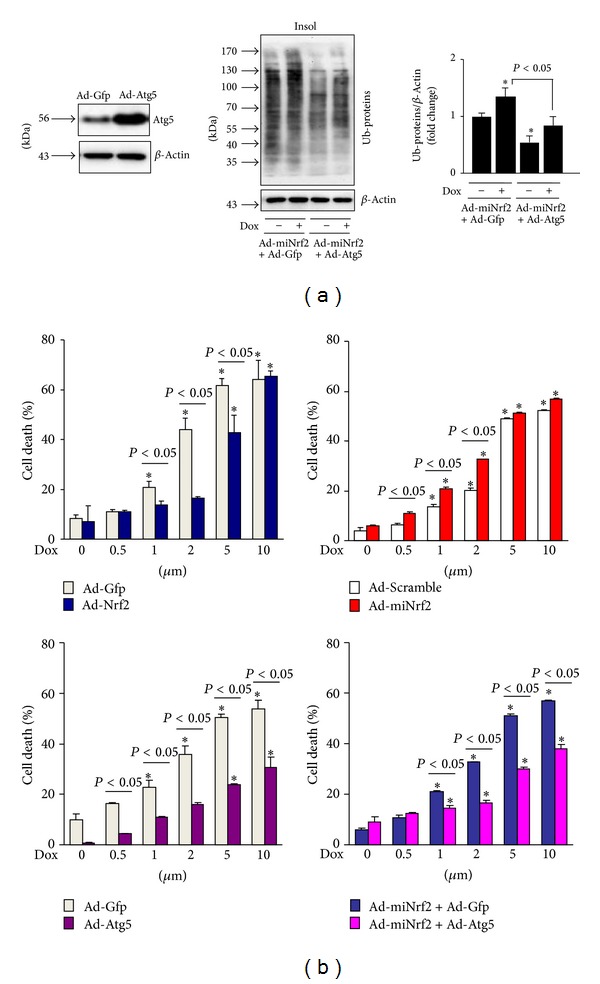
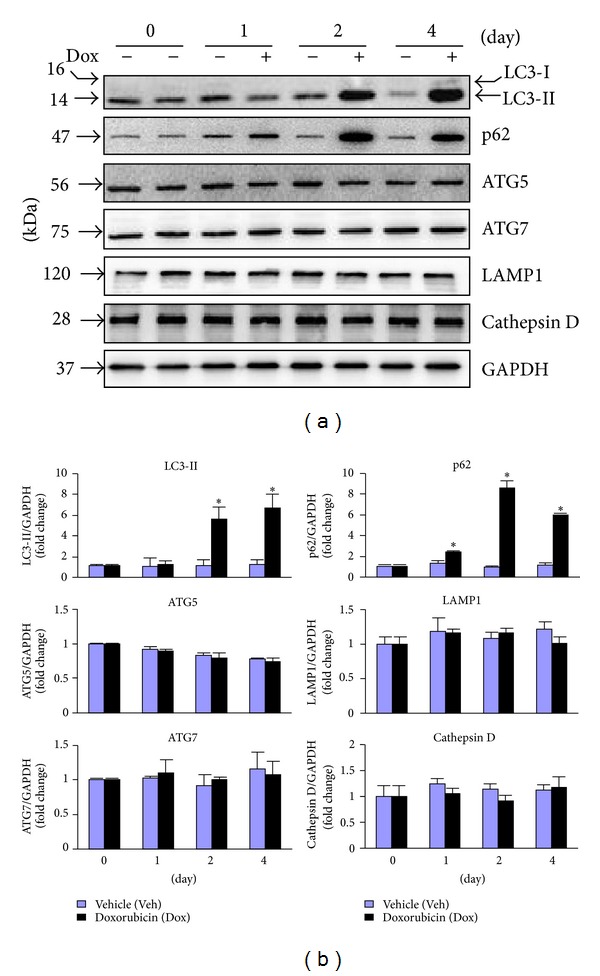
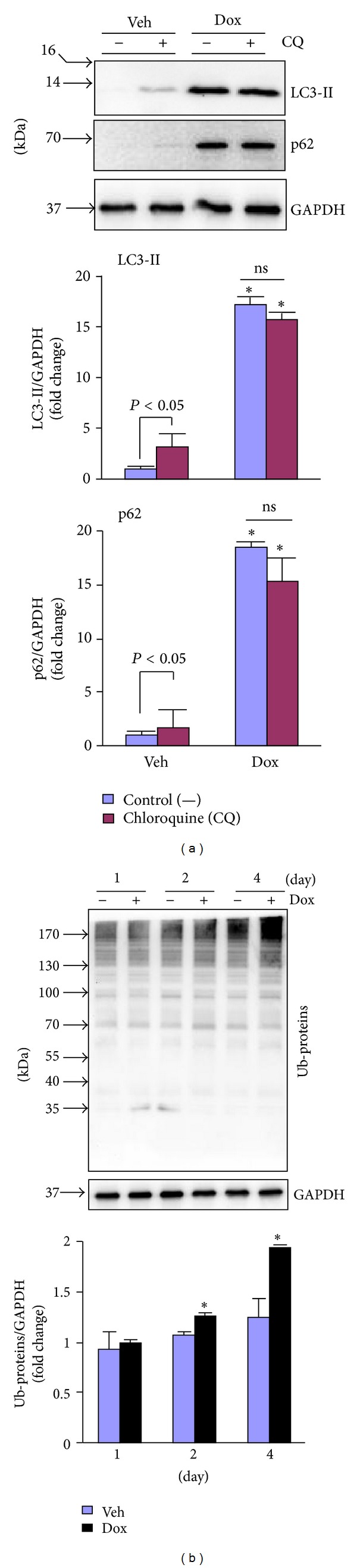
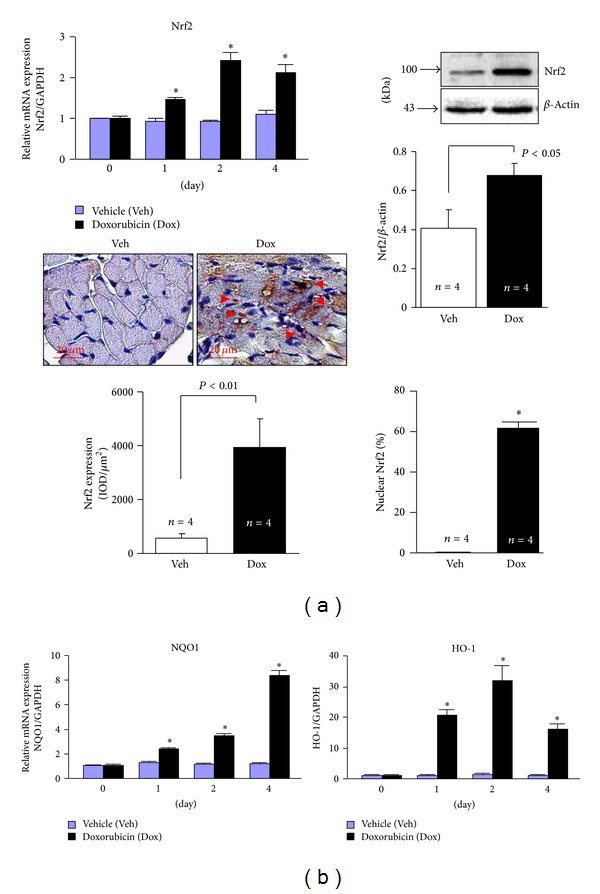
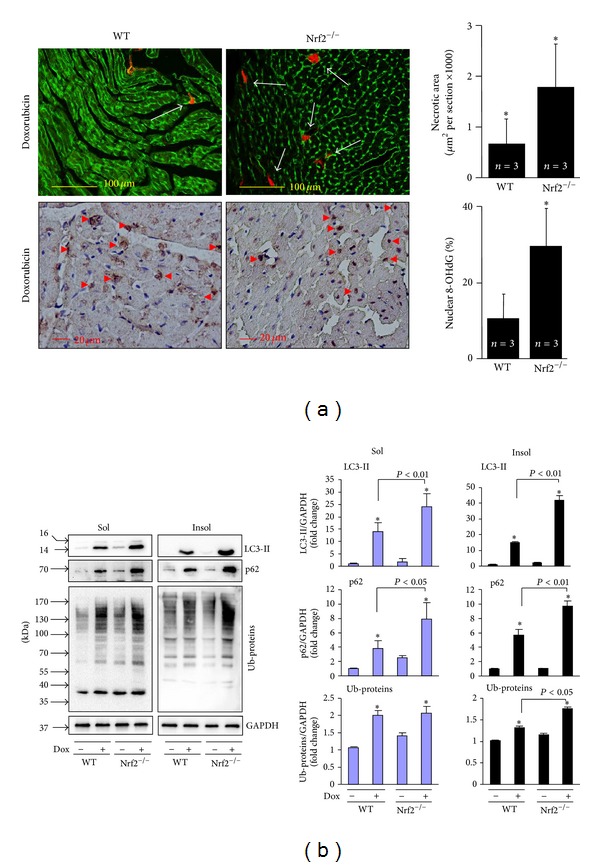
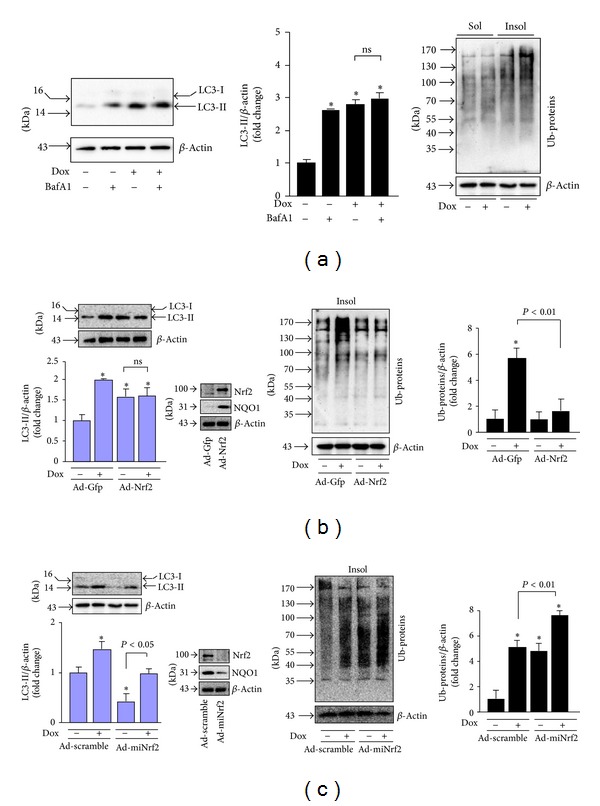
The anticancer therapy of doxorubicin (Dox) has been limited by its acute and chronic cardiotoxicity. In addition to a causative role of oxidative stress, autophagy appears to play an important role in the regulation of Dox-induced cardiotoxicity. However, the underlying mechanisms remain unclear. Accordingly, we explored a role of nuclear factor erythroid-2 related factor 2 (Nrf2) in Dox-induced cardiomyopathy with a focus on myocardial oxidative stress and autophagic activity. In wild type (WT) mice, a single intraperitoneal injection of 25 mg/kg Dox rapidly induced cardiomyocyte necrosis and cardiac dysfunction, which were associated with oxidative stress, impaired autophagy, and accumulated polyubiquitinated protein aggregates. However, these Dox-induced adverse effects were exaggerated in Nrf2 knockout (Nrf2(-/-)) mice. In cultured cardiomyocytes, overexpression of Nrf2 increased the steady levels of LC3-II, ameliorated Dox-induced impairment of autophagic flux and accumulation of ubiquitinated protein aggregates, and suppressed Dox-induced cytotoxicity, whereas knockdown of Nrf2 exerted opposite effects. Moreover, the exaggerated adverse effects in Dox-intoxicated Nrf2 depleted cardiomyocytes were dramatically attenuated by forced activation of autophagy via overexpression of autophagy related gene 5 (Atg5). Thus, these results suggest that Nrf2 is likely an endogenous suppressor of Dox-induced cardiotoxicity by controlling both oxidative stress and autophagy in the heart.
阿霉素(Dox)的抗癌治疗因急性和慢性心脏毒性而受到限制。除了氧化应激的致病作用外,自噬似乎在Dox诱导的心脏毒性调节中起重要作用。然而,其潜在机制仍不清楚。因此,我们探讨了核因子红细胞2相关因子2(Nrf2)在Dox诱导的心肌病中的作用,重点是心肌氧化应激和自噬活性。在野生型(WT)小鼠中,单次腹腔注射25mg/kg Dox可迅速诱导心肌细胞坏死和心脏功能障碍,这与氧化应激、自噬受损和多聚泛素化蛋白聚集体积累有关。然而,这些Dox诱导的不良反应在Nrf2基因敲除(Nrf2(-/-))小鼠中更为严重。在培养的心肌细胞中,Nrf2的过表达增加了LC3-II的稳定水平,改善了Dox诱导的自噬通量受损和泛素化蛋白聚集体的积累,并抑制了Dox诱导的细胞毒性,而敲低Nrf2则产生相反的效果。此外,通过自噬相关基因5(Atg5)的过表达强制激活自噬,可显著减轻Dox中毒的Nrf2缺失心肌细胞中夸大的不良反应。因此,这些结果表明,Nrf2可能是通过控制心脏中的氧化应激和自噬来抑制Dox诱导的心脏毒性的内源性因子。