Structural Biology & Bioinformatics Division, CSIR- Indian Institute of Chemical Biology, 4, Raja S, C, Mullick Road, Kolkata 700032, India.
BMC Genomics. 2014 Jun 4;15(1):430. doi: 10.1186/1471-2164-15-430.
The Firmicutes often possess three conspicuous genome features: marked Purine Asymmetry (PAS) across two strands of replication, Strand-biased Gene Distribution (SGD) and presence of two isoforms of DNA polymerase III alpha subunit, PolC and DnaE. Despite considerable research efforts, it is not clear whether the co-existence of PAS, PolC and/or SGD is an essential and exclusive characteristic of the Firmicutes. The nature of correlations, if any, between these three features within and beyond the lineages of Firmicutes has also remained elusive. The present study has been designed to address these issues.
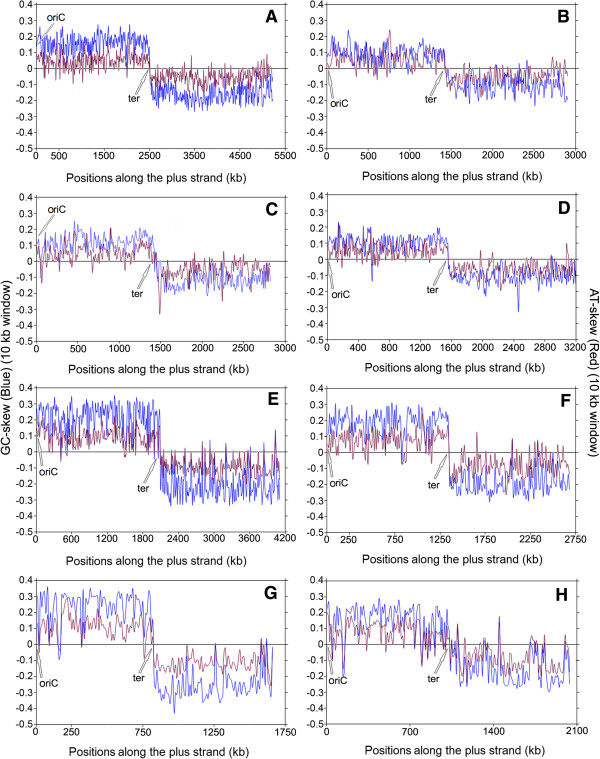
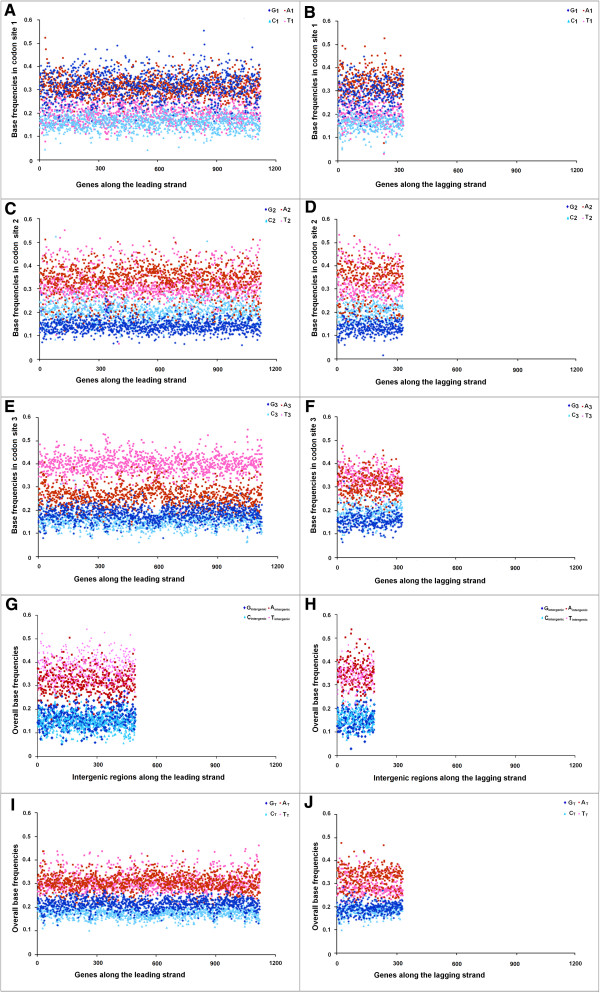
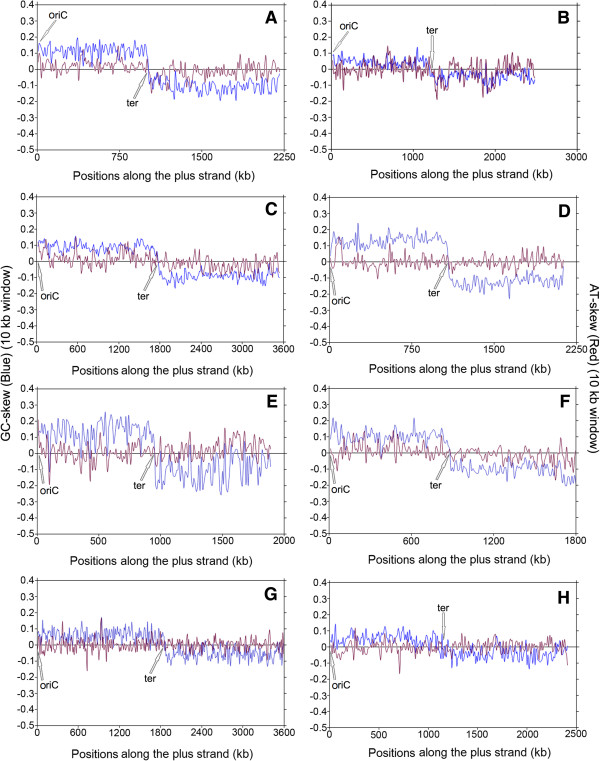
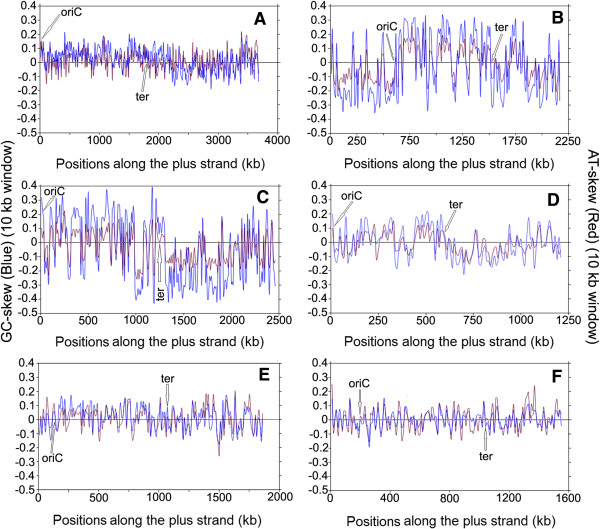
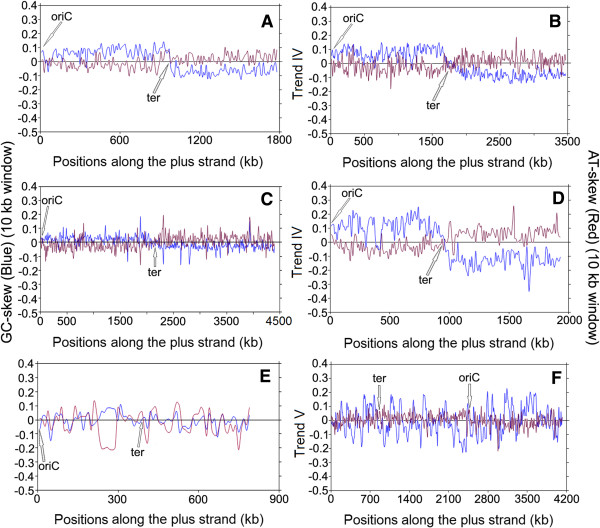
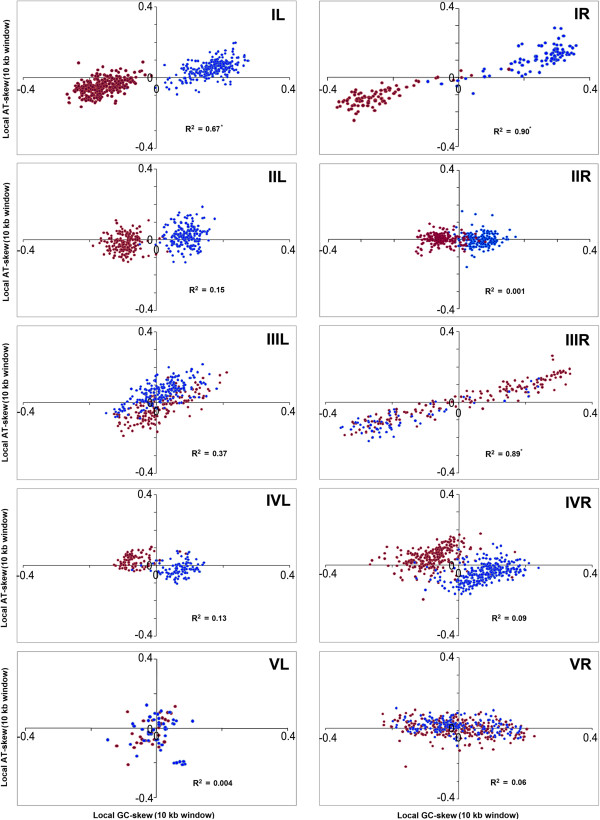
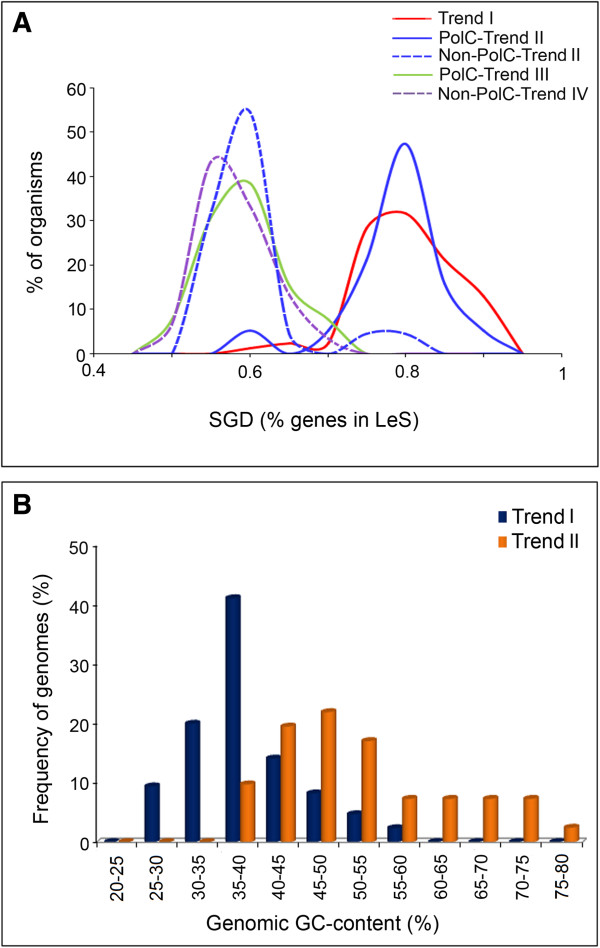
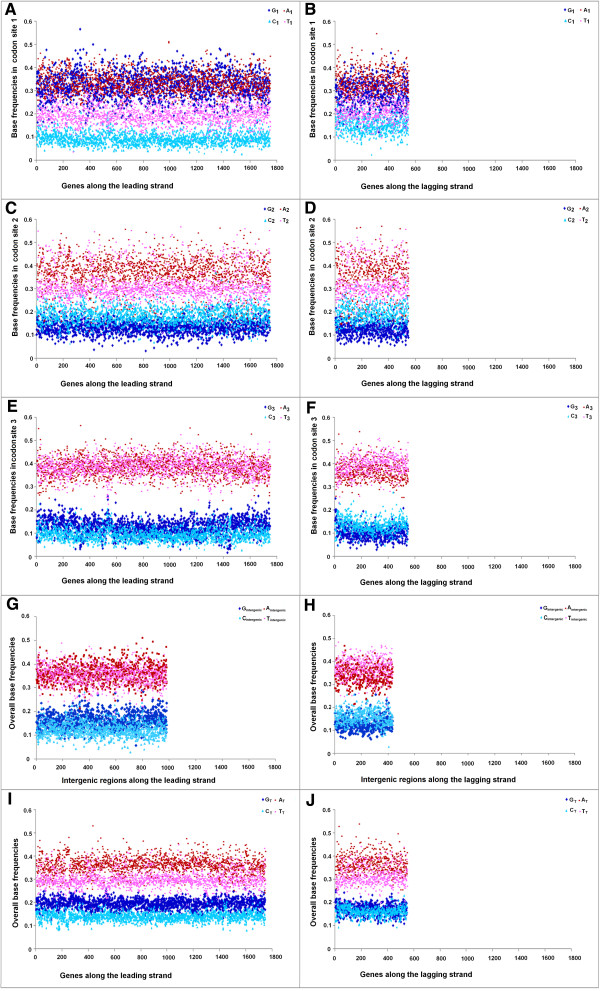
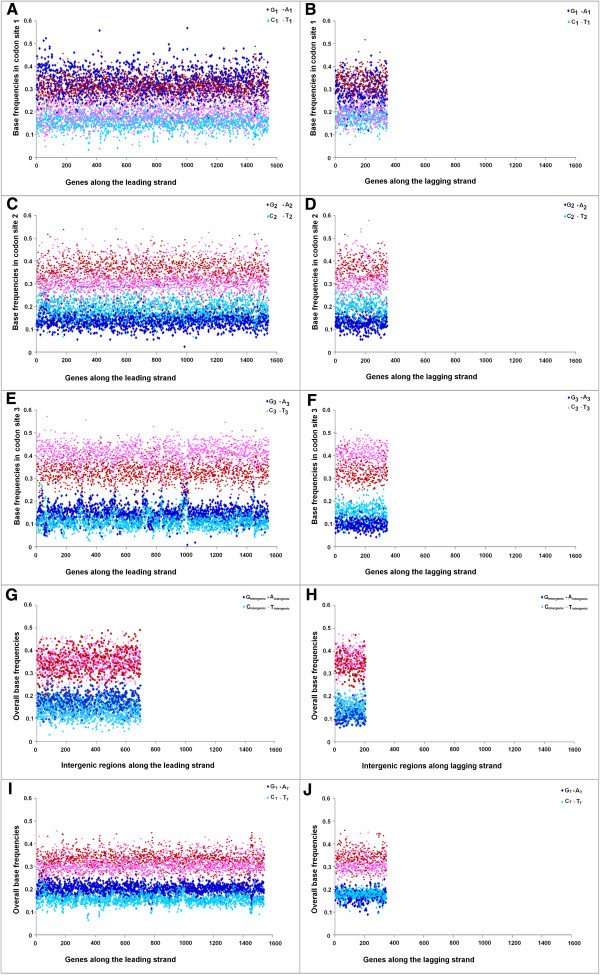
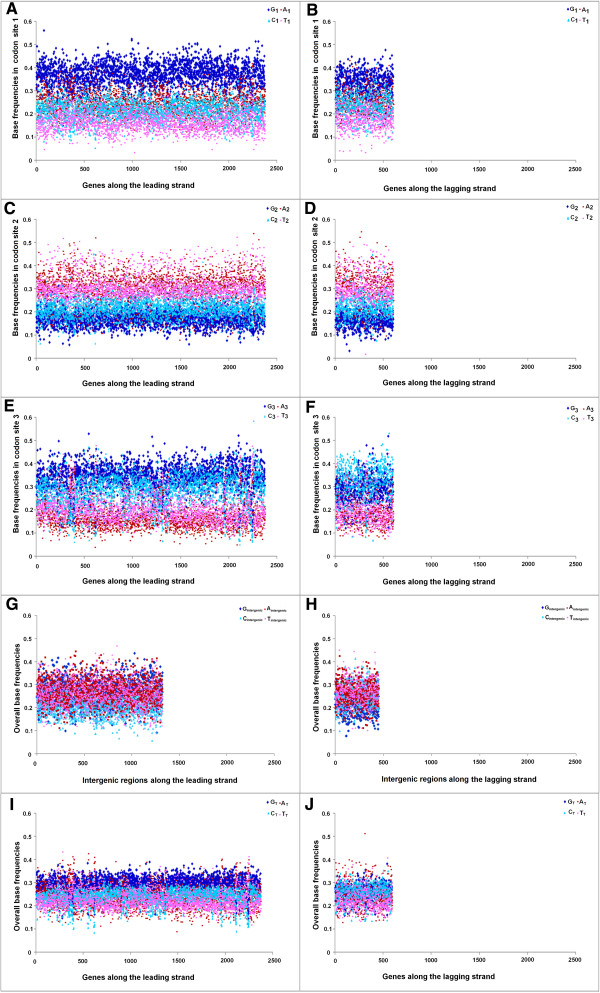
A large-scale analysis of diverse bacterial genomes indicates that PAS, PolC and SGD are neither essential nor exclusive features of the Firmicutes. PolC prevails in four bacterial phyla: Firmicutes, Fusobacteria, Tenericutes and Thermotogae, while PAS occurs only in subsets of Firmicutes, Fusobacteria and Tenericutes. There are five major compositional trends in Firmicutes: (I) an explicit PAS or G + A-dominance along the entire leading strand (II) only G-dominance in the leading strand, (III) alternate stretches of purine-rich and pyrimidine-rich sequences, (IV) G + T dominance along the leading strand, and (V) no identifiable patterns in base usage. Presence of strong SGD has been observed not only in genomes having PAS, but also in genomes with G-dominance along their leading strands - an observation that defies the notion of co-occurrence of PAS and SGD in Firmicutes. The PolC-containing non-Firmicutes organisms often have alternate stretches of R-dominant and Y-dominant sequences along their genomes and most of them show relatively weak, but significant SGD. Firmicutes having G + A-dominance or G-dominance along LeS usually show distinct base usage patterns in three codon sites of genes. Probable molecular mechanisms that might have incurred such usage patterns have been proposed.
Co-occurrence of PAS, strong SGD and PolC should not be regarded as a genome signature of the Firmicutes. Presence of PAS in a species may warrant PolC and strong SGD, but PolC and/or SGD not necessarily implies PAS.
厚壁菌门通常具有三个显著的基因组特征:两条复制链上明显的嘌呤不对称(PAS)、链偏向性基因分布(SGD)以及存在两种 DNA 聚合酶 III α 亚基的同工型,PolC 和 DnaE。尽管已经进行了大量研究,但 PAS、PolC 和/或 SGD 是否共存是厚壁菌门的一个必要且独特的特征尚不清楚。在厚壁菌门的谱系内外,这三个特征之间的相关性的性质也仍然难以捉摸。本研究旨在解决这些问题。
对多种细菌基因组的大规模分析表明,PAS、PolC 和 SGD 既不是厚壁菌门的必要特征,也不是其特有特征。PolC 存在于四个细菌门:厚壁菌门、软壁菌门、无壁菌门和热袍菌门,而 PAS 仅出现在厚壁菌门、软壁菌门和无壁菌门的部分成员中。厚壁菌门有五个主要的组成趋势:(I)在整个前导链上明确的 PAS 或 G+C 优势;(II)前导链上仅 G 优势;(III)嘌呤丰富和嘧啶丰富序列的交替延伸;(IV)前导链上 G+T 优势;(V)碱基使用没有可识别的模式。不仅在具有 PAS 的基因组中,而且在具有前导链上 G 优势的基因组中,都观察到强烈的 SGD 存在,这一观察结果违背了 PAS 和 SGD 在厚壁菌门中共同存在的观点。含有 PolC 的非厚壁菌门生物的基因组中通常存在 R 优势和 Y 优势序列的交替延伸,它们中的大多数表现出相对较弱但显著的 SGD。在前导链上具有 G+C 优势或 G 优势的厚壁菌门通常在前导链上的三个密码子位点表现出明显不同的碱基使用模式。提出了可能导致这种使用模式的可能的分子机制。
PAS、强 SGD 和 PolC 的共同存在不应被视为厚壁菌门的基因组特征。在一个物种中存在 PAS 可能需要 PolC 和强 SGD,但 PolC 和/或 SGD 不一定意味着 PAS。