Hecimovich Mark D, Styles Irene, Volet Simone E
School of Psychology and Exercise Science, Murdoch University, South Street, Murdoch 6150, Western Australia.
BMC Res Notes. 2014 Jun 4;7:338. doi: 10.1186/1756-0500-7-338.
Health professionals in athletic training, chiropractic, osteopathy, and physiotherapy fields, require high-level knowledge and skills in their assessment and management of patients. This is important when communicating with patients and applying a range of manual procedures. Prior to embarking on professional practice, it is imperative to acquire optimal situation-specific levels of self-confidence for a beginner practitioner in these areas. In order to foster this professional self-confidence within the higher education context, it is necessary to have valid and reliable scales that can measure and track levels and how they change. This study reports on the development and psychometric analysis of two new scales, Patient Communication Confidence Scale (PCCS) and the Clinical Skills Confidence Scale (CSCS), to measure confidence in these two areas for students in manual medicine programs. The Rasch measurement model was used to guide the development of the scales and establish their psychometric properties.
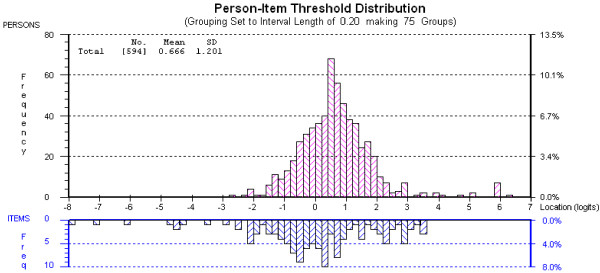
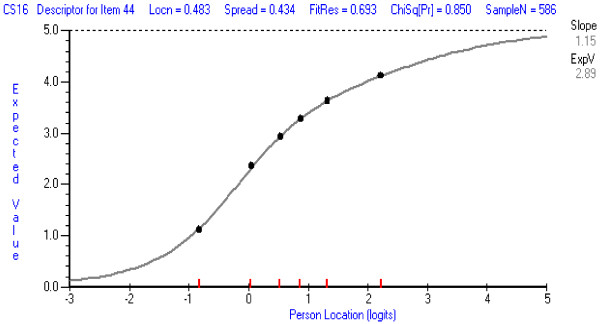
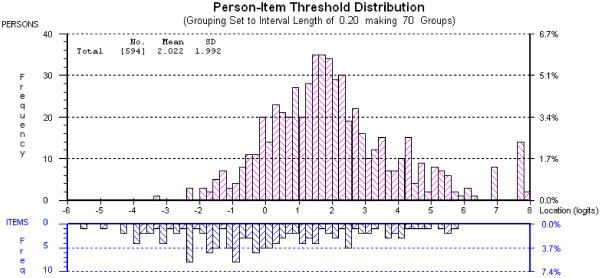
The responses to 269 returned questionnaires over two occasions were submitted to psychometric analysis, with various aspects of the scales examined including: item thresholds; item fit; Differential Item Functioning; targeting; item locations; item dependencies; and reliability. To provide further evidence of validity, scores were correlated with two existing valid scales.
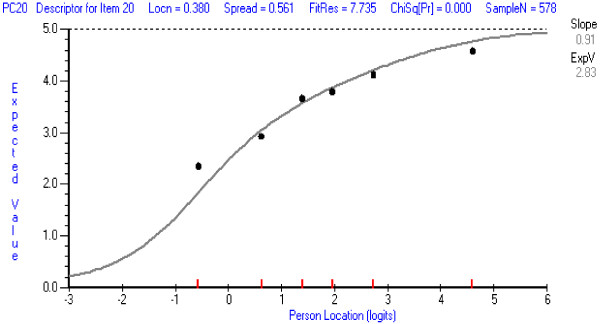
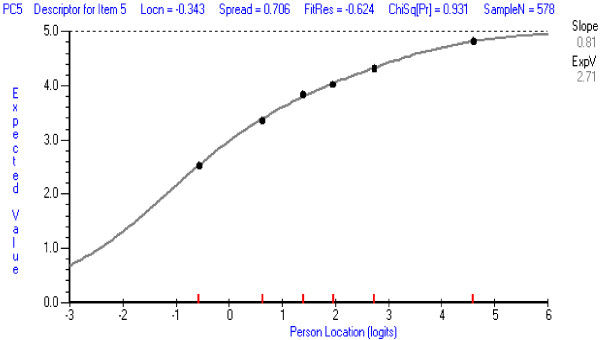
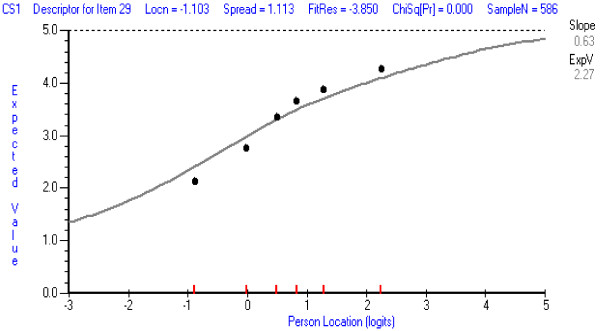
Analyses showed that the scales provided valid and reliable measures of confidence for this sample of persons. High Person Separation Indices (0.96 for PCCS; 0.93 for SCSC) provided statistical evidence of reliability, meaning the scales are able to discriminate amongst persons with different levels of confidence. For the PCCS, item categories were operating as required, and for the CSCS only two items' thresholds were slightly disordered. Three tests of fit revealed good fit to the model (indicating the internal consistency of both scales) and results of the correlations with two existing valid scales were consistent with expectations.
The importance of confidence cannot be overlooked in health education because students learning new information and skills, and dealing with challenging situations can be negatively impacted by a lack of confidence which can result in students disengaging from placements or leaving a program. Valid and reliable instruments are essential in tracking change in levels of confidence in specific skills over time and the examination of the degree of congruence between confidence and competence. Analysis of responses to the two confidence scales established that they are valid and reliable instruments.
运动训练、整脊疗法、骨疗法和物理治疗领域的健康专业人员在对患者进行评估和管理时需要高水平的知识和技能。这在与患者沟通以及应用一系列手法操作时非常重要。在开始专业实践之前,对于这些领域的初学者而言,获得针对特定情况的最佳自信水平至关重要。为了在高等教育背景下培养这种专业自信,需要有有效且可靠的量表来测量和跟踪自信水平及其变化情况。本研究报告了两种新量表——患者沟通自信量表(PCCS)和临床技能自信量表(CSCS)的开发及心理测量分析,以测量手法医学专业学生在这两个领域的自信程度。采用拉施测量模型来指导量表的开发并确定其心理测量特性。
对两次回收的269份问卷的回答进行心理测量分析,检查量表的各个方面,包括:项目阈值;项目拟合度;项目功能差异;目标定位;项目位置;项目依赖性;以及信度。为了提供有效性的进一步证据,将分数与两个现有的有效量表进行相关性分析。
分析表明,这些量表为该样本人群提供了有效且可靠的自信测量方法。较高的个人分离指数(PCCS为0.96;SCSC为0.93)提供了可靠性的统计证据,这意味着量表能够区分不同自信水平的人。对于PCCS,项目类别按要求运行,对于CSCS,只有两个项目的阈值略有紊乱。三次拟合检验表明与模型拟合良好(表明两个量表的内部一致性),并且与两个现有有效量表的相关性结果符合预期。
在健康教育中,自信的重要性不容忽视,因为学习新信息和技能以及应对具有挑战性情况的学生可能会因缺乏自信而受到负面影响,这可能导致学生放弃实习或退出课程。有效且可靠的工具对于跟踪特定技能自信水平随时间的变化以及检查自信与能力之间的一致程度至关重要。对两个自信量表回答的分析表明它们是有效且可靠的工具。