Zhong Meigong, Zheng Kai, Chen Maoyun, Xiang Yangfei, Jin Fujun, Ma Kaiqi, Qiu Xianxiu, Wang Qiaoli, Peng Tao, Kitazato Kaio, Wang Yifei
Guangzhou Jinan Biomedicine Research and Development Center, National Engineering Research Center of Genetic Medicine, Jinan University, Guangzhou, PR China; College of Pharmacy, Jinan University, Guangzhou, PR China.
Guangzhou Jinan Biomedicine Research and Development Center, National Engineering Research Center of Genetic Medicine, Jinan University, Guangzhou, PR China.
PLoS One. 2014 Jun 5;9(6):e99425. doi: 10.1371/journal.pone.0099425. eCollection 2014.
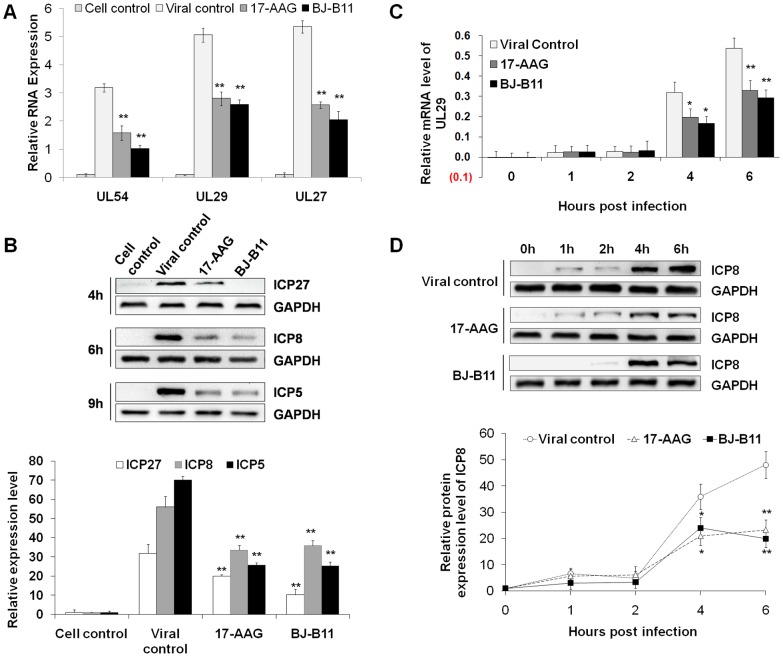
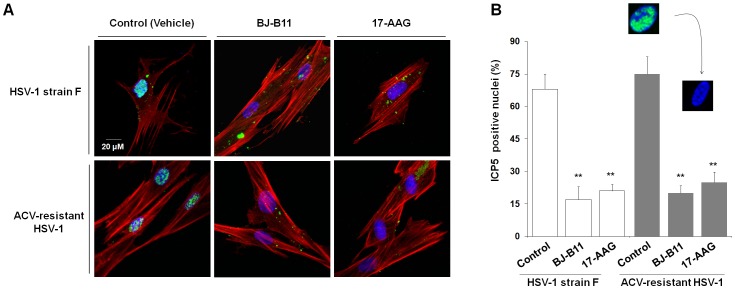
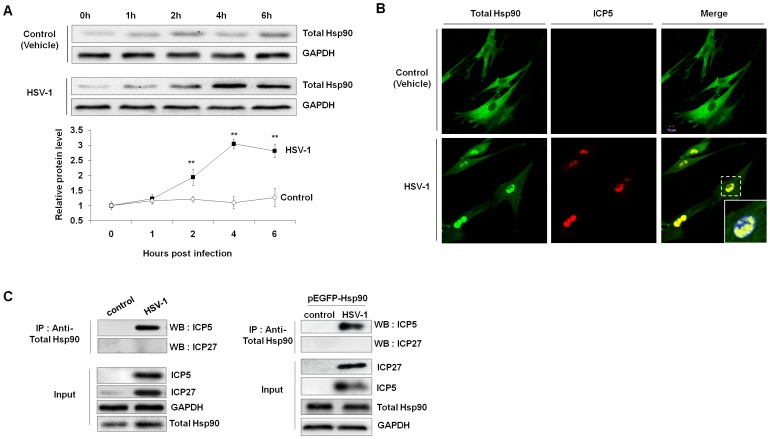
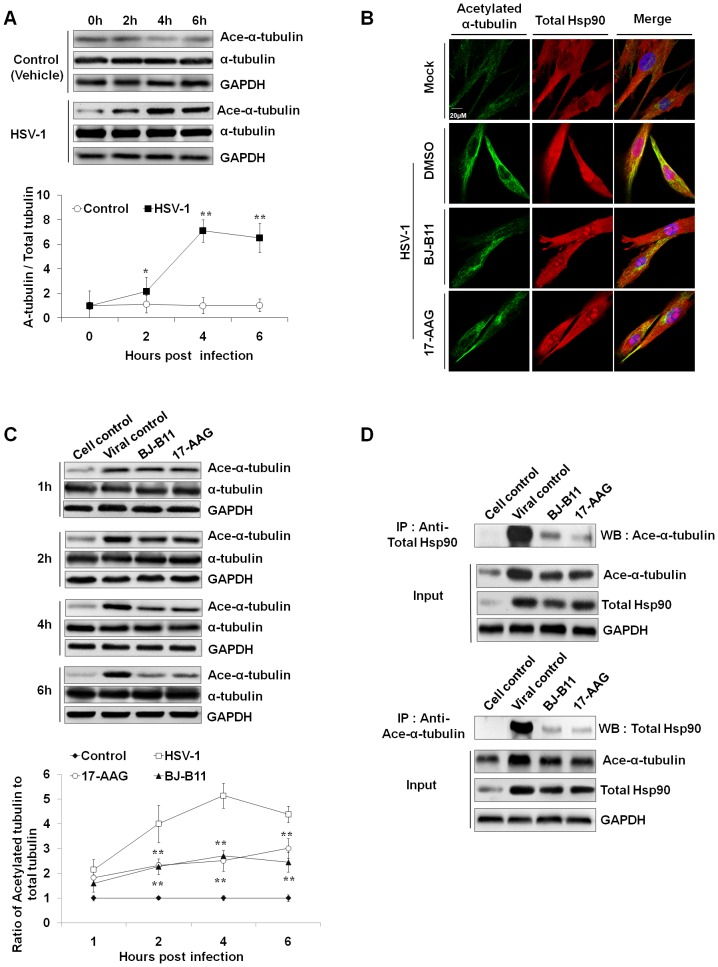
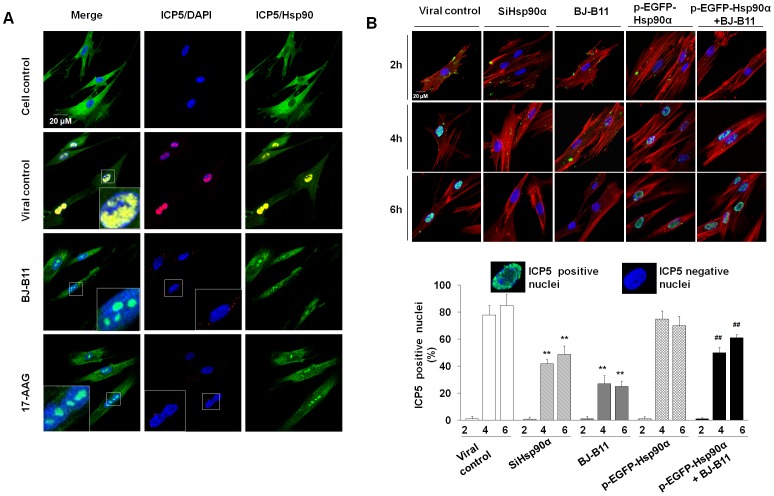
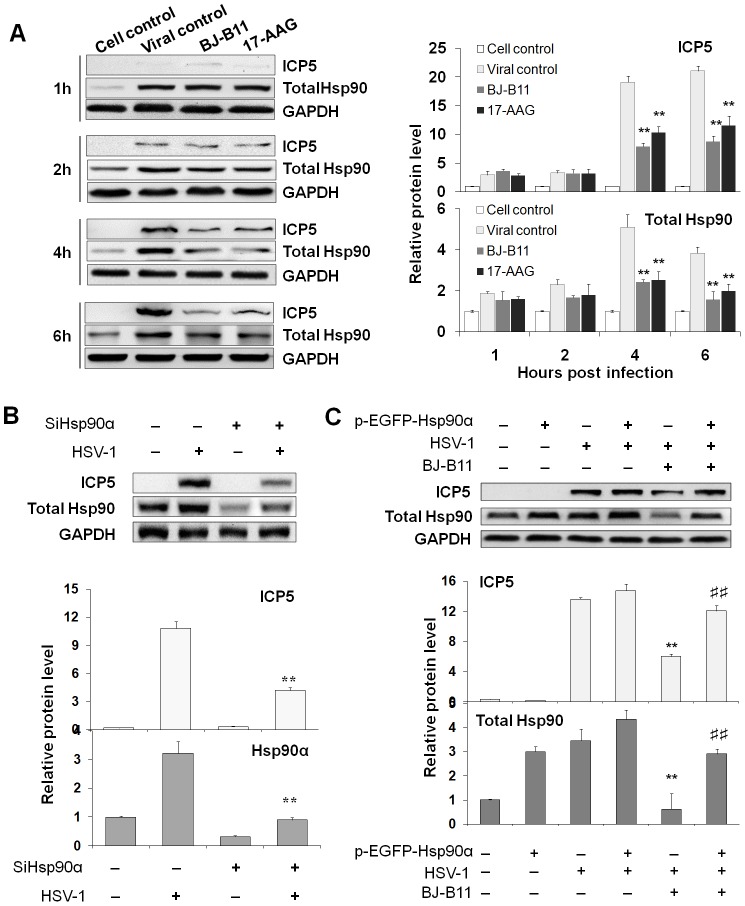
Although it is known that inhibitors of heat shock protein 90 (Hsp90) can inhibit herpes simplex virus type 1 (HSV-1) infection, the role of Hsp90 in HSV-1 entry and the antiviral mechanisms of Hsp90 inhibitors remain unclear. In this study, we found that Hsp90 inhibitors have potent antiviral activity against standard or drug-resistant HSV-1 strains and viral gene and protein synthesis are inhibited in an early phase. More detailed studies demonstrated that Hsp90 is upregulated by virus entry and it interacts with virus. Hsp90 knockdown by siRNA or treatment with Hsp90 inhibitors significantly inhibited the nuclear transport of viral capsid protein (ICP5) at the early stage of HSV-1 infection. In contrast, overexpression of Hsp90 restored the nuclear transport that was prevented by the Hsp90 inhibitors, suggesting that Hsp90 is required for nuclear transport of viral capsid protein. Furthermore, HSV-1 infection enhanced acetylation of α-tubulin and Hsp90 interacted with the acetylated α-tubulin, which is suppressed by Hsp90 inhibition. These results demonstrate that Hsp90, by interacting with acetylated α-tubulin, plays a crucial role in viral capsid protein nuclear transport and may provide novel insight into the role of Hsp90 in HSV-1 infection and offer a promising strategy to overcome drug-resistance.
虽然已知热休克蛋白90(Hsp90)抑制剂可抑制1型单纯疱疹病毒(HSV-1)感染,但Hsp90在HSV-1进入过程中的作用以及Hsp90抑制剂的抗病毒机制仍不清楚。在本研究中,我们发现Hsp90抑制剂对标准或耐药HSV-1毒株具有强大的抗病毒活性,且在早期阶段可抑制病毒基因和蛋白质合成。更详细的研究表明,病毒进入可使Hsp90上调,且它与病毒相互作用。在HSV-1感染早期,通过小干扰RNA(siRNA)敲低Hsp90或用Hsp90抑制剂处理可显著抑制病毒衣壳蛋白(ICP5)的核转运。相反,Hsp90的过表达恢复了被Hsp90抑制剂阻断的核转运,这表明病毒衣壳蛋白的核转运需要Hsp90。此外,HSV-1感染增强了α-微管蛋白的乙酰化,且Hsp90与乙酰化的α-微管蛋白相互作用,而这种相互作用会被Hsp90抑制所抑制。这些结果表明,Hsp90通过与乙酰化的α-微管蛋白相互作用,在病毒衣壳蛋白的核转运中起关键作用,可能为深入了解Hsp90在HSV-1感染中的作用提供新线索,并为克服耐药性提供一种有前景的策略。