Brea Johanni, Urbanczik Robert, Senn Walter
Department of Physiology, University of Bern, Bern, Switzerland.
Department of Physiology and Center for Cognition, Learning and Memory, University of Bern, Bern, Switzerland.
PLoS Comput Biol. 2014 Jun 5;10(6):e1003640. doi: 10.1371/journal.pcbi.1003640. eCollection 2014 Jun.
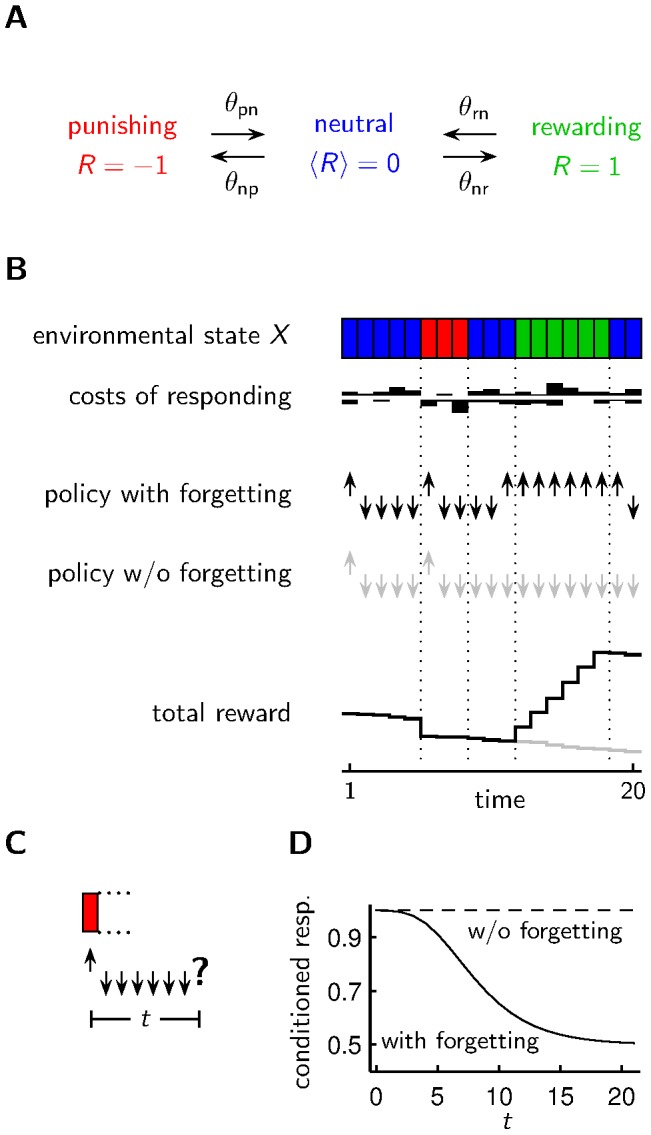
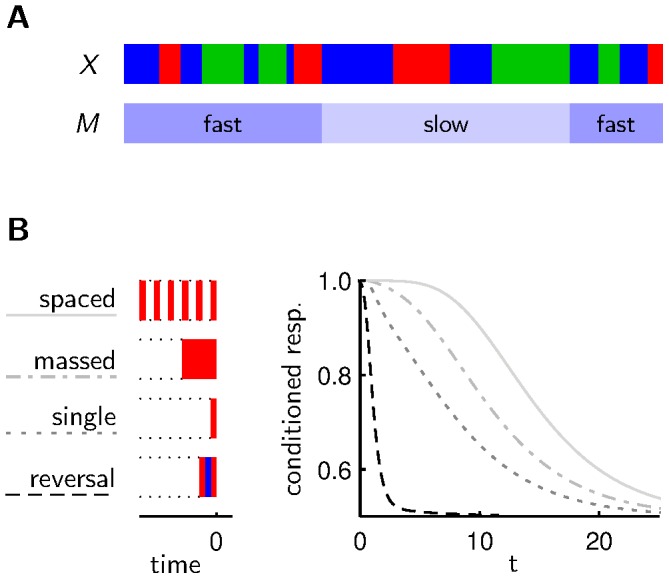
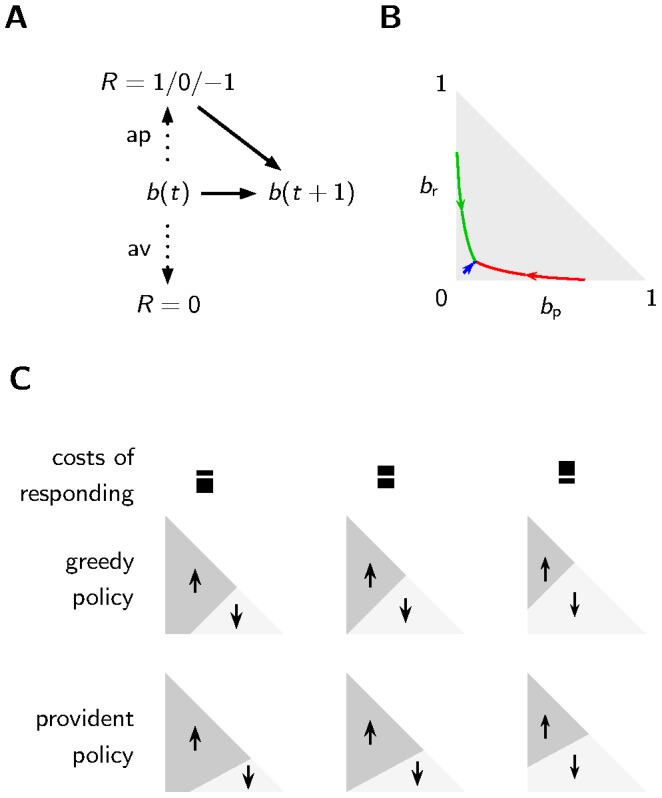
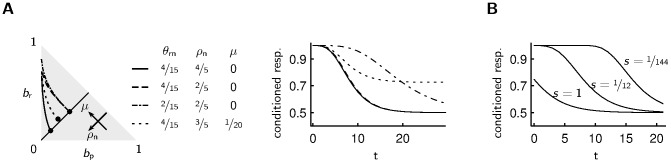
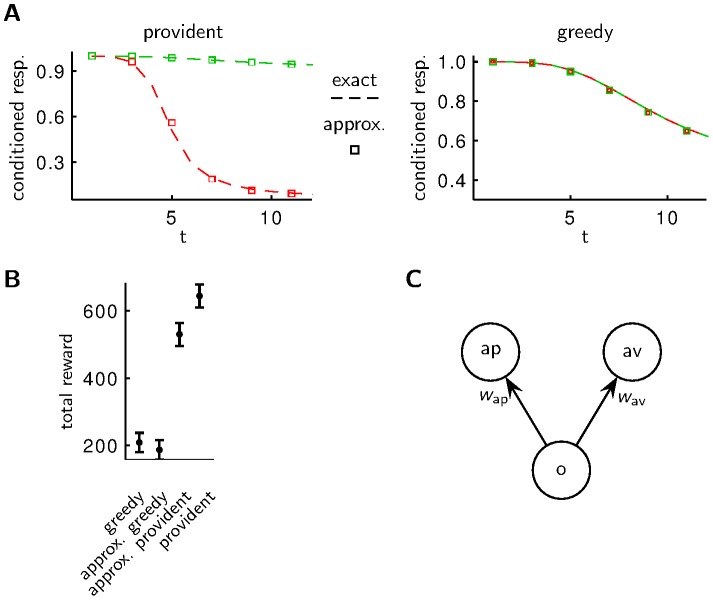
Recent experiments revealed that the fruit fly Drosophila melanogaster has a dedicated mechanism for forgetting: blocking the G-protein Rac leads to slower and activating Rac to faster forgetting. This active form of forgetting lacks a satisfactory functional explanation. We investigated optimal decision making for an agent adapting to a stochastic environment where a stimulus may switch between being indicative of reward or punishment. Like Drosophila, an optimal agent shows forgetting with a rate that is linked to the time scale of changes in the environment. Moreover, to reduce the odds of missing future reward, an optimal agent may trade the risk of immediate pain for information gain and thus forget faster after aversive conditioning. A simple neuronal network reproduces these features. Our theory shows that forgetting in Drosophila appears as an optimal adaptive behavior in a changing environment. This is in line with the view that forgetting is adaptive rather than a consequence of limitations of the memory system.
最近的实验表明,果蝇具有一种专门的遗忘机制:阻断G蛋白Rac会导致遗忘变慢,而激活Rac则会加快遗忘。这种主动遗忘的形式缺乏令人满意的功能解释。我们研究了一个适应随机环境的智能体的最优决策,在该环境中,一种刺激可能在表示奖励或惩罚之间切换。与果蝇一样,一个最优智能体表现出的遗忘速率与环境变化的时间尺度相关。此外,为了降低错过未来奖励的几率,一个最优智能体可能会用即时痛苦的风险来换取信息增益,从而在厌恶性条件作用后更快地遗忘。一个简单的神经网络再现了这些特征。我们的理论表明,果蝇的遗忘表现为在不断变化的环境中的一种最优适应性行为。这与遗忘是适应性的观点一致,而不是记忆系统局限性的结果。