1] Department of Molecular Medicine, Ewha Womans University School of Medicine, Seoul, Republic of Korea [2] Ewha Global Top 5 Research Program, Ewha Womans University, Seoul, Republic of Korea.
Exp Mol Med. 2014 Jun 6;46(6):e99. doi: 10.1038/emm.2014.38.
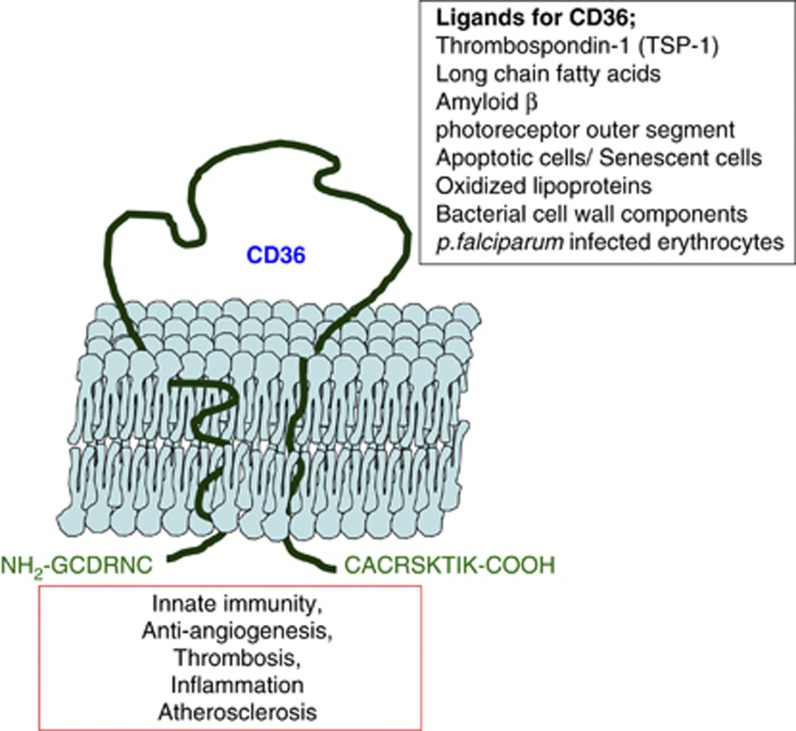
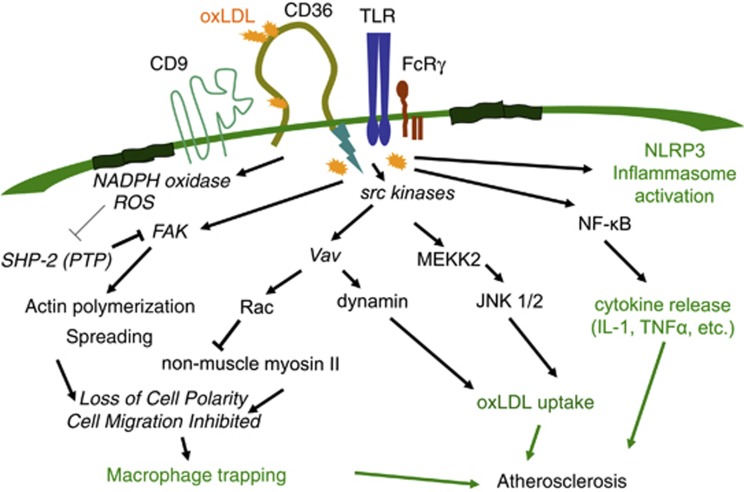
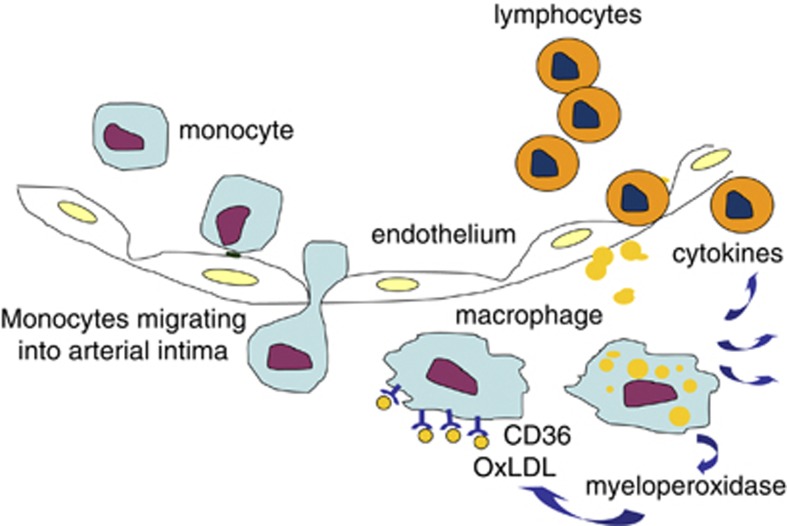
CD36 is a membrane glycoprotein that is present on various types of cells, including monocytes, macrophages, microvascular endothelial cells, adipocytes and platelets. Macrophage CD36 participates in atherosclerotic arterial lesion formation through its interaction with oxidized low-density lipoprotein (oxLDL), which triggers signaling cascades for inflammatory responses. CD36 functions in oxLDL uptake and foam cell formation, which is the initial critical stage of atherosclerosis. In addition, oxLDL via CD36 inhibits macrophage migration, which may be a macrophage-trapping mechanism in atherosclerotic lesions. The role of CD36 was examined in in vitro studies and in vivo experiments, which investigated various functions of CD36 in atherosclerosis and revealed that CD36 deficiency reduces atherosclerotic lesion formation. Platelet CD36 also promotes atherosclerotic inflammatory processes and is involved in thrombus formation after atherosclerotic plaque rupture. Because CD36 is an essential component of atherosclerosis, defining the function of CD36 and its corresponding signaling pathway may lead to a new treatment strategy for atherosclerosis.
CD36 是一种膜糖蛋白,存在于多种细胞上,包括单核细胞、巨噬细胞、微血管内皮细胞、脂肪细胞和血小板。巨噬细胞 CD36 通过与氧化型低密度脂蛋白(oxLDL)相互作用参与动脉粥样硬化性动脉损伤的形成,该相互作用引发炎症反应的信号级联反应。CD36 参与 oxLDL 的摄取和泡沫细胞形成,这是动脉粥样硬化的初始关键阶段。此外,oxLDL 通过 CD36 抑制巨噬细胞迁移,这可能是动脉粥样硬化病变中的巨噬细胞捕获机制。在体外研究和体内实验中研究了 CD36 的作用,这些研究调查了 CD36 在动脉粥样硬化中的各种功能,并表明 CD36 缺乏可减少动脉粥样硬化损伤的形成。血小板 CD36 也促进动脉粥样硬化炎症过程,并参与动脉粥样硬化斑块破裂后的血栓形成。由于 CD36 是动脉粥样硬化的重要组成部分,因此确定 CD36 的功能及其相应的信号通路可能会为动脉粥样硬化提供新的治疗策略。