Department of Psychology, University of Arizona Tucson, AZ, USA.
Department of Psychology, University of Arizona Tucson, AZ, USA ; Cognitive Science Program, University of Arizona Tucson, AZ, USA.
Front Psychol. 2014 May 27;5:482. doi: 10.3389/fpsyg.2014.00482. eCollection 2014.
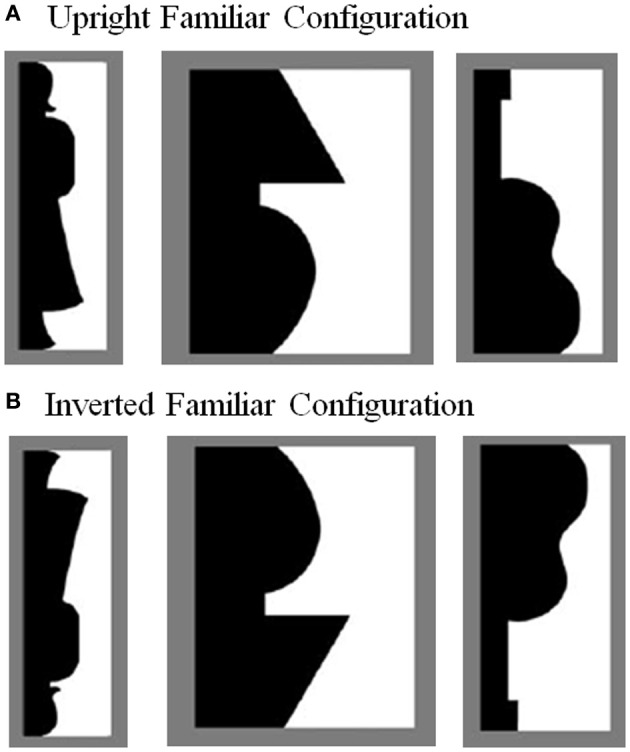
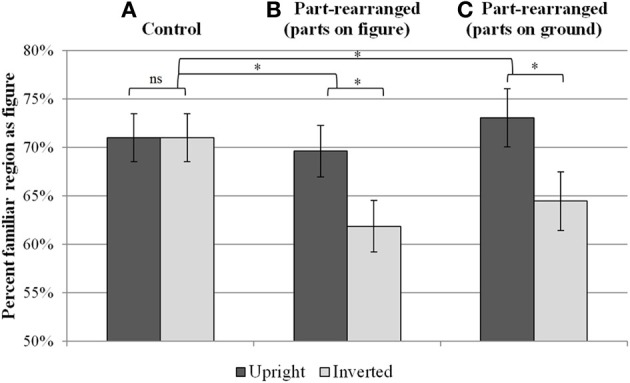
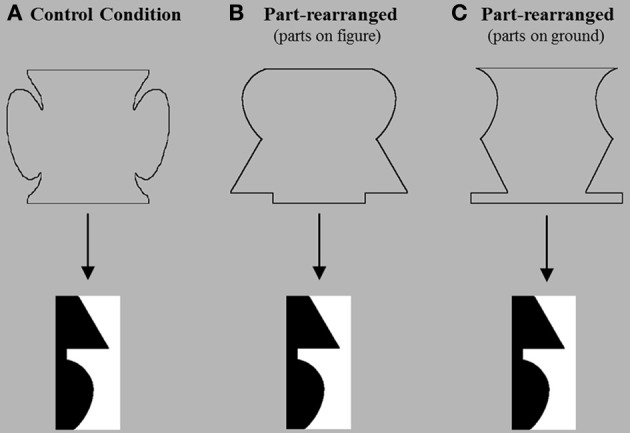
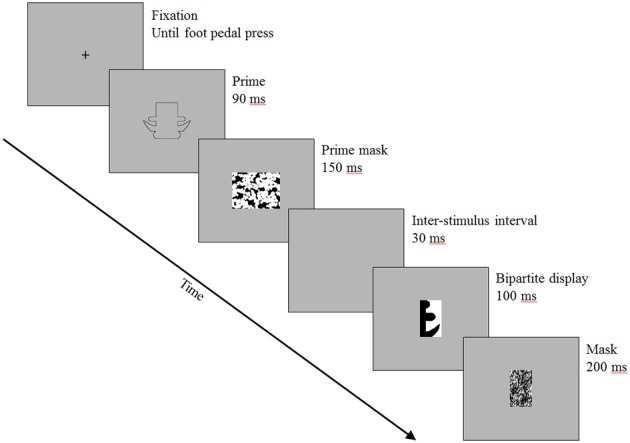
The familiarity of an object depends on the spatial arrangement of its parts; when the parts are spatially rearranged, they form a novel, unrecognizable configuration. Yet the same collection of parts comprises both the familiar and novel configuration. Is it possible that the collection of familiar parts activates a representation of the intact familiar configuration even when they are spatially rearranged? We presented novel configurations as primes before test displays that assayed effects on figure-ground perception from memories of intact familiar objects. In our test displays, two equal-area regions shared a central border; one region depicted a portion of a familiar object. Previous research with such displays has shown that participants are more likely to perceive the region depicting a familiar object as the figure and the abutting region as its ground when the familiar object is depicted in its upright orientation rather than upside down. The novel primes comprised either the same or a different collection of parts as the familiar object in the test display (part-rearranged and control primes, respectively). We found that participants were more likely to perceive the familiar region as figure in upright vs. inverted displays following part-rearranged primes but not control primes. Thus, priming with a novel configuration comprising the same familiar parts as the upcoming figure-ground display facilitated orientation-dependent effects of object memories on figure assignment. Similar results were obtained when the spatially rearranged collection of parts was suggested on the groundside of the prime's border, suggesting that familiar parts in novel configurations access the representation of their corresponding intact whole object before figure assignment. These data demonstrate that familiar parts access memories of familiar objects even when they are arranged in a novel configuration.
物体的熟悉程度取决于其各部分的空间排列;当这些部分在空间上重新排列时,它们就会形成一种新颖的、无法识别的结构。然而,相同的部件集合既构成了熟悉的配置,也构成了新颖的配置。是否有可能,即使部件在空间上重新排列,熟悉部件的集合也会激活完整熟悉配置的表示?我们在测试显示之前呈现新的配置作为启动项,以测试从完整熟悉物体的记忆中对图形-背景感知的影响。在我们的测试显示中,两个相等面积的区域共享一个中央边界;一个区域描绘了一个熟悉物体的一部分。之前使用此类显示的研究表明,当熟悉物体以直立方向而不是倒置方向描绘时,参与者更有可能将描绘熟悉物体的区域视为图形,而将相邻区域视为其背景。新的启动项包括与测试显示中的熟悉物体相同或不同的部件集合(部分重排和控制启动项,分别)。我们发现,参与者在部分重排启动项后,更有可能将熟悉区域视为直立而不是倒置显示中的图形,而不是控制启动项。因此,用与即将到来的图形-背景显示相同的熟悉部件组成的新配置进行启动,促进了对象记忆对图形分配的定向依赖效应。当空间上重新排列的部件集合在启动项边界的地面侧暗示时,也获得了类似的结果,这表明新颖配置中的熟悉部件在进行图形分配之前,会访问其对应完整整体对象的表示。这些数据表明,即使部件以新颖的配置排列,熟悉的部件也可以访问熟悉物体的记忆。