Department of Animal Science, Texas A&M University, College Station, Texas, United States of America.
Department of Veterinary Physiology and Pharmacology, College of Veterinary Medicine & Biomedical Sciences, Texas A&M University, College Station, Texas, United States of America.
PLoS One. 2014 Jun 6;9(6):e98835. doi: 10.1371/journal.pone.0098835. eCollection 2014.
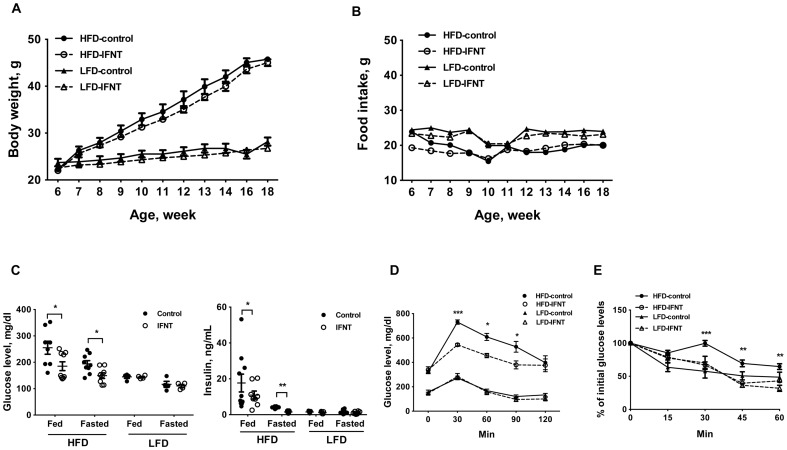
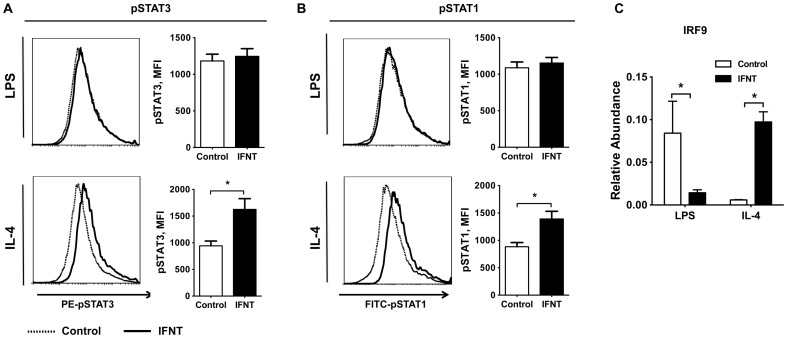
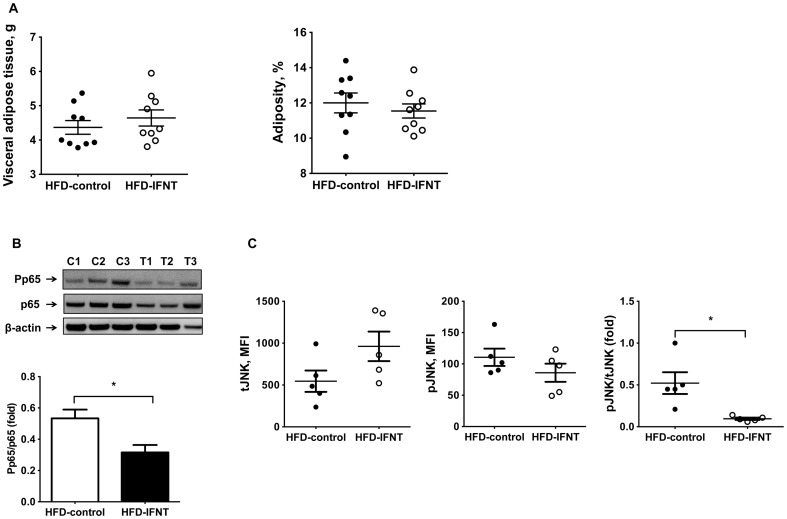
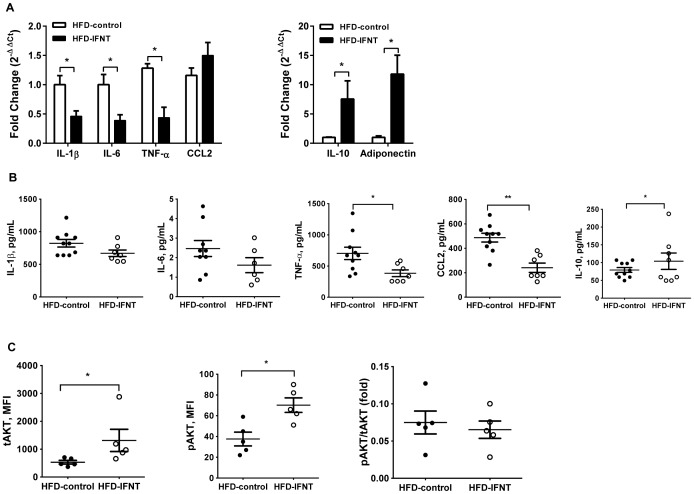
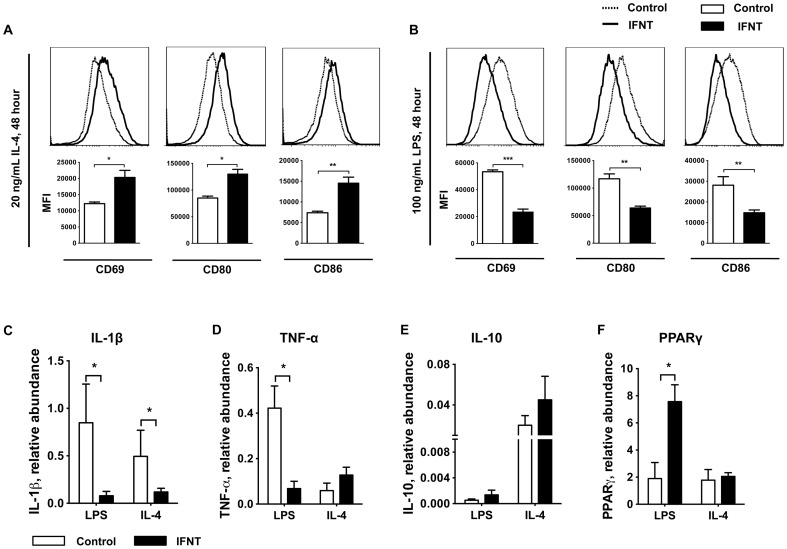
Chronic adipose tissue inflammation is a hallmark of obesity-induced insulin resistance and anti-inflammatory agents can benefit patients with obesity-associated syndromes. Currently available type I interferons for therapeutic immunomodulation are accompanied by high cytotoxicity and therefore in this study we have examined anti-inflammatory effects of interferon tau (IFNT), a member of the type I interferon family with low cellular toxicity even at high doses. Using a diet-induced obesity mouse model, we observed enhanced insulin sensitivity in obese mice administered IFNT compared to control mice, which was accompanied by a significant decrease in secretion of proinflammatory cytokines and elevated anti-inflammatory macrophages (M2) in adipose tissue. Further investigations revealed that IFNT is a potent regulator of macrophage activation that favors anti-inflammatory responses as evidenced by activation of associated surface antigens, production of anti-inflammatory cytokines, and activation of selective cell signaling pathways. Thus, our study demonstrates, for the first time, that IFNT can significantly mitigate obesity-associated systemic insulin resistance and tissue inflammation by controlling macrophage polarization, and thus IFNT can be a novel bio-therapeutic agent for treating obesity-associated syndromes and type 2 diabetes.
慢性脂肪组织炎症是肥胖引起的胰岛素抵抗的标志,抗炎药物可以使肥胖相关综合征患者受益。目前可用于治疗性免疫调节的 I 型干扰素伴随着高细胞毒性,因此在这项研究中,我们研究了 I 型干扰素家族成员干扰素 tau(IFNT)的抗炎作用,IFNT 的细胞毒性低,即使在高剂量下也很低。使用饮食诱导的肥胖小鼠模型,我们观察到与对照组小鼠相比,给予 IFNT 的肥胖小鼠胰岛素敏感性增强,这伴随着脂肪组织中促炎细胞因子分泌的显著减少和抗炎巨噬细胞(M2)的升高。进一步的研究表明,IFNT 是一种有效的巨噬细胞激活调节剂,有利于抗炎反应,这表现在相关表面抗原的激活、抗炎细胞因子的产生和选择性细胞信号通路的激活。因此,我们的研究首次表明,IFNT 通过控制巨噬细胞极化,可显著减轻肥胖相关的全身胰岛素抵抗和组织炎症,因此 IFNT 可以成为治疗肥胖相关综合征和 2 型糖尿病的新型生物治疗剂。