Ibis Biosciences an Abbott Company, 2251 Faraday Ave, Suite 150, Carlsbad, CA 92008, USA.
BMC Genomics. 2014 Jun 6;15(1):443. doi: 10.1186/1471-2164-15-443.
Next-generation sequencing sample preparation requires nanogram to microgram quantities of DNA; however, many relevant samples are comprised of only a few cells. Genomic analysis of these samples requires a whole genome amplification method that is unbiased and free of exogenous DNA contamination. To address these challenges we have developed protocols for the production of DNA-free consumables including reagents and have improved upon multiple displacement amplification (iMDA).
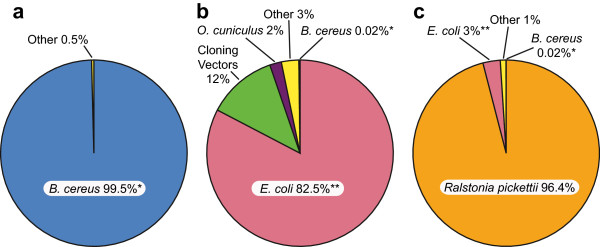
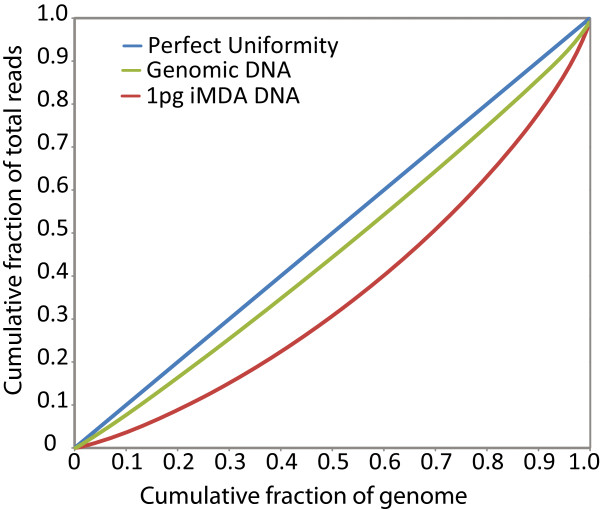
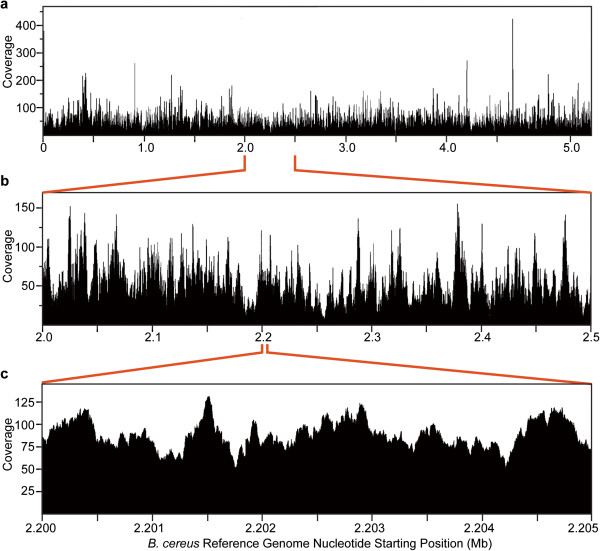
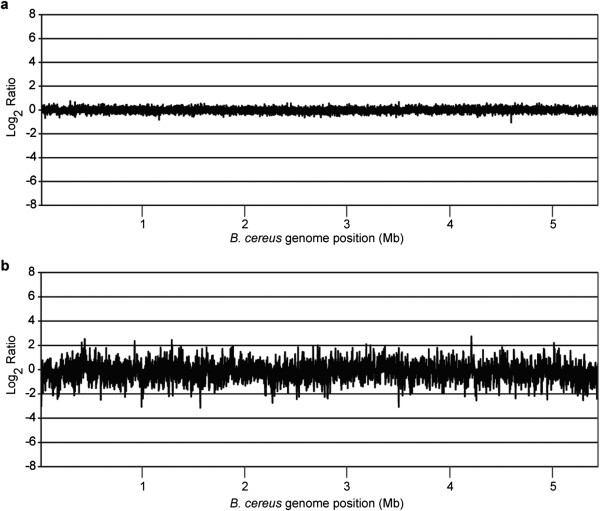
A specialized ethylene oxide treatment was developed that renders free DNA and DNA present within Gram positive bacterial cells undetectable by qPCR. To reduce DNA contamination in amplification reagents, a combination of ion exchange chromatography, filtration, and lot testing protocols were developed. Our multiple displacement amplification protocol employs a second strand-displacing DNA polymerase, improved buffers, improved reaction conditions and DNA free reagents. The iMDA protocol, when used in combination with DNA-free laboratory consumables and reagents, significantly improved efficiency and accuracy of amplification and sequencing of specimens with moderate to low levels of DNA. The sensitivity and specificity of sequencing of amplified DNA prepared using iMDA was compared to that of DNA obtained with two commercial whole genome amplification kits using 10 fg (~1-2 bacterial cells worth) of bacterial genomic DNA as a template. Analysis showed >99% of the iMDA reads mapped to the template organism whereas only 0.02% of the reads from the commercial kits mapped to the template. To assess the ability of iMDA to achieve balanced genomic coverage, a non-stochastic amount of bacterial genomic DNA (1 pg) was amplified and sequenced, and data obtained were compared to sequencing data obtained directly from genomic DNA. The iMDA DNA and genomic DNA sequencing had comparable coverage 99.98% of the reference genome at ≥1X coverage and 99.9% at ≥5X coverage while maintaining both balance and representation of the genome.
The iMDA protocol in combination with DNA-free laboratory consumables, significantly improved the ability to sequence specimens with low levels of DNA. iMDA has broad utility in metagenomics, diagnostics, ancient DNA analysis, pre-implantation embryo screening, single-cell genomics, whole genome sequencing of unculturable organisms, and forensic applications for both human and microbial targets.
下一代测序的样品制备需要纳克到微克数量的 DNA;然而,许多相关的样品仅由几个细胞组成。这些样品的基因组分析需要一种无偏倚且无外源 DNA 污染的全基因组扩增方法。为了解决这些挑战,我们开发了生产无 DNA 消耗品的方案,包括试剂,并改进了多次置换扩增(iMDA)。
开发了一种特殊的环氧乙烷处理方法,使游离 DNA 和革兰氏阳性细菌细胞内的 DNA 无法通过 qPCR 检测。为了减少扩增试剂中的 DNA 污染,开发了离子交换色谱、过滤和批次测试方案的组合。我们的多次置换扩增方案采用了第二种链置换 DNA 聚合酶、改进的缓冲液、改进的反应条件和无 DNA 试剂。当 iMDA 方案与无 DNA 实验室消耗品和试剂结合使用时,显著提高了中等至低水平 DNA 样品的扩增和测序效率和准确性。使用 iMDA 制备的扩增 DNA 的测序灵敏度和特异性与两种商用全基因组扩增试剂盒获得的 DNA 进行了比较,模板为 10 fg(~1-2 个细菌细胞的含量)细菌基因组 DNA。分析表明,超过 99%的 iMDA 读数与模板生物匹配,而商业试剂盒的读数只有 0.02%与模板匹配。为了评估 iMDA 实现平衡基因组覆盖的能力,用非随机数量的细菌基因组 DNA(1 pg)进行扩增和测序,并将获得的数据与直接从基因组 DNA 获得的测序数据进行比较。iMDA DNA 和基因组 DNA 测序在≥1X 覆盖度时,参考基因组的覆盖率为 99.98%,在≥5X 覆盖度时为 99.9%,同时保持基因组的平衡和代表性。
iMDA 方案与无 DNA 实验室消耗品相结合,显著提高了低水平 DNA 样品的测序能力。iMDA 在宏基因组学、诊断、古 DNA 分析、植入前胚胎筛选、单细胞基因组学、不可培养生物的全基因组测序以及人类和微生物靶标的法医应用中具有广泛的用途。