Ojakaa David, Olango Susan, Jarvis Jordan
AMREF Kenya, Wilson Airport, Langata Road, PO Box 30125, Nairobi, Kenya.
Hum Resour Health. 2014 Jun 6;12:33. doi: 10.1186/1478-4491-12-33.
The World Health Organization (WHO) and the Government of Kenya alike identify a well-performing health workforce as key to attaining better health. Nevertheless, the motivation and retention of health care workers (HCWs) persist as challenges. This study investigated factors influencing motivation and retention of HCWs at primary health care facilities in three different settings in Kenya - the remote area of Turkana, the relatively accessible region of Machakos, and the disadvantaged informal urban settlement of Kibera in Nairobi.
A cross-sectional cluster sample design was used to select 59 health facilities that yielded interviews with 404 health care workers, grouped into 10 different types of service providers. Data were collected in November 2011 using structured questionnaires and a Focus Group Discussion guide. Findings were analyzed using bivariate and multivariate methods of the associations and determinants of health worker motivation and retention.
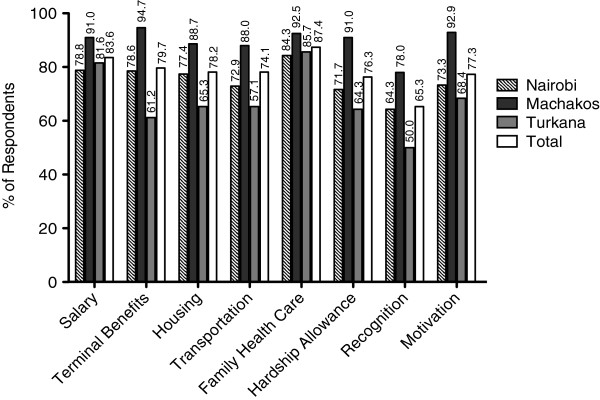
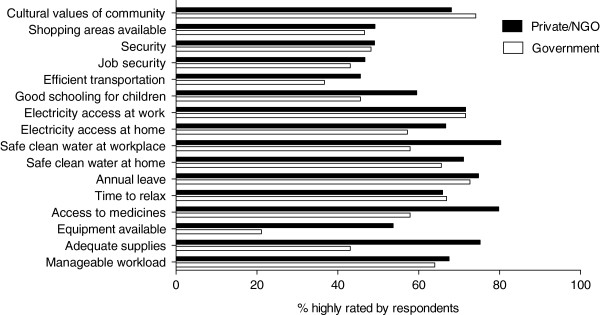
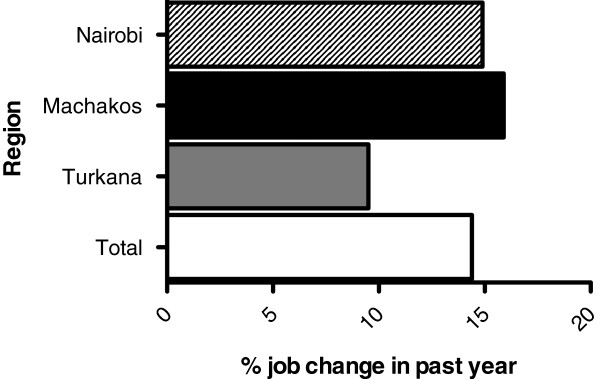
The levels of education and gender factors were lowest in Turkana with female HCWs representing only 30% of the workers against a national average of 53%. A smaller proportion of HCWs in Turkana feel that they have adequate training for their jobs. Overall, 13% of the HCWs indicated that they had changed their job in the last 12 months and 20% indicated that they could leave their current job within the next two years. In terms of work environment, inadequate access to electricity, equipment, transport, housing, and the physical state of the health facility were cited as most critical, particularly in Turkana. The working environment is rated as better in private facilities. Adequate training, job security, salary, supervisor support, and manageable workload were identified as critical satisfaction factors. Family health care, salary, and terminal benefits were rated as important compensatory factors.
There are distinct motivational and retention factors that affect HCWs in the three regions. Findings and policy implications from this study point to a set of recommendations to be implemented at national and county levels. These include gender mainstreaming, development of appropriate retention schemes, competitive compensation packages, strategies for career growth, establishment of a model HRH community, and the conduct of a discrete choice experiment.
世界卫生组织(WHO)和肯尼亚政府均认定,一支高效运作的卫生人力队伍是实现更佳健康状况的关键。然而,医护人员的积极性和留任意愿依然是挑战所在。本研究调查了肯尼亚三种不同环境下基层医疗设施中医护人员积极性和留任意愿的影响因素,这三种环境分别是图尔卡纳的偏远地区、相对便利的马查科斯地区以及内罗毕条件较差的基贝拉非正式城市定居点。
采用横断面整群抽样设计,选取了59家卫生机构,对404名医护人员进行访谈,这些人员分为10种不同类型的服务提供者。2011年11月使用结构化问卷和焦点小组讨论指南收集数据。使用双变量和多变量方法分析医护人员积极性和留任意愿的关联及决定因素。
图尔卡纳地区的教育水平和性别因素最低,女性医护人员仅占工作人员的30%,而全国平均水平为53%。图尔卡纳地区中较小比例的医护人员认为他们接受了与其工作相匹配的充分培训。总体而言,13%的医护人员表示他们在过去12个月内更换了工作,20%的医护人员表示他们可能在未来两年内离职。在工作环境方面,电力供应不足、设备、交通、住房以及卫生设施的物理状况被认为是最关键的问题,特别是在图尔卡纳地区。私立机构的工作环境评价更高。充分的培训、工作保障、薪资、上级支持以及可管理的工作量被确定为关键的满意度因素。家庭医疗保健、薪资和终端福利被评为重要的补偿因素。
在这三个地区存在影响医护人员的不同激励和留任因素。本研究的结果和政策启示指向了一系列需在国家和县级层面实施的建议。这些建议包括性别主流化、制定适当的留任计划、具有竞争力的薪酬方案、职业发展策略、建立模范卫生人力社区以及开展离散选择实验。