Wang Xingmin, Yang Yonghong, Huycke Mark M
The Muchmore Laboratories for Infectious Diseases Research, Department of Veterans Affairs Medical Center, Oklahoma City, Oklahoma, USA Department of Radiation Oncology, University of Oklahoma Health Sciences Center, Oklahoma City, Oklahoma, USA.
The Muchmore Laboratories for Infectious Diseases Research, Department of Veterans Affairs Medical Center, Oklahoma City, Oklahoma, USA Department of Medicine, University of Oklahoma Health Sciences Center, Oklahoma City, Oklahoma, USA.
Gut. 2015 Mar;64(3):459-68. doi: 10.1136/gutjnl-2014-307213. Epub 2014 Jun 6.
Commensal bacteria and innate immunity play a major role in the development of colorectal cancer (CRC). We propose that selected commensals polarise colon macrophages to produce endogenous mutagens that initiate chromosomal instability (CIN), lead to expression of progenitor and tumour stem cell markers, and drive CRC through a bystander effect.
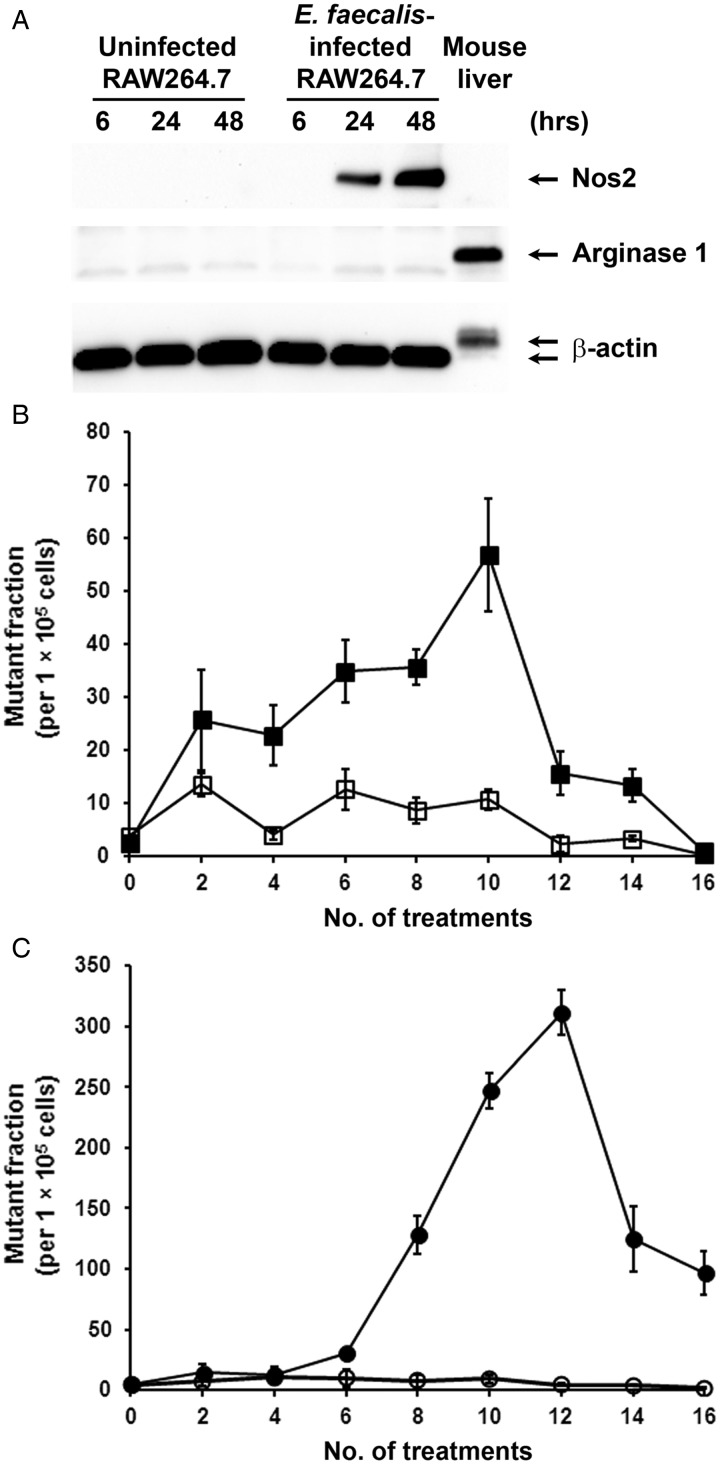
Primary murine colon epithelial cells were repetitively exposed to Enterococcus faecalis-infected macrophages, or purified trans-4-hydroxy-2-nonenal (4-HNE)-an endogenous mutagen and spindle poison produced by macrophages. CIN, gene expression, growth as allografts in immunodeficient mice were examined for clones and expression of markers confirmed using interleukin (IL) 10 knockout mice colonised by E. faecalis.
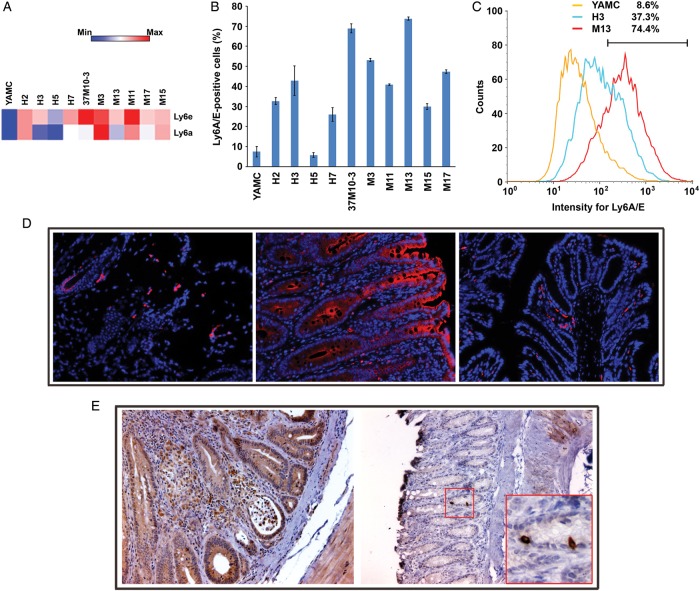
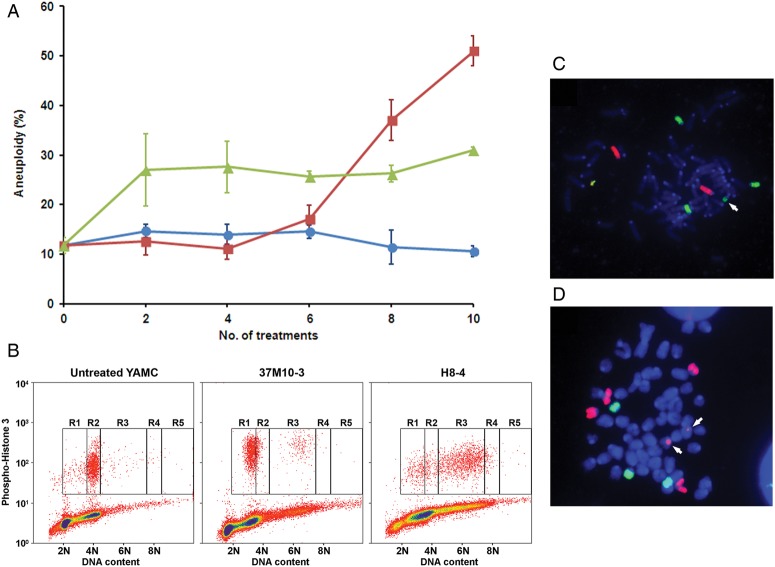
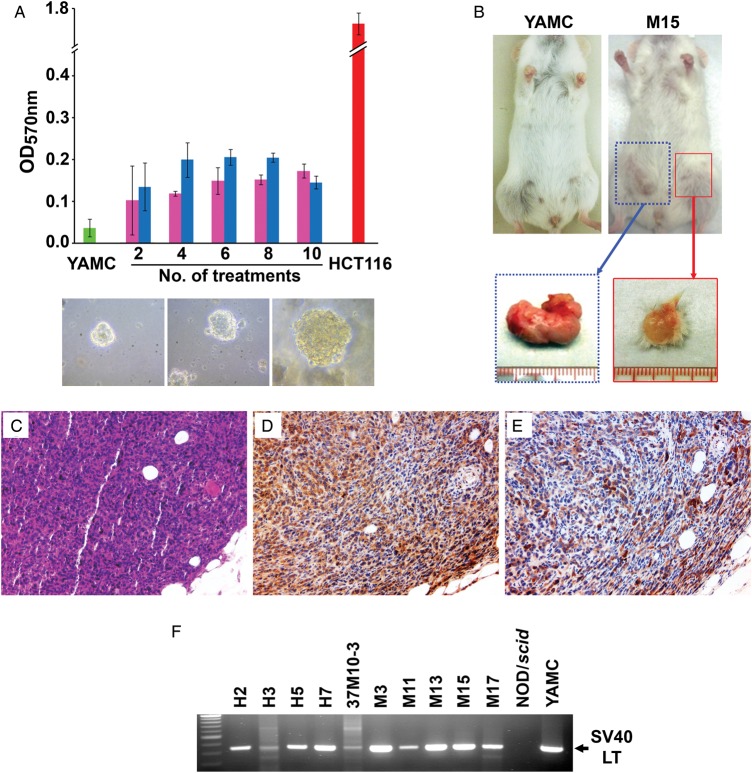
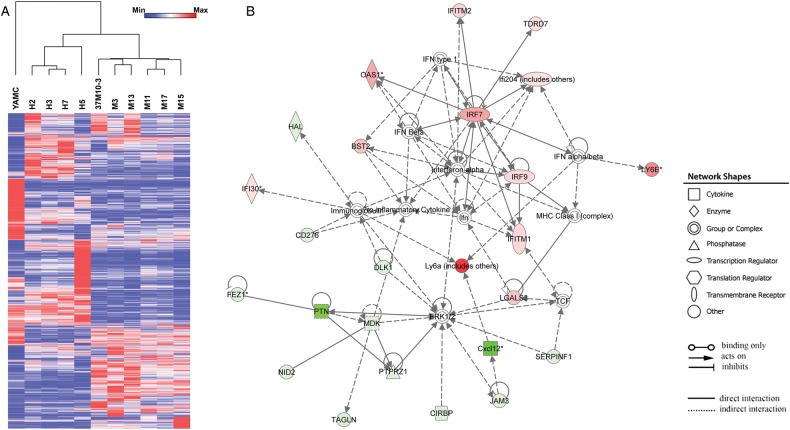
Primary colon epithelial cells exposed to polarised macrophages or 4-hydroxy-2-nonenal developed CIN and were transformed after 10 weekly treatments. In immunodeficient mice, 8 of 25 transformed clones grew as poorly differentiated carcinomas with 3 tumours invading skin and/or muscle. All tumours stained for cytokeratins confirming their epithelial cell origin. Gene expression profiling of clones showed alterations in 3 to 7 cancer driver genes per clone. Clones also strongly expressed stem/progenitor cell markers Ly6A and Ly6E. Although not differentially expressed in clones, murine allografts positively stained for the tumour stem cell marker doublecortin-like kinase 1. Doublecortin-like kinase 1 and Ly6A/E were expressed by epithelial cells in colon biopsies for areas of inflamed and dysplastic tissue from E. faecalis-colonised IL-10 knockout mice.
These results validate a novel mechanism for CRC that involves endogenous CIN and cellular transformation arising through a microbiome-driven bystander effect.
共生细菌和先天免疫在结直肠癌(CRC)的发生发展中起主要作用。我们提出,特定的共生菌使结肠巨噬细胞极化,产生内源性诱变剂,引发染色体不稳定(CIN),导致祖细胞和肿瘤干细胞标志物表达,并通过旁观者效应驱动CRC发生。
将原代小鼠结肠上皮细胞反复暴露于粪肠球菌感染的巨噬细胞,或纯化的反式-4-羟基-2-壬烯醛(4-HNE)——一种由巨噬细胞产生的内源性诱变剂和纺锤体毒素。检测克隆的CIN、基因表达、在免疫缺陷小鼠体内作为同种异体移植物的生长情况,并使用定殖有粪肠球菌的白细胞介素(IL)10基因敲除小鼠确认标志物的表达。
暴露于极化巨噬细胞或4-羟基-2-壬烯醛的原代结肠上皮细胞出现CIN,并在每周处理10次后发生转化。在免疫缺陷小鼠中,25个转化克隆中有8个生长为低分化癌,3个肿瘤侵犯皮肤和/或肌肉。所有肿瘤均对细胞角蛋白染色,证实其上皮细胞起源。克隆的基因表达谱显示每个克隆中有3至7个癌症驱动基因发生改变。克隆还强烈表达干细胞/祖细胞标志物Ly6A和Ly6E。尽管在克隆中没有差异表达,但小鼠同种异体移植物对肿瘤干细胞标志物双皮质素样激酶1呈阳性染色。在来自定殖有粪肠球菌的IL-10基因敲除小鼠的炎症和发育异常组织区域的结肠活检中,上皮细胞表达双皮质素样激酶1和Ly6A/E。
这些结果验证了一种新的CRC发生机制,该机制涉及内源性CIN和通过微生物群驱动的旁观者效应引起的细胞转化。