Kon Michihiro, Ohiwa Nao, Honda Akiko, Matsubayashi Takeo, Ikeda Tatsuaki, Akimoto Takayuki, Suzuki Yasuhiro, Hirano Yuichi, Russell Aaron P
Department of Sports Sciences, Japan Institute of Sports Sciences, 3-15-1 Nishigaoka, KitaTokyo, Japan Centre for Physical Activity and Nutrition Research, School of Exercise and Nutrition Sciences, Deakin University, Burwood, Victoria, Australia.
Department of Sports Sciences, Japan Institute of Sports Sciences, 3-15-1 Nishigaoka, KitaTokyo, Japan.
Physiol Rep. 2014 Jun 6;2(6). doi: 10.14814/phy2.12033. Print 2014 Jun 1.
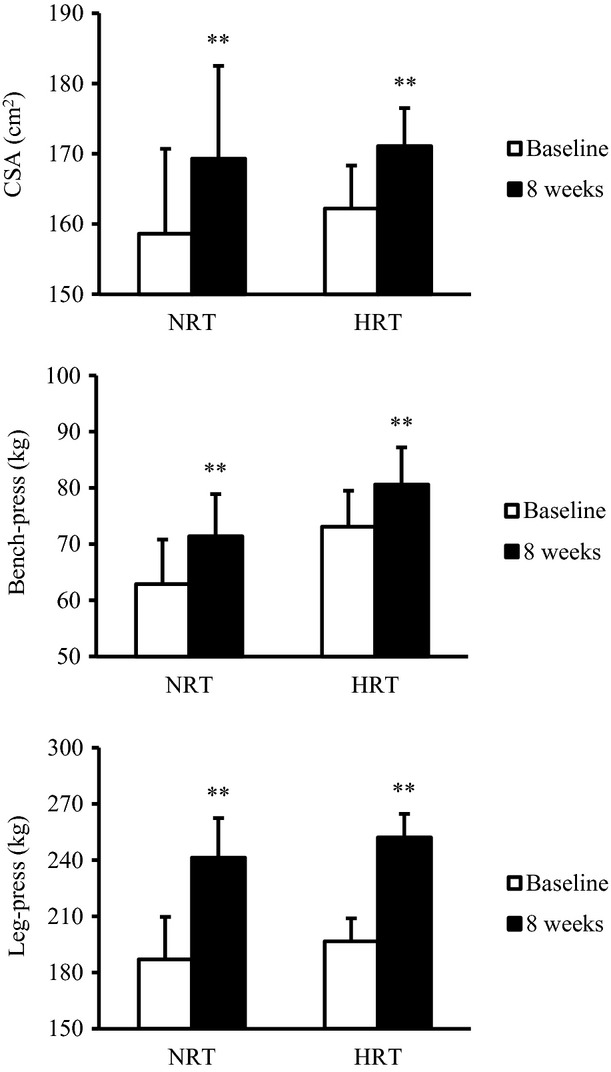
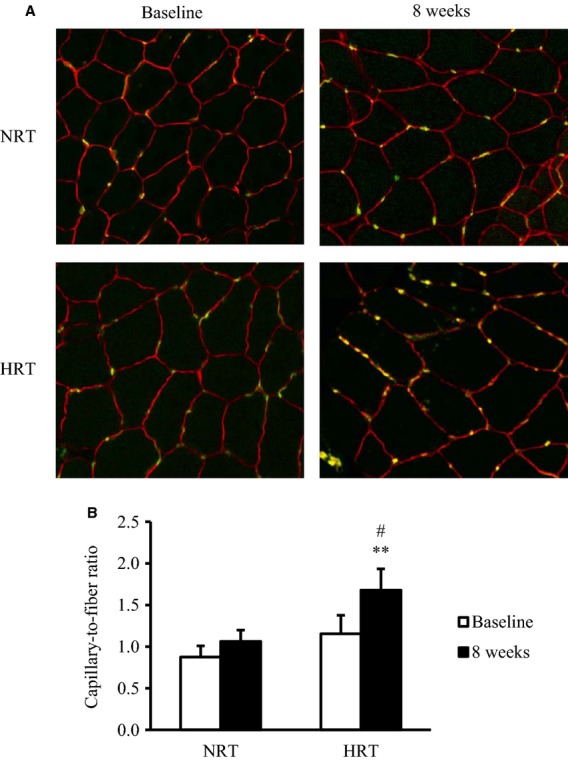
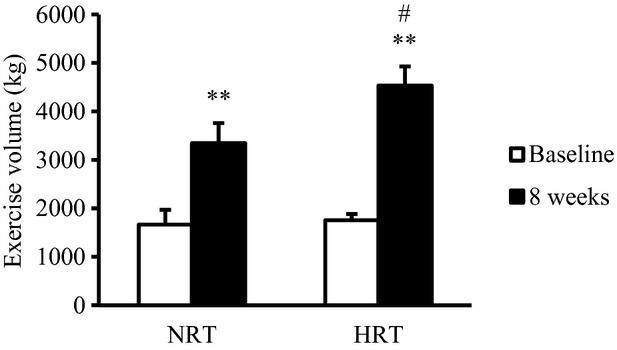
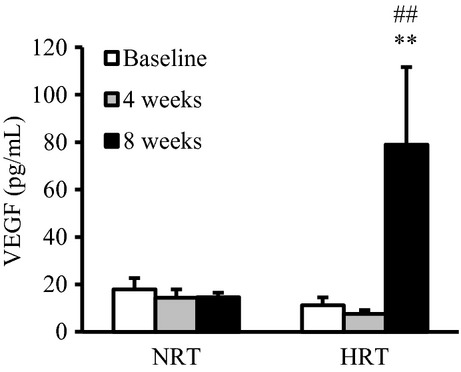
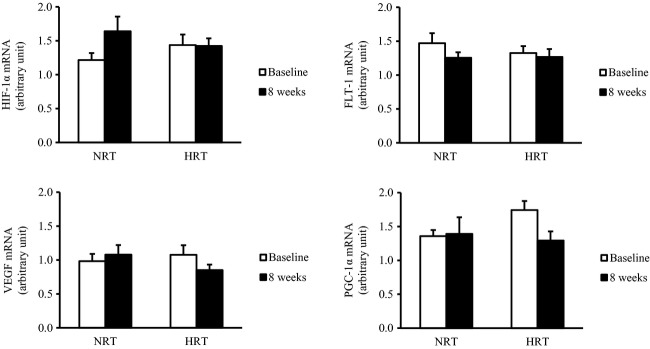
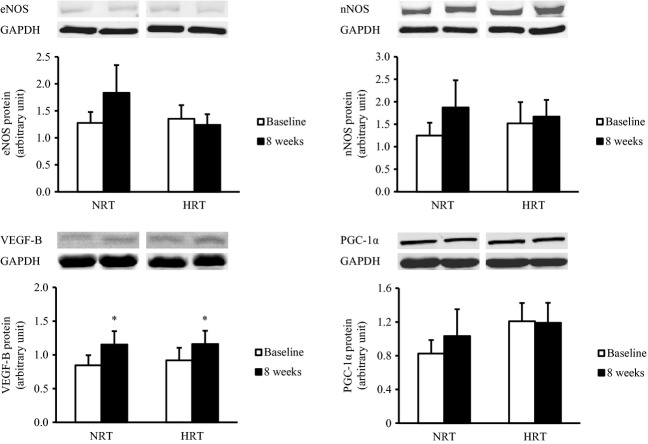
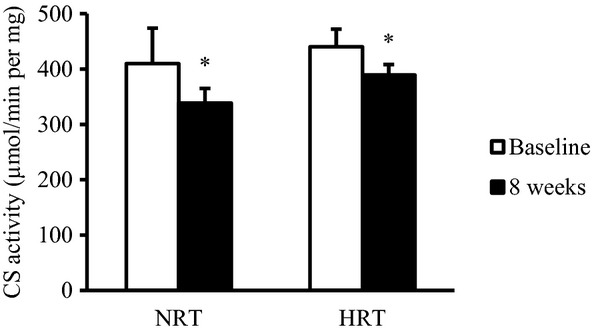
Hypoxia is an important modulator of endurance exercise-induced oxidative adaptations in skeletal muscle. However, whether hypoxia affects resistance exercise-induced muscle adaptations remains unknown. Here, we determined the effect of resistance exercise training under systemic hypoxia on muscular adaptations known to occur following both resistance and endurance exercise training, including muscle cross-sectional area (CSA), one-repetition maximum (1RM), muscular endurance, and makers of mitochondrial biogenesis and angiogenesis, such as peroxisome proliferator-activated receptor-γ coactivator-1α (PGC-1α), citrate synthase (CS) activity, nitric oxide synthase (NOS), vascular endothelial growth factor (VEGF), hypoxia-inducible factor-1 (HIF-1), and capillary-to-fiber ratio. Sixteen healthy male subjects were randomly assigned to either a normoxic resistance training group (NRT, n = 7) or a hypoxic (14.4% oxygen) resistance training group (HRT, n = 9) and performed 8 weeks of resistance training. Blood and muscle biopsy samples were obtained before and after training. After training muscle CSA of the femoral region, 1RM for bench-press and leg-press, muscular endurance, and skeletal muscle VEGF protein levels significantly increased in both groups. The increase in muscular endurance was significantly higher in the HRT group. Plasma VEGF concentration and skeletal muscle capillary-to-fiber ratio were significantly higher in the HRT group than the NRT group following training. Our results suggest that, in addition to increases in muscle size and strength, HRT may also lead to increased muscular endurance and the promotion of angiogenesis in skeletal muscle.
缺氧是耐力运动诱导骨骼肌氧化适应的重要调节因子。然而,缺氧是否影响抗阻运动诱导的肌肉适应仍不清楚。在此,我们确定了全身缺氧条件下抗阻运动训练对已知在抗阻和耐力运动训练后发生的肌肉适应的影响,包括肌肉横截面积(CSA)、一次重复最大负荷(1RM)、肌肉耐力以及线粒体生物发生和血管生成的标志物,如过氧化物酶体增殖物激活受体γ共激活因子-1α(PGC-1α)、柠檬酸合酶(CS)活性、一氧化氮合酶(NOS)、血管内皮生长因子(VEGF)、缺氧诱导因子-1(HIF-1)以及毛细血管与肌纤维比例。16名健康男性受试者被随机分为常氧抗阻训练组(NRT,n = 7)或低氧(14.4%氧气)抗阻训练组(HRT,n = 9),并进行8周的抗阻训练。在训练前后采集血液和肌肉活检样本。训练后,两组的股部肌肉CSA、卧推和腿举的1RM、肌肉耐力以及骨骼肌VEGF蛋白水平均显著增加。HRT组的肌肉耐力增加显著更高。训练后,HRT组的血浆VEGF浓度和骨骼肌毛细血管与肌纤维比例显著高于NRT组。我们的结果表明,除了增加肌肉大小和力量外,HRT还可能导致肌肉耐力增加以及促进骨骼肌血管生成。