Clark Crystal A, Dagher Alain
Montreal Neurological Institute, McGill University Montreal, QC, Canada.
Front Behav Neurosci. 2014 May 30;8:196. doi: 10.3389/fnbeh.2014.00196. eCollection 2014.
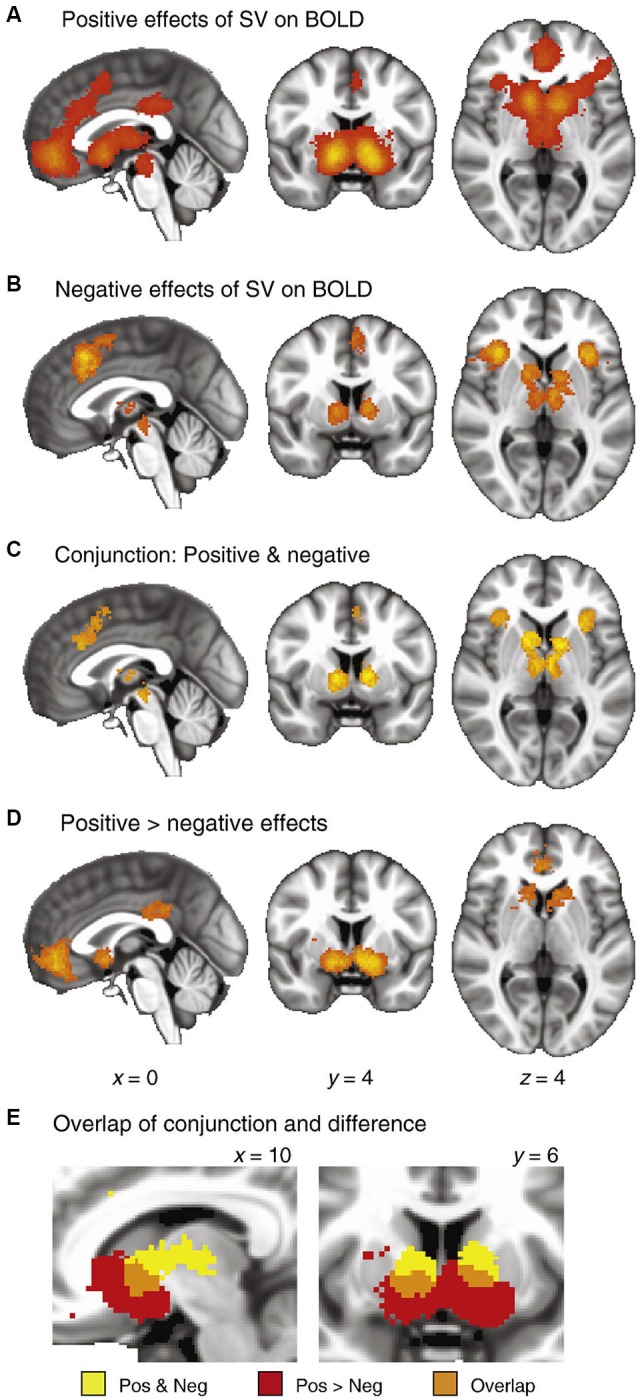
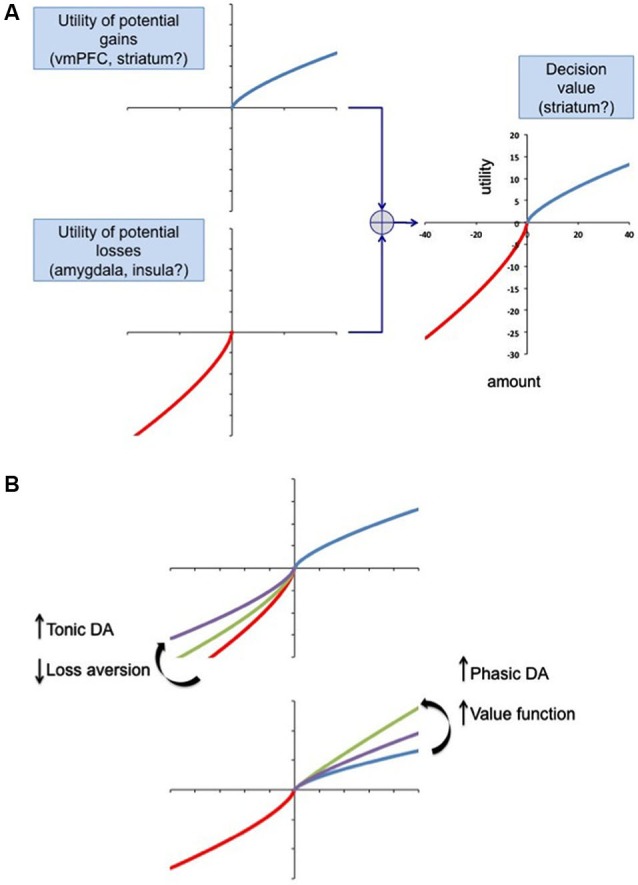
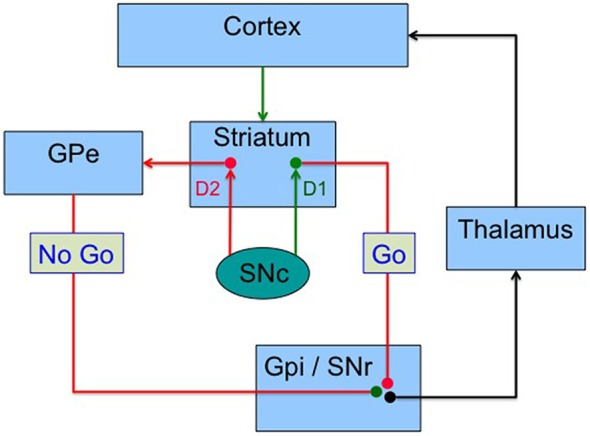
An influential model suggests that dopamine signals the difference between predicted and experienced reward. In this way, dopamine can act as a learning signal that can shape behaviors to maximize rewards and avoid punishments. Dopamine is also thought to invigorate reward seeking behavior. Loss of dopamine signaling is the major abnormality in Parkinson's disease. Dopamine agonists have been implicated in the occurrence of impulse control disorders in Parkinson's disease patients, the most common being pathological gambling, compulsive sexual behavior, and compulsive buying. Recently, a number of functional imaging studies investigating impulse control disorders in Parkinson's disease have been published. Here we review this literature, and attempt to place it within a decision-making framework in which potential gains and losses are evaluated to arrive at optimum choices. We also provide a hypothetical but still incomplete model on the effect of dopamine agonist treatment on these value and risk assessments. Two of the main brain structures thought to be involved in computing aspects of reward and loss are the ventral striatum (VStr) and the insula, both dopamine projection sites. Both structures are consistently implicated in functional brain imaging studies of pathological gambling in Parkinson's disease.
一个有影响力的模型表明,多巴胺标志着预期奖励与实际获得奖励之间的差异。通过这种方式,多巴胺可以充当一种学习信号,塑造行为以最大化奖励并避免惩罚。多巴胺还被认为能激发寻求奖励的行为。多巴胺信号缺失是帕金森病的主要异常情况。多巴胺激动剂与帕金森病患者冲动控制障碍的发生有关,最常见的是病理性赌博、强迫性行为和强迫性购物。最近,已经发表了一些研究帕金森病冲动控制障碍的功能成像研究。在此我们回顾这一文献,并尝试将其置于一个决策框架内,在该框架中评估潜在的收益和损失以做出最优选择。我们还提供了一个关于多巴胺激动剂治疗对这些价值和风险评估影响的假设性但仍不完整的模型。被认为参与计算奖励和损失方面的两个主要脑结构是腹侧纹状体(VStr)和脑岛,二者均为多巴胺投射部位。在帕金森病病理性赌博的功能脑成像研究中,这两个结构均一直被涉及。