Kuhen Kelli L, Chatterjee Arnab K, Rottmann Matthias, Gagaring Kerstin, Borboa Rachel, Buenviaje Jennifer, Chen Zhong, Francek Carolyn, Wu Tao, Nagle Advait, Barnes S Whitney, Plouffe David, Lee Marcus C S, Fidock David A, Graumans Wouter, van de Vegte-Bolmer Marga, van Gemert Geert J, Wirjanata Grennady, Sebayang Boni, Marfurt Jutta, Russell Bruce, Suwanarusk Rossarin, Price Ric N, Nosten Francois, Tungtaeng Anchalee, Gettayacamin Montip, Sattabongkot Jetsumon, Taylor Jennifer, Walker John R, Tully David, Patra Kailash P, Flannery Erika L, Vinetz Joseph M, Renia Laurent, Sauerwein Robert W, Winzeler Elizabeth A, Glynne Richard J, Diagana Thierry T
Genomics Institute of the Novartis Research Foundation, San Diego, California, USA.
Swiss Tropical and Public Health Institute, Parasite Chemotherapy, Basel, Switzerland University of Basel, Basel, Switzerland.
Antimicrob Agents Chemother. 2014 Sep;58(9):5060-7. doi: 10.1128/AAC.02727-13. Epub 2014 Jun 9.
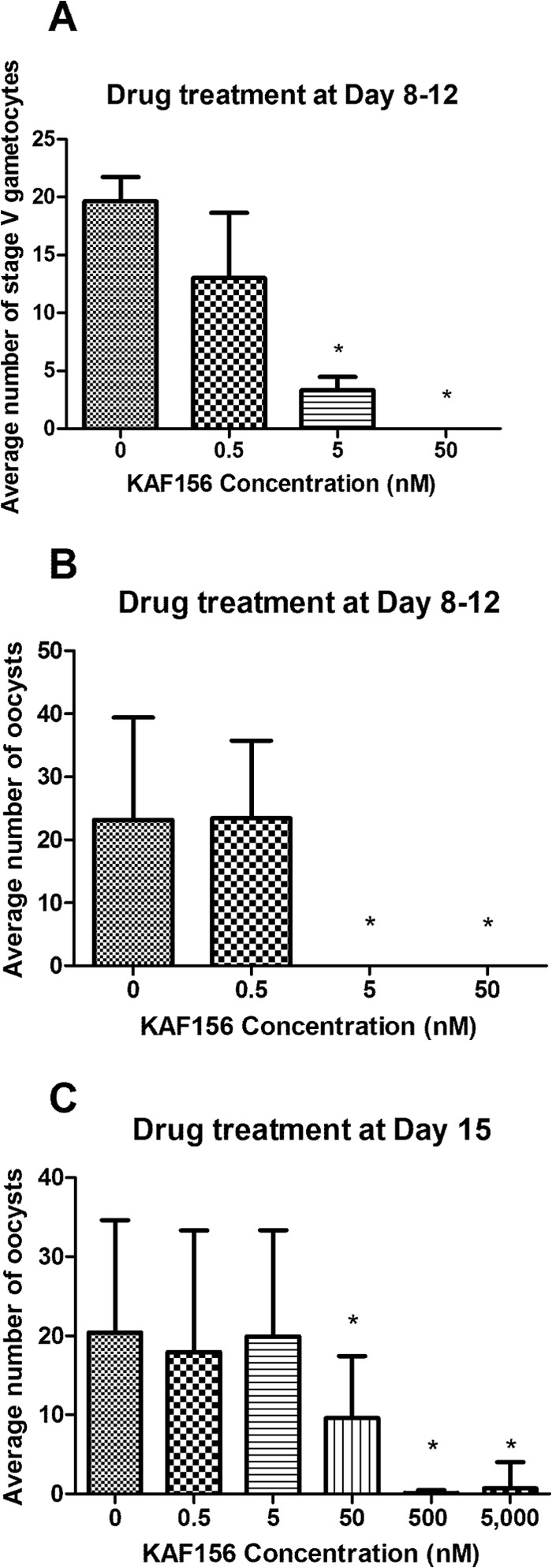
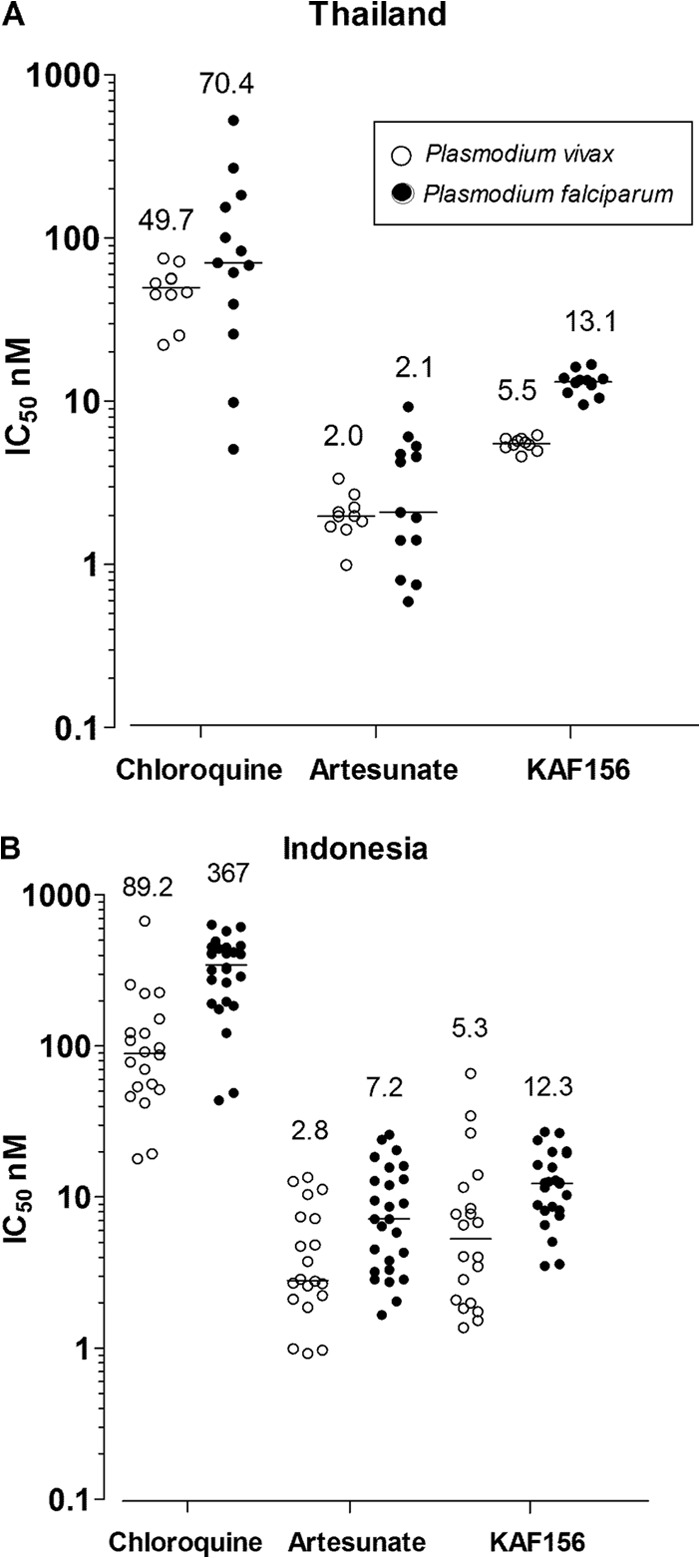
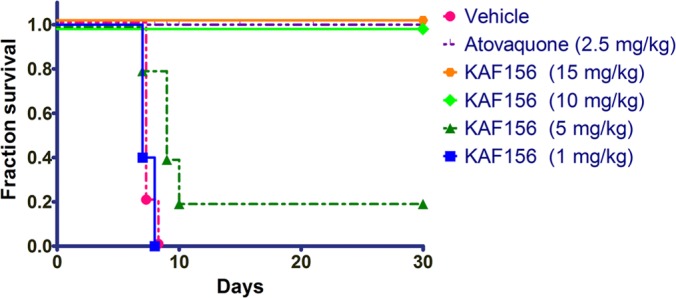
Renewed global efforts toward malaria eradication have highlighted the need for novel antimalarial agents with activity against multiple stages of the parasite life cycle. We have previously reported the discovery of a novel class of antimalarial compounds in the imidazolopiperazine series that have activity in the prevention and treatment of blood stage infection in a mouse model of malaria. Consistent with the previously reported activity profile of this series, the clinical candidate KAF156 shows blood schizonticidal activity with 50% inhibitory concentrations of 6 to 17.4 nM against P. falciparum drug-sensitive and drug-resistant strains, as well as potent therapeutic activity in a mouse models of malaria with 50, 90, and 99% effective doses of 0.6, 0.9, and 1.4 mg/kg, respectively. When administered prophylactically in a sporozoite challenge mouse model, KAF156 is completely protective as a single oral dose of 10 mg/kg. Finally, KAF156 displays potent Plasmodium transmission blocking activities both in vitro and in vivo. Collectively, our data suggest that KAF156, currently under evaluation in clinical trials, has the potential to treat, prevent, and block the transmission of malaria.
全球为根除疟疾而做出的新努力凸显了开发对疟原虫生命周期多个阶段具有活性的新型抗疟药物的必要性。我们之前报道过在咪唑并哌嗪系列中发现了一类新型抗疟化合物,它们在疟疾小鼠模型中对血液阶段感染具有预防和治疗活性。与该系列先前报道的活性特征一致,临床候选药物KAF156表现出血液裂殖体杀灭活性,对恶性疟原虫药物敏感和耐药菌株的50%抑制浓度为6至17.4 nM,并且在疟疾小鼠模型中具有强效治疗活性,50%、90%和99%有效剂量分别为0.6、0.9和1.4 mg/kg。当在子孢子攻击小鼠模型中进行预防性给药时,单剂量口服10 mg/kg的KAF156具有完全保护作用。最后,KAF156在体外和体内均表现出强效的疟原虫传播阻断活性。总体而言,我们的数据表明,目前正在进行临床试验评估的KAF156有潜力治疗、预防和阻断疟疾传播。