Avilov Sergiy, Berardozzi Romain, Gunewardene Mudalige S, Adam Virgile, Hess Samuel T, Bourgeois Dominique
Université Grenoble Alpes, Institut de Biologie Structurale (IBS), Grenoble, France; CNRS, IBS, Grenoble, France; CEA, DSV, IBS, Grenoble, France.
Department of Physics and Astronomy, University of Maine, Orono, Maine, United States of America.
PLoS One. 2014 Jun 10;9(6):e98362. doi: 10.1371/journal.pone.0098362. eCollection 2014.
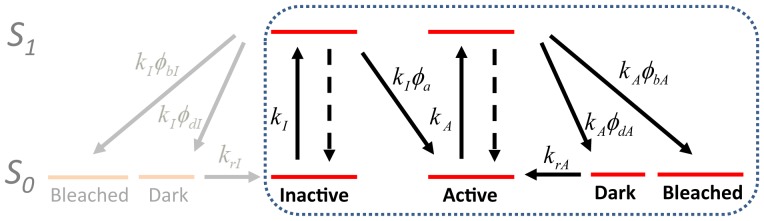
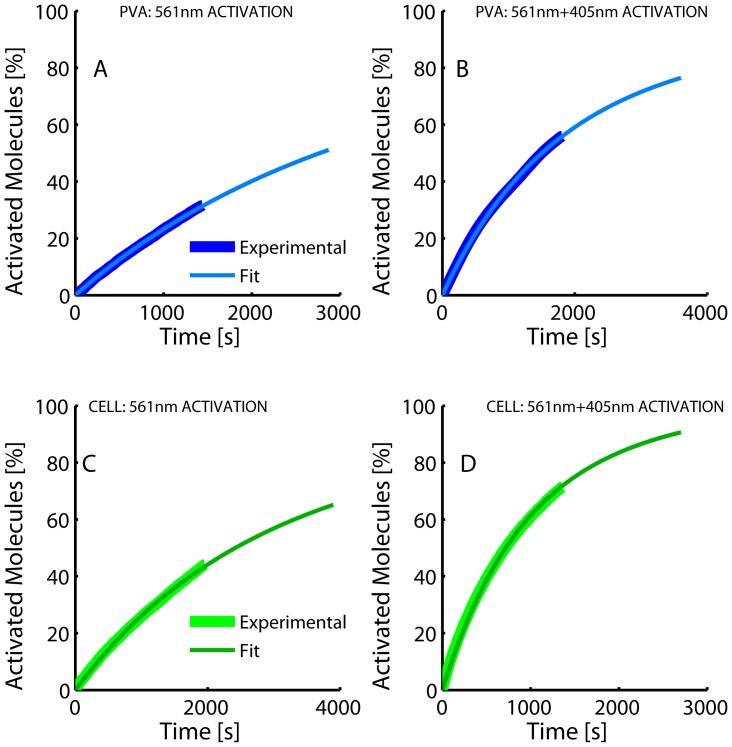
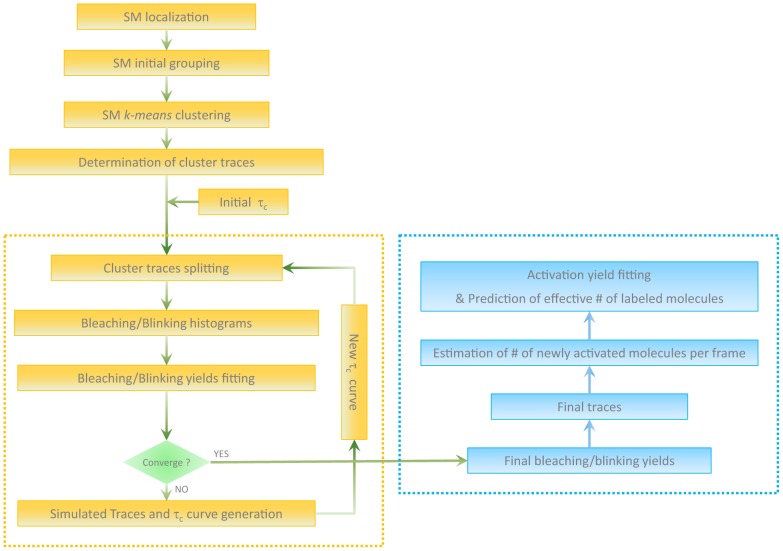
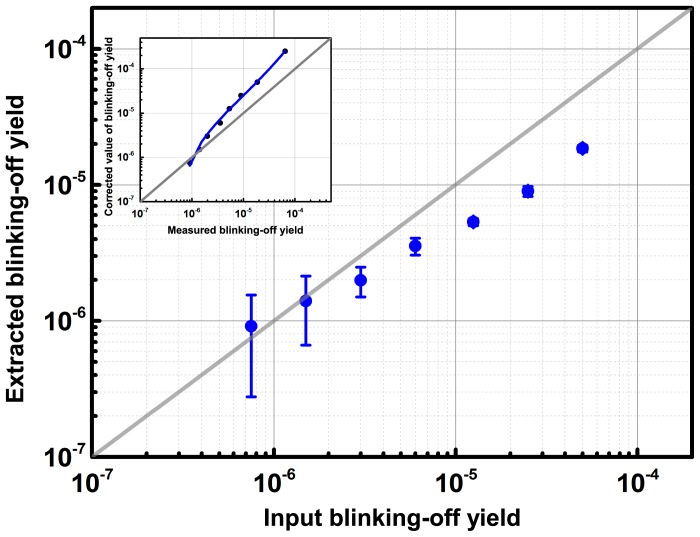
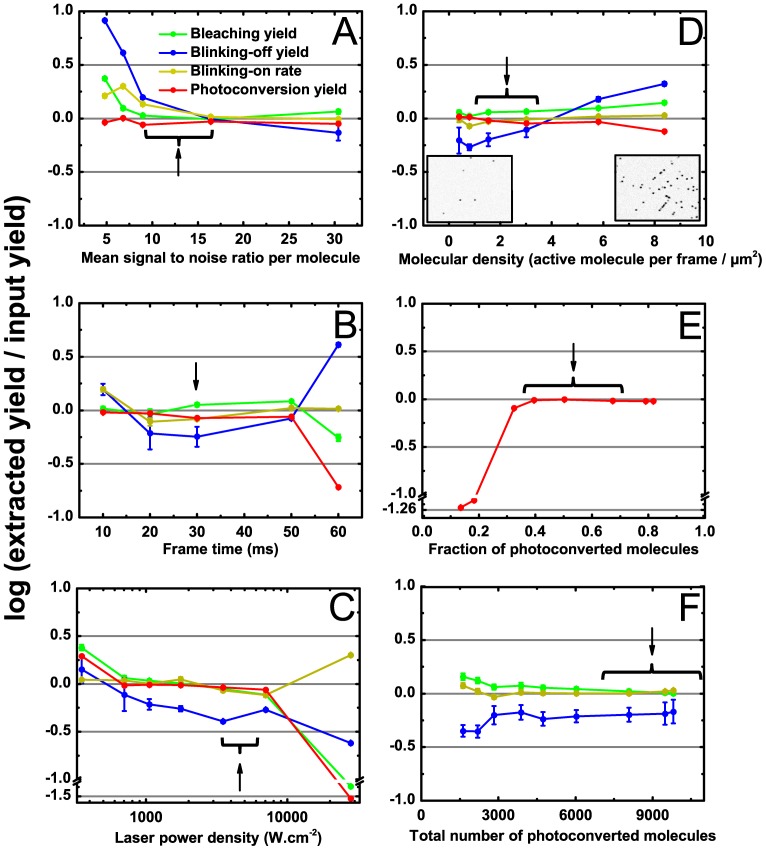
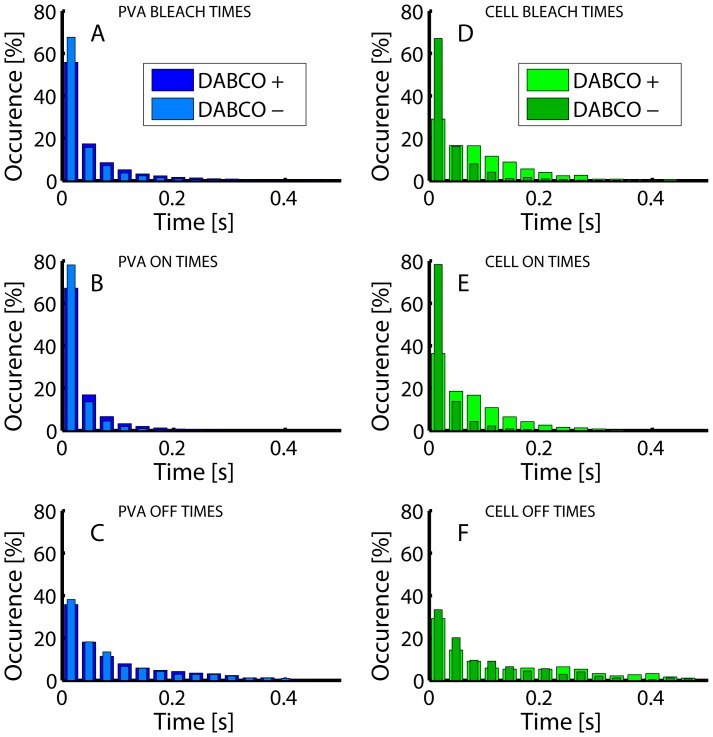
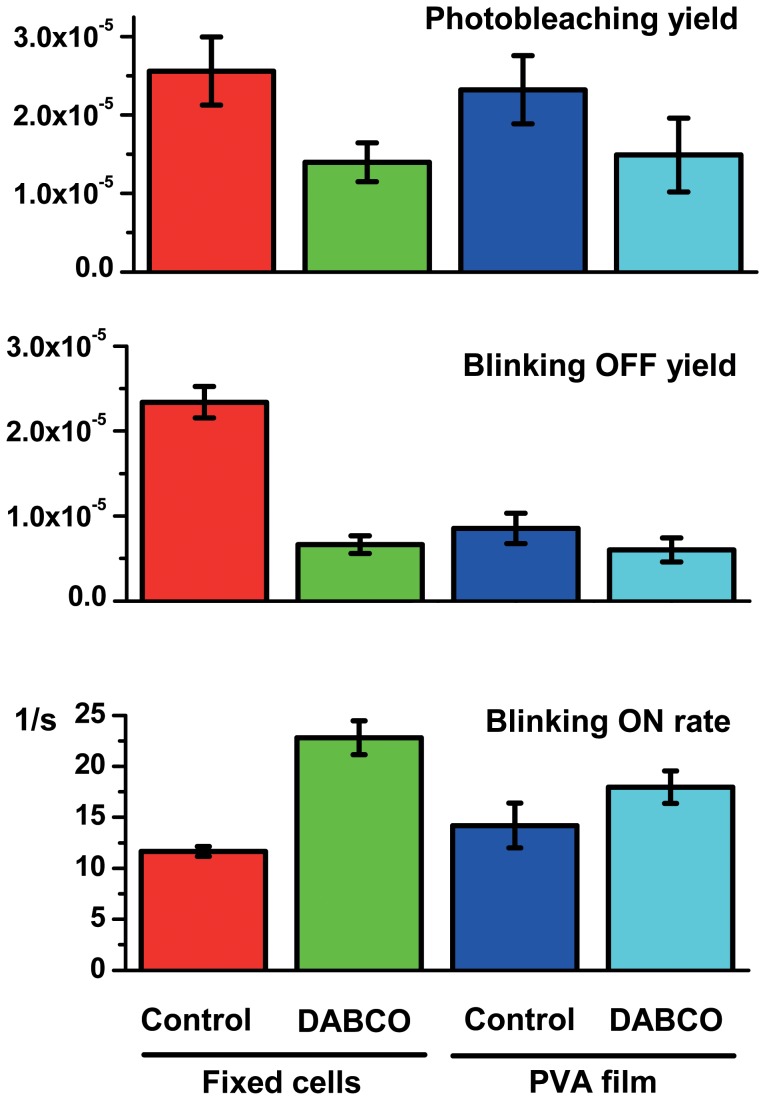
Single-molecule localization microscopy of biological samples requires a precise knowledge of the employed fluorescent labels. Photoactivation, photoblinking and photobleaching of phototransformable fluorescent proteins influence the data acquisition and data processing strategies to be used in (Fluorescence) Photoactivation Localization Microscopy ((F)-PALM), notably for reliable molecular counting. As these parameters might depend on the local environment, they should be measured in cellulo in biologically relevant experimental conditions. Here, we measured phototransformation quantum yields for Dendra2 fused to actin in fixed mammalian cells in typical (F)-PALM experiments. To this aim, we developed a data processing strategy based on the clustering optimization procedure proposed by Lee et al (PNAS 109, 17436-17441, 2012). Using simulations, we estimated the range of experimental parameters (molecular density, molecular orientation, background level, laser power, frametime) adequate for an accurate determination of the phototransformation yields. Under illumination at 561 nm in PBS buffer at pH 7.4, the photobleaching yield of Dendra2 fused to actin was measured to be (2.5 ± 0.4) × 10(-5), whereas the blinking-off yield and thermally-activated blinking-on rate were measured to be (2.3 ± 0.2) × 10(-5) and 11.7 ± 0.5 s-1, respectively. These phototransformation yields differed from those measured in poly-vinyl alcohol (PVA) and were strongly affected by addition of the antifading agent 1,4-diazabicyclo[2.2.2]octane (DABCO). In the presence of DABCO, the photobleaching yield was reduced 2-fold, the blinking-off yield was decreased more than 3-fold, and the blinking-on rate was increased 2-fold. Therefore, DABCO largely improved Dendra2 photostability in fixed mammalian cells. These findings are consistent with redox-based bleaching and blinking mechanisms under (F)-PALM experimental conditions. Finally, the green-to-red photoconversion quantum yield of Dendra2 was estimated to be (1.4 ± 0.6) × 10(-5) in cellulo under 405 nm illumination.
对生物样品进行单分子定位显微镜成像需要精确了解所使用的荧光标记。光转化荧光蛋白的光激活、光闪烁和光漂白会影响(荧光)光激活定位显微镜((F)-PALM)中使用的数据采集和数据处理策略,尤其是在进行可靠的分子计数时。由于这些参数可能取决于局部环境,因此应在生物学相关的实验条件下在细胞内进行测量。在这里,我们在典型的(F)-PALM实验中测量了固定哺乳动物细胞中与肌动蛋白融合的Dendra2的光转化量子产率。为此,我们基于Lee等人(《美国国家科学院院刊》109, 17436 - 17441, 2012)提出的聚类优化程序开发了一种数据处理策略。通过模拟,我们估计了适合准确测定光转化产率的实验参数范围(分子密度、分子取向、背景水平、激光功率、帧时间)。在pH 7.4的PBS缓冲液中于561 nm光照下,与肌动蛋白融合的Dendra2的光漂白产率经测量为(2.5 ± 0.4) × 10(-5),而光闪烁关闭产率和热激活光闪烁开启速率经测量分别为(2.3 ± 0.2) × 10(-5)和11.7 ± 0.5 s-1。这些光转化产率与在聚乙烯醇(PVA)中测量的结果不同,并且受到抗褪色剂1,4 - 二氮杂双环[2.2.2]辛烷(DABCO)添加的强烈影响。在存在DABCO的情况下,光漂白产率降低了2倍,光闪烁关闭产率降低了3倍以上,光闪烁开启速率提高了2倍。因此,DABCO在很大程度上提高了固定哺乳动物细胞中Dendra2的光稳定性。这些发现与(F)-PALM实验条件下基于氧化还原的漂白和闪烁机制一致。最后,在405 nm光照下,细胞内Dendra2的绿到红的光转化量子产率估计为(1.4 ± 0.6) × 10(-5)。