Mukai Tomoyuki, Ishida Shu, Ishikawa Remi, Yoshitaka Teruhito, Kittaka Mizuho, Gallant Richard, Lin Yi-Ling, Rottapel Robert, Brotto Marco, Reichenberger Ernst J, Ueki Yasuyoshi
Department of Oral and Craniofacial Sciences, School of Dentistry, University of Missouri-Kansas City, Kansas City, MO, USA.
J Bone Miner Res. 2014 Dec;29(12):2618-35. doi: 10.1002/jbmr.2295.
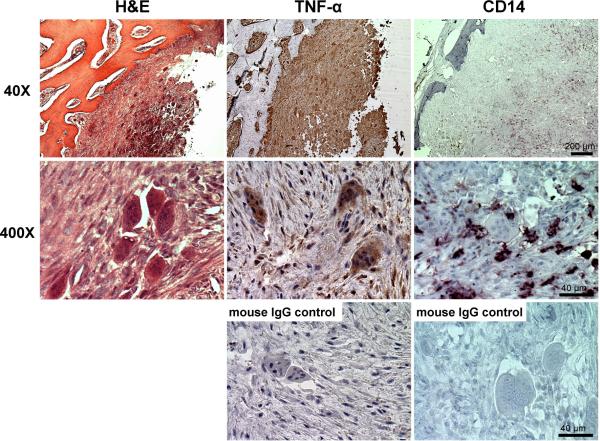
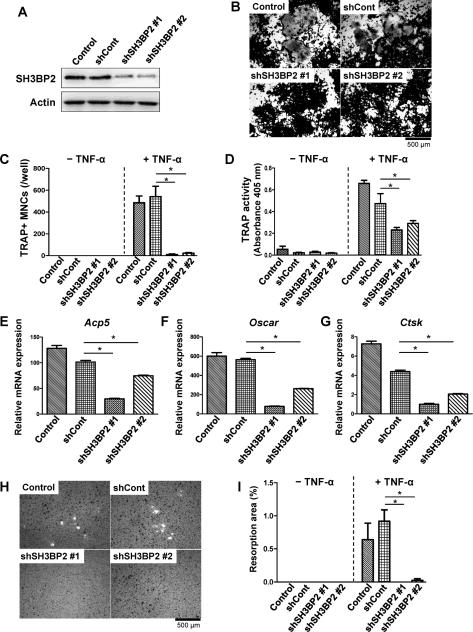
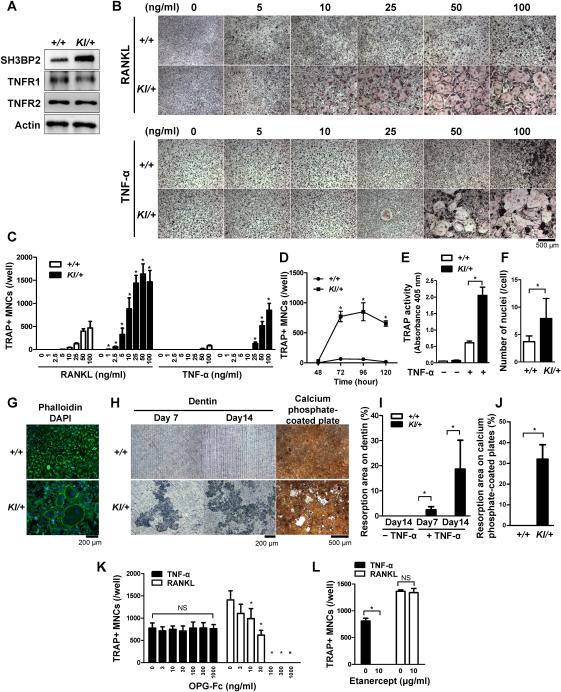
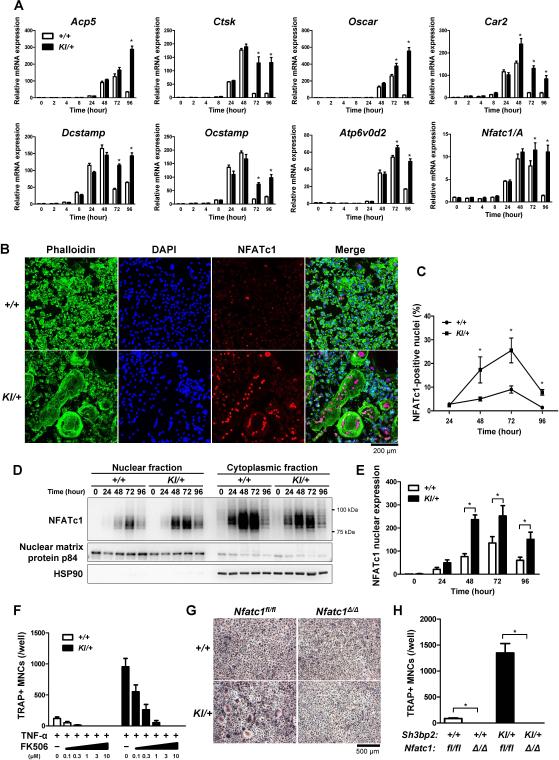
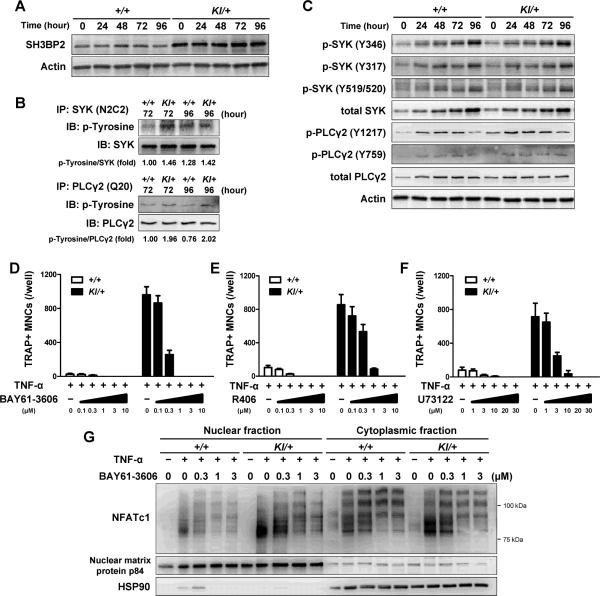
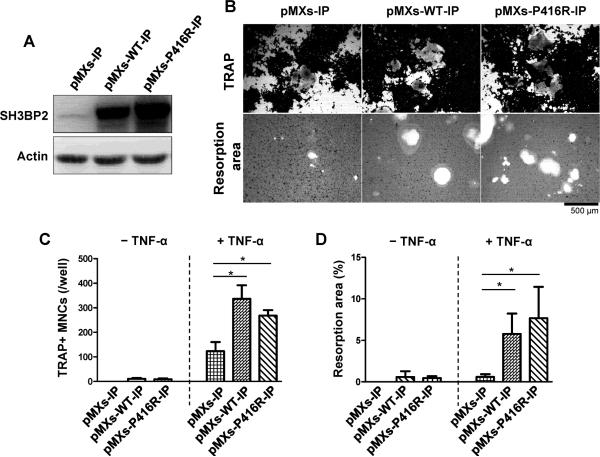
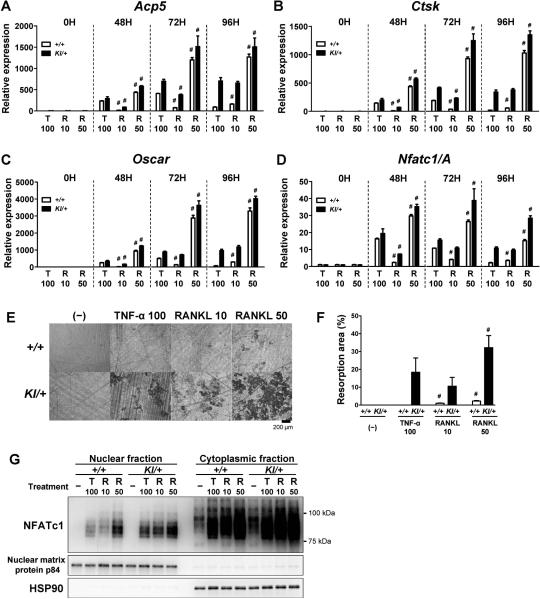
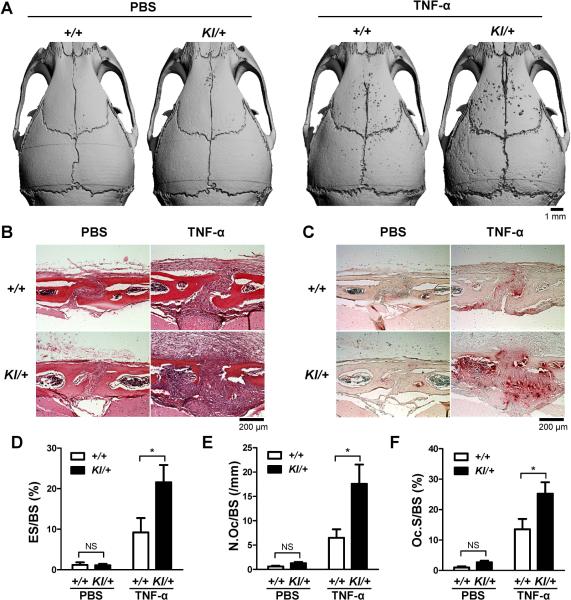
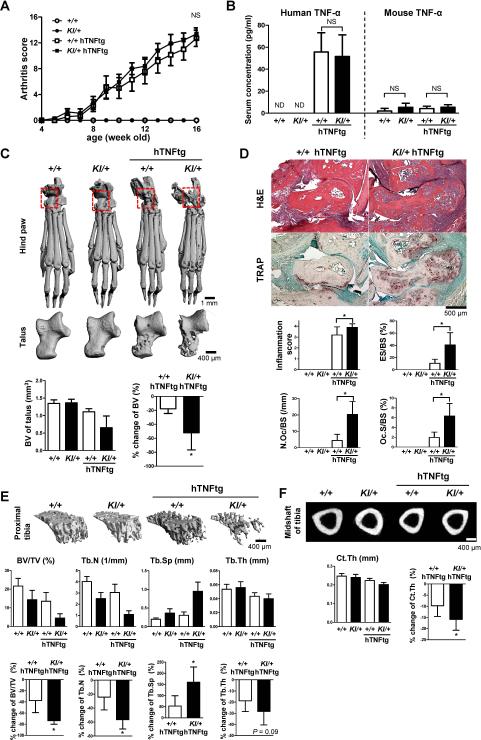
Cherubism (OMIM# 118400) is a genetic disorder with excessive jawbone resorption caused by mutations in SH3 domain binding protein 2 (SH3BP2), a signaling adaptor protein. Studies on the mouse model for cherubism carrying a P416R knock-in (KI) mutation have revealed that mutant SH3BP2 enhances tumor necrosis factor (TNF)-α production and receptor activator of nuclear factor-κB ligand (RANKL)-induced osteoclast differentiation in myeloid cells. TNF-α is expressed in human cherubism lesions, which contain a large number of tartrate-resistant acid phosphatase (TRAP)-positive multinucleated cells, and TNF-α plays a critical role in inflammatory bone destruction in homozygous cherubism mice (Sh3bp2(KI/KI) ). The data suggest a pathophysiological relationship between mutant SH3BP2 and TNF-α-mediated bone loss by osteoclasts. Therefore, we investigated whether P416R mutant SH3BP2 is involved in TNF-α-mediated osteoclast formation and bone loss. Here, we show that bone marrow-derived M-CSF-dependent macrophages (BMMs) from the heterozygous cherubism mutant (Sh3bp2(KI/+) ) mice are highly responsive to TNF-α and can differentiate into osteoclasts independently of RANKL in vitro by a mechanism that involves spleen tyrosine kinase (SYK) and phospholipase Cγ2 (PLCγ2) phosphorylation, leading to increased nuclear translocation of NFATc1. The heterozygous cherubism mutation exacerbates bone loss with increased osteoclast formation in a mouse calvarial TNF-α injection model as well as in a human TNF-α transgenic mouse model (hTNFtg). SH3BP2 knockdown in RAW264.7 cells results in decreased TRAP-positive multinucleated cell formation. These findings suggest that the SH3BP2 cherubism mutation can cause jawbone destruction by promoting osteoclast formation in response to TNF-α expressed in cherubism lesions and that SH3BP2 is a key regulator for TNF-α-induced osteoclastogenesis. Inhibition of SH3BP2 expression in osteoclast progenitors could be a potential strategy for the treatment of bone loss in cherubism as well as in other inflammatory bone disorders.
cherubism(OMIM# 118400)是一种遗传性疾病,由信号衔接蛋白SH3结构域结合蛋白2(SH3BP2)突变导致颌骨过度吸收。对携带P416R基因敲入(KI)突变的cherubism小鼠模型的研究表明,突变型SH3BP2可增强髓系细胞中肿瘤坏死因子(TNF)-α的产生以及核因子κB受体激活剂配体(RANKL)诱导的破骨细胞分化。TNF-α在人类cherubism病变中表达,该病变含有大量抗酒石酸酸性磷酸酶(TRAP)阳性的多核细胞,并且TNF-α在纯合cherubism小鼠(Sh3bp2(KI/KI))的炎性骨破坏中起关键作用。这些数据表明突变型SH3BP2与TNF-α介导的破骨细胞性骨质流失之间存在病理生理关系。因此,我们研究了P416R突变型SH3BP2是否参与TNF-α介导的破骨细胞形成和骨质流失。在此,我们表明,来自杂合cherubism突变体(Sh3bp2(KI/+))小鼠的骨髓来源的M-CSF依赖性巨噬细胞(BMM)对TNF-α高度敏感,并且在体外可通过涉及脾酪氨酸激酶(SYK)和磷脂酶Cγ2(PLCγ2)磷酸化的机制独立于RANKL分化为破骨细胞,从而导致NFATc1核转位增加。在小鼠颅骨TNF-α注射模型以及人类TNF-α转基因小鼠模型(hTNFtg)中,杂合cherubism突变会加剧骨质流失并增加破骨细胞形成。RAW264.7细胞中SH3BP2基因敲低导致TRAP阳性多核细胞形成减少。这些发现表明,SH3BP2 cherubism突变可通过促进对cherubism病变中表达的TNF-α的反应而导致破骨细胞形成,从而引起颌骨破坏,并且SH3BP2是TNF-α诱导破骨细胞生成的关键调节因子。抑制破骨细胞祖细胞中SH3BP2的表达可能是治疗cherubism以及其他炎性骨疾病中骨质流失的潜在策略。