State Plant Breeding Institute, University of Hohenheim, 70599 Stuttgart, Germany.
BMC Genomics. 2014 Jun 10;15(1):458. doi: 10.1186/1471-2164-15-458.
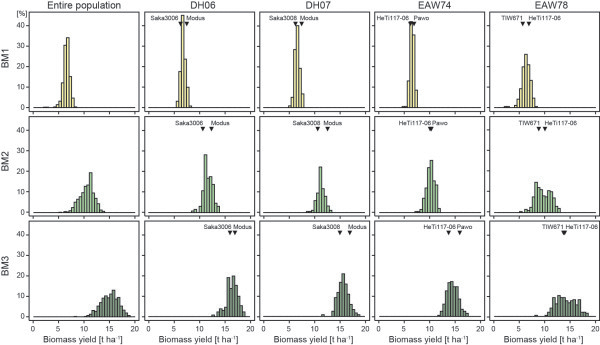
The nature of dynamic traits with their phenotypic plasticity suggests that they are under the control of a dynamic genetic regulation. We employed a precision phenotyping platform to non-invasively assess biomass yield in a large mapping population of triticale at three developmental stages.
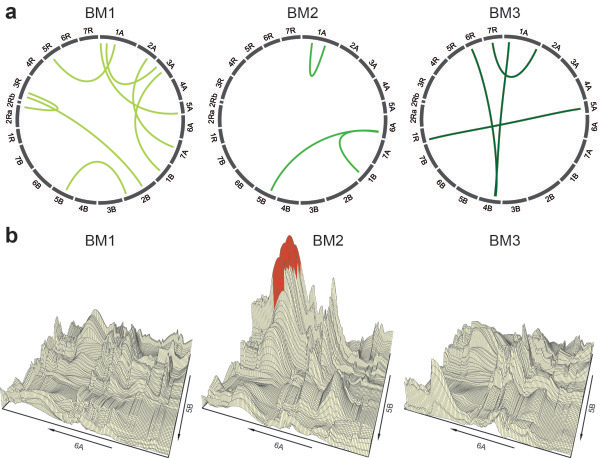
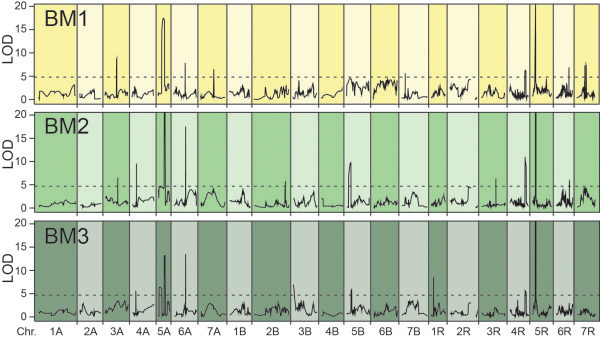
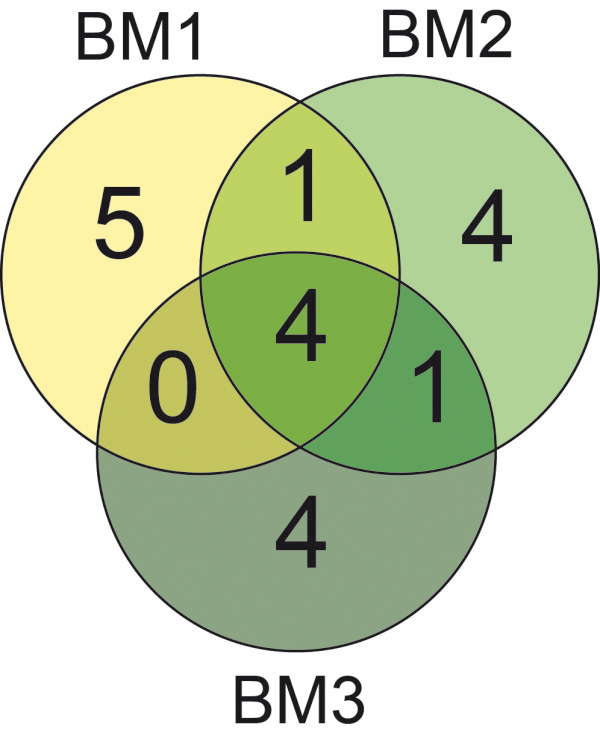
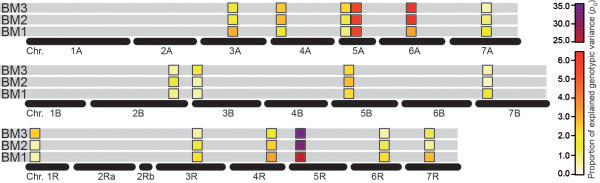
Using multiple-line cross QTL mapping we identified QTL for each of these developmental stages which explained a considerable proportion of the genotypic variance. Some QTL were identified at each developmental stage and thus contribute to biomass yield throughout the studied developmental phases. Interestingly, we also observed QTL that were only identified for one or two of the developmental stages illustrating a temporal contribution of these QTL to the trait. In addition, epistatic QTL were detected and the epistatic interaction landscape was shown to dynamically change with developmental progression.
In summary, our results reveal the temporal dynamics of the genetic architecture underlying biomass accumulation in triticale and emphasize the need for a temporal assessment of dynamic traits.
动态特征及其表型可塑性的性质表明它们受到动态遗传调控的控制。我们使用精密表型平台在三个发育阶段非侵入性地评估黑小麦大图谱群体的生物量产量。
使用多线交叉 QTL 作图,我们为每个发育阶段鉴定了 QTL,这些 QTL 解释了相当大的基因型方差比例。一些 QTL 在每个发育阶段都被鉴定出来,因此在整个研究的发育阶段都对生物量产量有贡献。有趣的是,我们还观察到仅在一个或两个发育阶段鉴定到的 QTL,表明这些 QTL 对该性状的时间贡献。此外,检测到上位性 QTL,并且上位性互作景观随着发育的进行而动态变化。
总之,我们的结果揭示了黑小麦生物量积累的遗传结构的时间动态,并强调了对动态特征进行时间评估的必要性。