Würschum Tobias, Tucker Matthew R, Reif Jochen C, Maurer Hans Peter
State Plant Breeding Institute, University of Hohenheim, Stuttgart 70593, Germany.
BMC Plant Biol. 2012 Jul 18;12:109. doi: 10.1186/1471-2229-12-109.
Doubled haploid production is a key technology in triticale research and breeding. A critical component of this method depends on chromosome doubling, which is traditionally achieved by in vivo treatment of seedlings with colchicine.
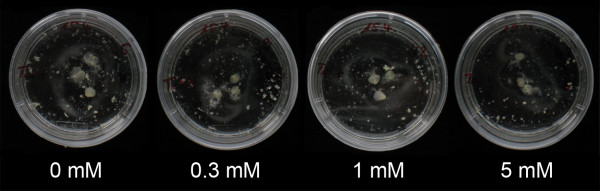
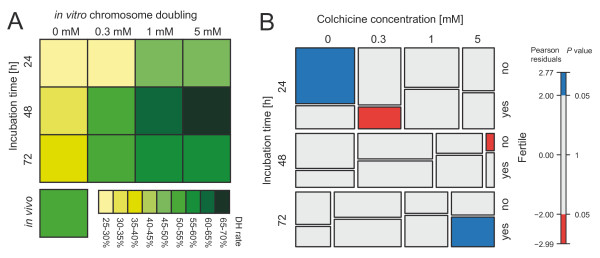
In this study we investigated the applicability of an in vitro approach for chromosome doubling based on microspore culture. Our results show a pronounced increase in the proportion of doubled haploid triticale plants compared to the spontaneous doubling rate, but also compared to the doubling obtained by the standard in vivo approach. In addition, the frequency of plants surviving from culture medium to maturity is also much higher for the in vitro approach. Colchicine concentrations of 1 mM for 24 h or 0.3 mM applied for 48 or 72 h during the first hours of microspore culture performed best.
Our results suggest that for triticale, in vitro chromosome doubling is a promising alternative to the in vivo approach.
双单倍体生产是小黑麦研究和育种中的一项关键技术。该方法的一个关键组成部分取决于染色体加倍,传统上这是通过用秋水仙碱对幼苗进行体内处理来实现的。
在本研究中,我们研究了基于小孢子培养的体外染色体加倍方法的适用性。我们的结果表明,与自发加倍率相比,双单倍体小黑麦植株的比例显著增加,与通过标准体内方法获得的加倍率相比也是如此。此外,体外方法从培养基存活到成熟的植株频率也高得多。在小孢子培养的最初几个小时内,1 mM秋水仙碱处理24小时或0.3 mM处理48或72小时效果最佳。
我们的结果表明,对于小黑麦来说,体外染色体加倍是体内方法的一个有前景的替代方法。