Tyler Mitchell, Tumban Ebenezer, Peabody David S, Chackerian Bryce
Department of Molecular Genetics and Microbiology, University of New Mexico, Albuquerque, New Mexico, 87131.
Biotechnol Bioeng. 2014 Dec;111(12):2398-406. doi: 10.1002/bit.25311. Epub 2014 Jul 31.
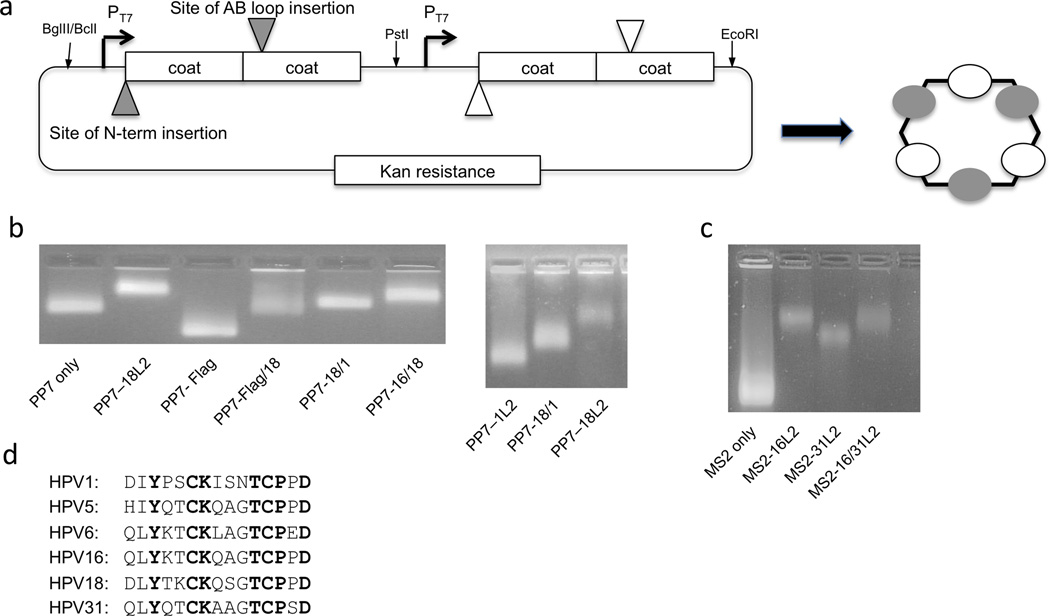
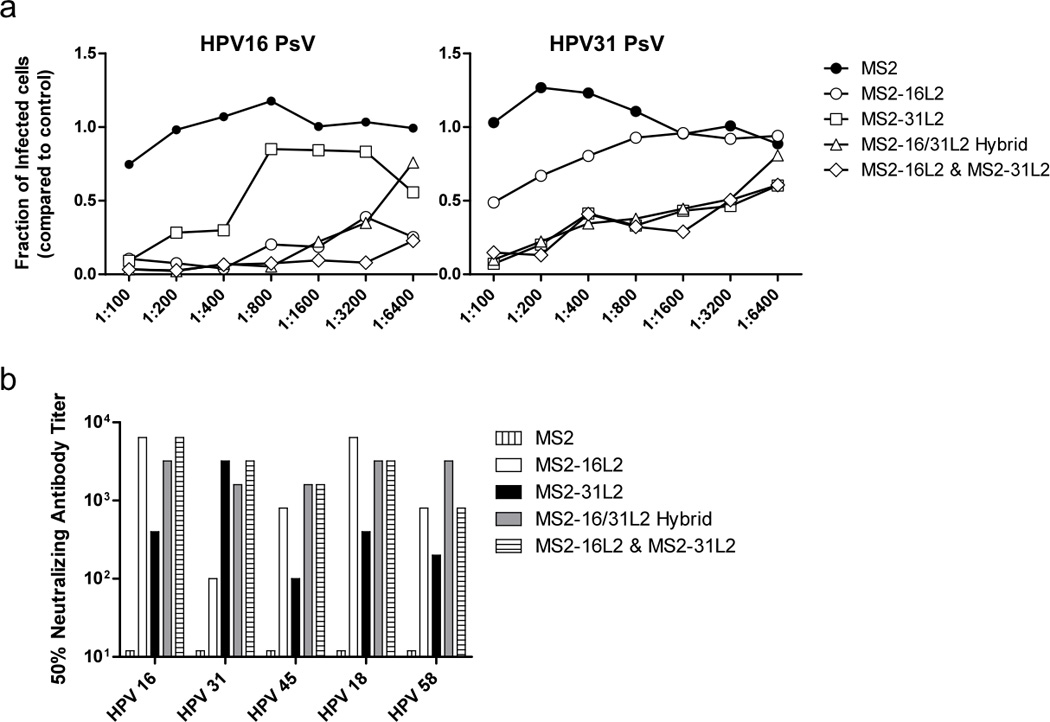
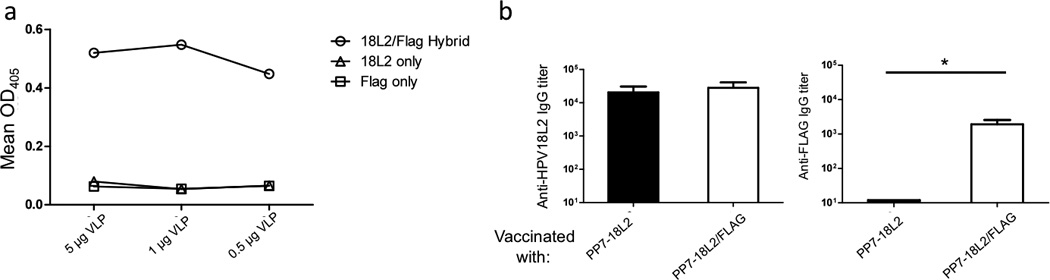
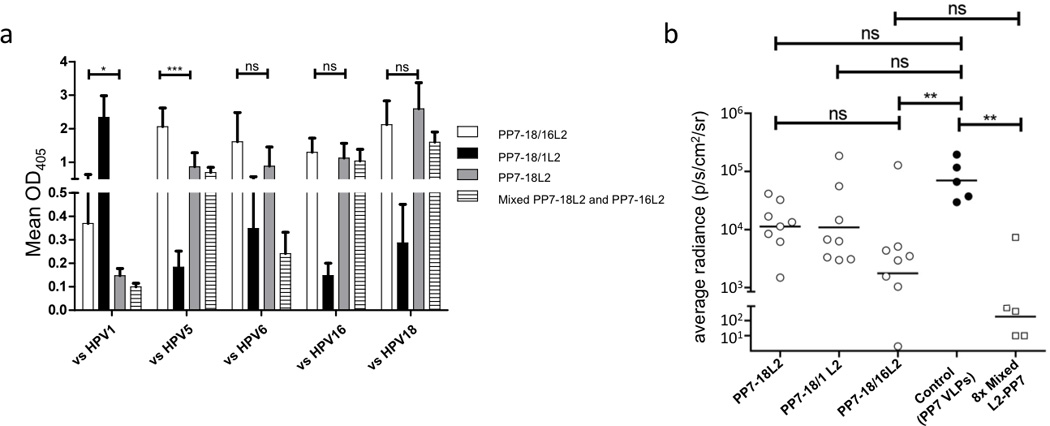
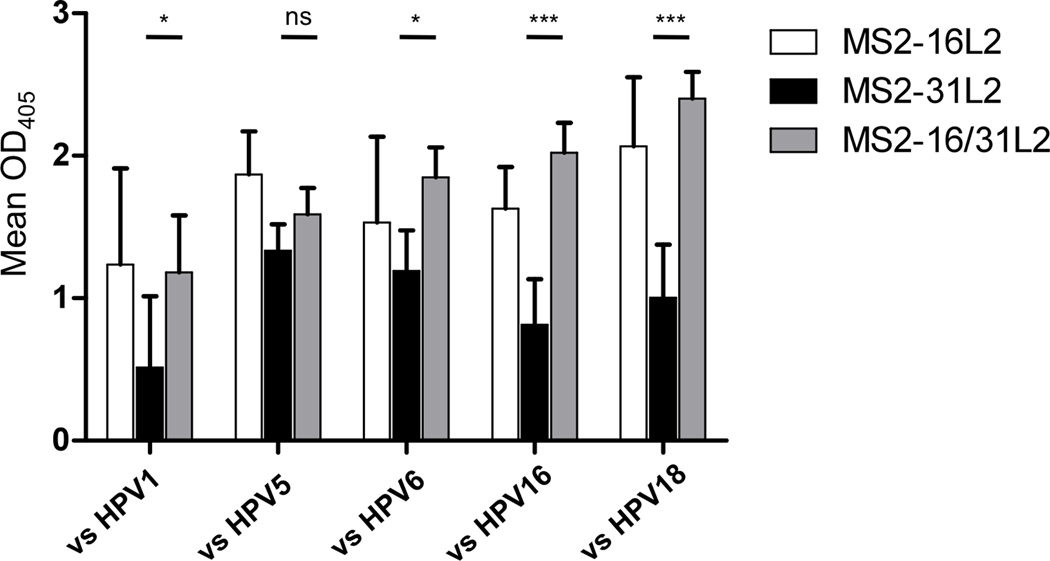
Virus-like particles (VLPs) can serve as a highly immunogenic vaccine platform for the multivalent display of epitopes from pathogens. We have used bacteriophage VLPs to develop vaccines that target a highly conserved epitope from the human papillomavirus (HPV) minor capsid protein, L2.VLPs displaying an L2-peptide from HPV16 elicit antibodies that broadly neutralize infection by HPV types associated with the development of cervical cancer. To broaden the cross-neutralization further, we have developed a strategy to display two different peptides on a single, hybrid VLP in a multivalent, highly immunogenic fashion. In general, hybrid VLPs elicited high-titer antibody responses against both targets, although in one case we observed an immunodominant response against only one of the displayed epitopes. Immunization with hybrid particles elicited antibodies that were able to neutralize heterologous HPV types at higher titers than those elicited by particles displaying one epitope alone, indicating that the hybrid VLP approach may be an effective technique to target epitopes that undergo antigenic variation.
病毒样颗粒(VLPs)可作为一种高度免疫原性的疫苗平台,用于多价展示病原体的表位。我们已利用噬菌体VLPs开发了针对人乳头瘤病毒(HPV)次要衣壳蛋白L2中高度保守表位的疫苗。展示来自HPV16的L2肽的VLPs可引发抗体,这些抗体能广泛中和与宫颈癌发生相关的HPV类型的感染。为了进一步扩大交叉中和作用,我们已开发出一种策略,以多价、高度免疫原性的方式在单个杂交VLPs上展示两种不同的肽。一般来说,杂交VLPs引发了针对两个靶点的高滴度抗体反应,不过在一个案例中,我们观察到仅针对所展示的一个表位的免疫显性反应。用杂交颗粒免疫引发的抗体能够以比单独展示一个表位的颗粒引发的抗体更高的滴度中和异源HPV类型,这表明杂交VLP方法可能是针对发生抗原变异的表位的一种有效技术。