Lehrstuhl für Zoologie und Evolutionsbiologie, Department of Biology, University of Konstanz Konstanz, Germany.
Front Genet. 2014 Jun 3;5:163. doi: 10.3389/fgene.2014.00163. eCollection 2014.
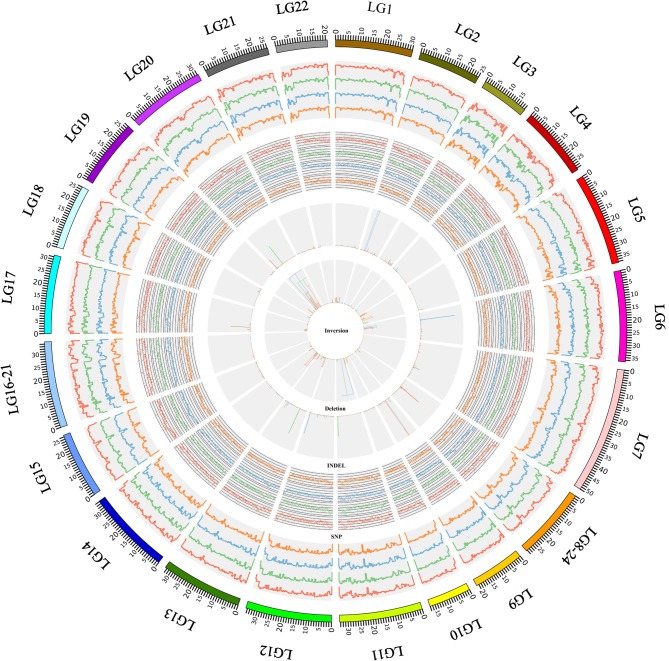
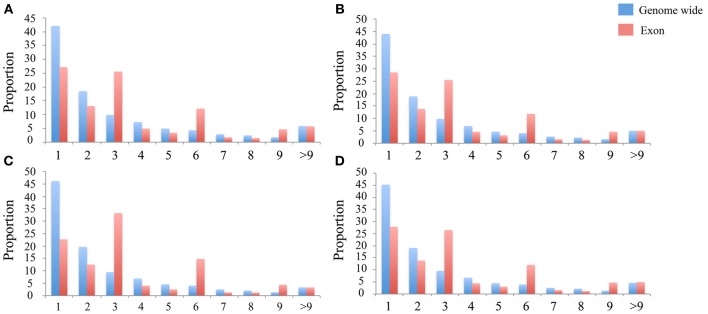
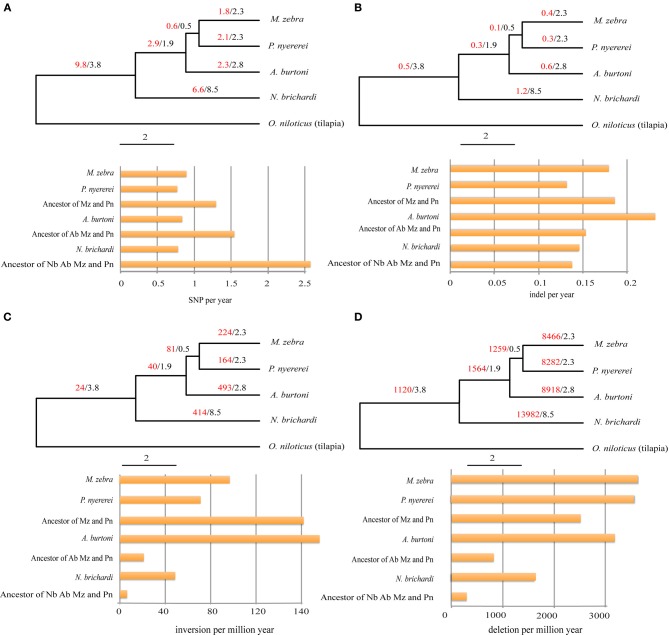
African cichlid fishes are an ideal system for studying explosive rates of speciation and the origin of diversity in adaptive radiation. Within the last few million years, more than 2000 species have evolved in the Great Lakes of East Africa, the largest adaptive radiation in vertebrates. These young species show spectacular diversity in their coloration, morphology and behavior. However, little is known about the genomic basis of this astonishing diversity. Recently, five African cichlid genomes were sequenced, including that of the Nile Tilapia (Oreochromis niloticus), a basal and only relatively moderately diversified lineage, and the genomes of four representative endemic species of the adaptive radiations, Neolamprologus brichardi, Astatotilapia burtoni, Metriaclima zebra, and Pundamila nyererei. Using the Tilapia genome as a reference genome, we generated a high-resolution genomic variation map, consisting of single nucleotide polymorphisms (SNPs), short insertions and deletions (indels), inversions and deletions. In total, around 18.8, 17.7, 17.0, and 17.0 million SNPs, 2.3, 2.2, 1.4, and 1.9 million indels, 262, 306, 162, and 154 inversions, and 3509, 2705, 2710, and 2634 deletions were inferred to have evolved in N. brichardi, A. burtoni, P. nyererei, and M. zebra, respectively. Many of these variations affected the annotated gene regions in the genome. Different patterns of genetic variation were detected during the adaptive radiation of African cichlid fishes. For SNPs, the highest rate of evolution was detected in the common ancestor of N. brichardi, A. burtoni, P. nyererei, and M. zebra. However, for the evolution of inversions and deletions, we found that the rates at the terminal taxa are substantially higher than the rates at the ancestral lineages. The high-resolution map provides an ideal opportunity to understand the genomic bases of the adaptive radiation of African cichlid fishes.
非洲慈鲷鱼类是研究物种形成速度和适应辐射中多样性起源的理想系统。在过去的几百万年中,东非大湖地区已经进化出了 2000 多种鱼类,这是脊椎动物中最大的适应辐射。这些年轻的物种在颜色、形态和行为上表现出惊人的多样性。然而,关于这种惊人多样性的基因组基础知之甚少。最近,对五个非洲慈鲷基因组进行了测序,包括尼罗河罗非鱼(Oreochromis niloticus)的基因组,这是一个基础且相对多样化程度较低的谱系,以及适应辐射的四个代表性特有物种的基因组,Neolamprologus brichardi、Astatotilapia burtoni、Metriaclima zebra 和 Pundamila nyererei。我们使用罗非鱼基因组作为参考基因组,生成了一个高分辨率的基因组变异图谱,包括单核苷酸多态性(SNPs)、短插入和缺失(indels)、倒位和缺失。总的来说,在 N. brichardi、A. burtoni、P. nyererei 和 M. zebra 中推断出大约 1880 万、1770 万、1700 万和 1700 万个 SNPs、230 万、220 万、140 万和 190 万个 indels、262 个、306 个、162 个和 154 个倒位和 3509 个、2705 个、2710 个和 2634 个缺失。许多这些变异影响了基因组中注释的基因区域。在非洲慈鲷鱼类的适应辐射过程中,检测到了不同的遗传变异模式。对于 SNPs,在 N. brichardi、A. burtoni、P. nyererei 和 M. zebra 的共同祖先中检测到最高的进化速率。然而,对于倒位和缺失的进化,我们发现终端分类单元的速率远高于祖先谱系的速率。高分辨率图谱为了解非洲慈鲷鱼类适应辐射的基因组基础提供了理想的机会。