Urasaki Yasuyo, Pizzorno Giuseppe, Le Thuc T
Nevada Cancer Institute, Las Vegas, Nevada, United States of America; Desert Research Institute, Las Vegas, Nevada, United States of America.
PLoS One. 2014 Jun 11;9(6):e99728. doi: 10.1371/journal.pone.0099728. eCollection 2014.
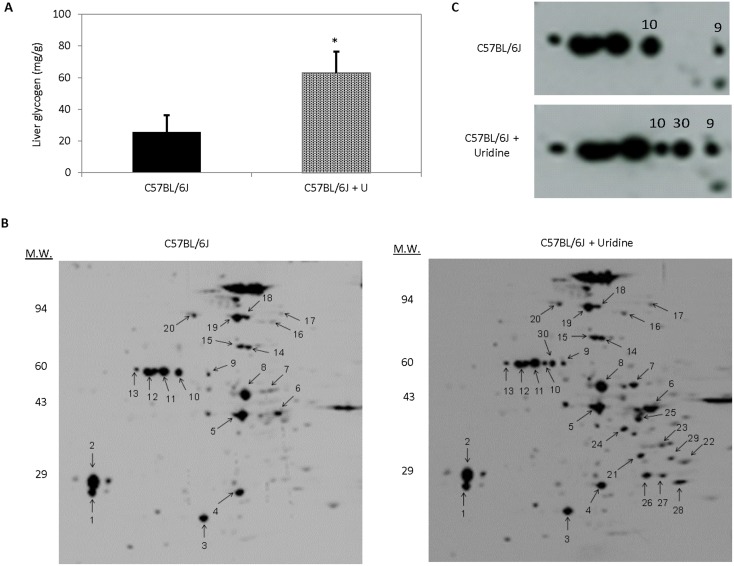
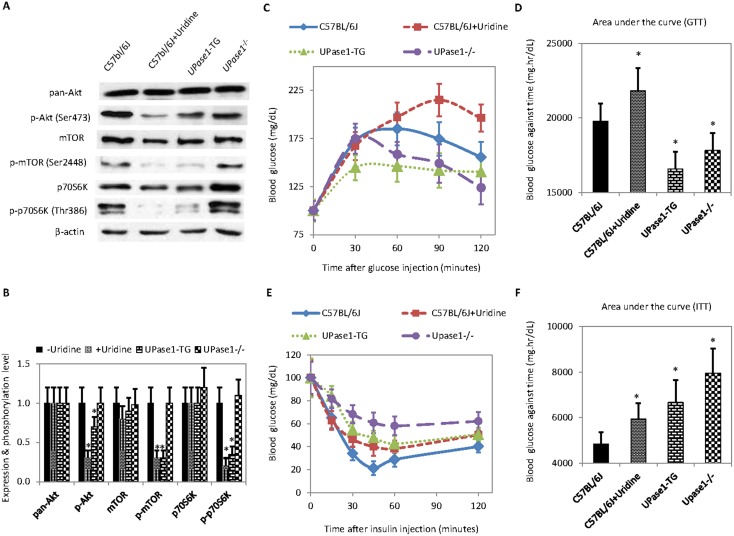
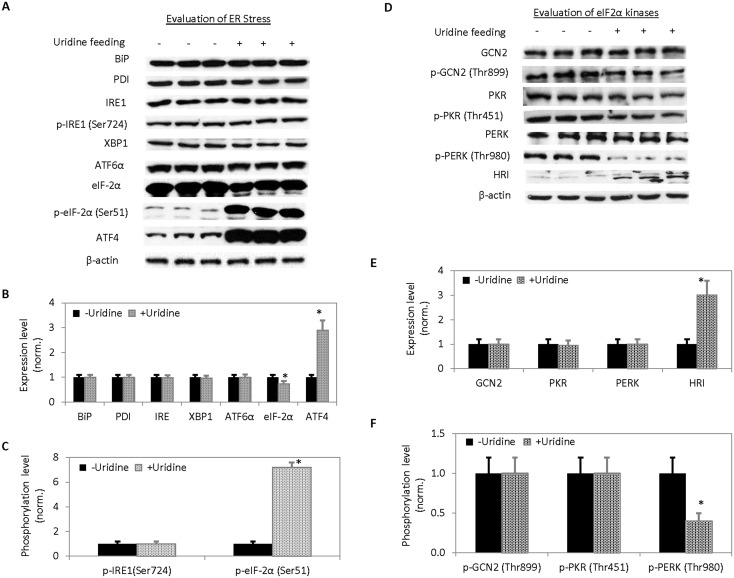
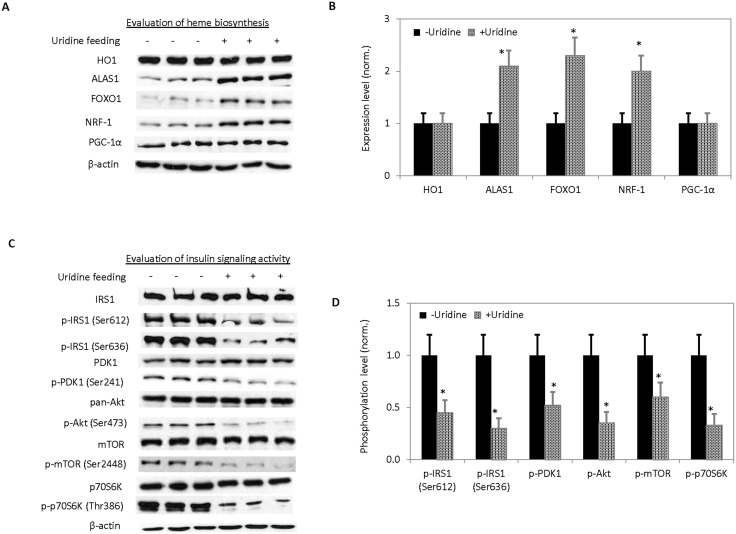
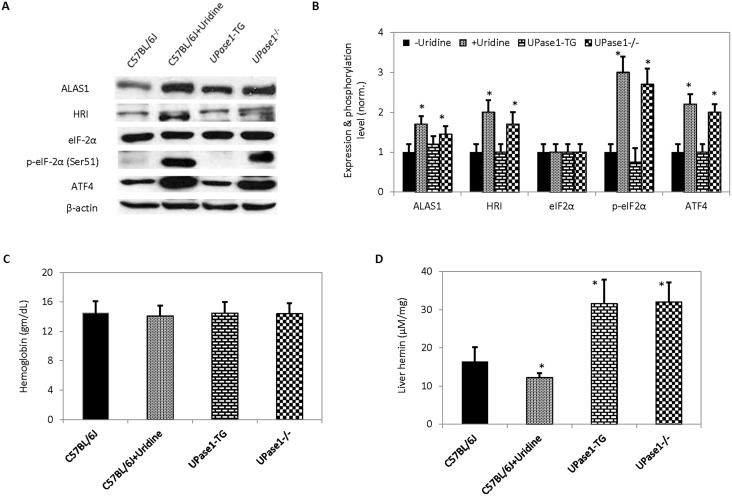
Purines and pyrimidines are complementary bases of the genetic code. The roles of purines and their derivatives in cellular signal transduction and energy metabolism are well-known. In contrast, the roles of pyrimidines and their derivatives in cellular function remain poorly understood. In this study, the roles of uridine, a pyrimidine nucleoside, in liver metabolism are examined in mice. We report that short-term uridine administration in C57BL/6J mice increases liver protein glycosylation profiles, reduces phosphorylation level of insulin signaling proteins, and activates the HRI-eIF-2α-ATF4 heme-deficiency stress response pathway. Short-term uridine administration is also associated with reduced liver hemin level and reduced ability for insulin-stimulated blood glucose removal during an insulin tolerance test. Some of the short-term effects of exogenous uridine in C57BL/6J mice are conserved in transgenic UPase1-/- mice with long-term elevation of endogenous uridine level. UPase1-/- mice exhibit activation of the liver HRI-eIF-2α-ATF4 heme-deficiency stress response pathway. UPase1-/- mice also exhibit impaired ability for insulin-stimulated blood glucose removal. However, other short-term effects of exogenous uridine in C57BL/6J mice are not conserved in UPase1-/- mice. UPase1-/- mice exhibit normal phosphorylation level of liver insulin signaling proteins and increased liver hemin concentration compared to untreated control C57BL/6J mice. Contrasting short-term and long-term consequences of uridine on liver metabolism suggest that uridine exerts transient effects and elicits adaptive responses. Taken together, our data support potential roles of pyrimidines and their derivatives in the regulation of liver metabolism.
嘌呤和嘧啶是遗传密码的互补碱基。嘌呤及其衍生物在细胞信号转导和能量代谢中的作用已为人熟知。相比之下,嘧啶及其衍生物在细胞功能中的作用仍知之甚少。在本研究中,我们在小鼠中研究了嘧啶核苷尿苷在肝脏代谢中的作用。我们报告,在C57BL/6J小鼠中短期给予尿苷可增加肝脏蛋白质糖基化谱,降低胰岛素信号蛋白的磷酸化水平,并激活HRI-eIF-2α-ATF4血红素缺乏应激反应途径。短期给予尿苷还与肝脏血红素水平降低以及胰岛素耐量试验期间胰岛素刺激的血糖清除能力降低有关。外源性尿苷在C57BL/6J小鼠中的一些短期作用在长期内源性尿苷水平升高的转基因UPase1-/-小鼠中得以保留。UPase1-/-小鼠表现出肝脏HRI-eIF-2α-ATF4血红素缺乏应激反应途径的激活。UPase1-/-小鼠还表现出胰岛素刺激的血糖清除能力受损。然而,外源性尿苷在C57BL/6J小鼠中的其他短期作用在UPase1-/-小鼠中未得以保留。与未处理的对照C57BL/6J小鼠相比,UPase1-/-小鼠表现出肝脏胰岛素信号蛋白的正常磷酸化水平和肝脏血红素浓度增加。尿苷对肝脏代谢的短期和长期影响的对比表明尿苷发挥短暂作用并引发适应性反应。综上所述,我们的数据支持嘧啶及其衍生物在肝脏代谢调节中的潜在作用。