Yang Zhong, Wang Yaming, Li Yanan, Liu Qiang, Zeng Qing, Xu Xiaoyin
Department of Radiology, Functional and Molecular Imaging Center, Brigham & Women's Hospital, 75 Francis Street SR 153, Boston, MA 02115, USA.
BMC Biotechnol. 2014 Jun 12;14:55. doi: 10.1186/1472-6750-14-55.
Green fluorescent protein (GFP) is a useful biomarker, widely used in biomedical research to track stem cells after transplantation and/or to assess therapeutic transgene expression. However, both GFP and therapeutic gene products themselves may be immunogenic to the recipient. The main aim of this study was to use animal models to evaluate potential impact of GFP on the cell engraftment and to optimize tracking strategies prior to transplantation.
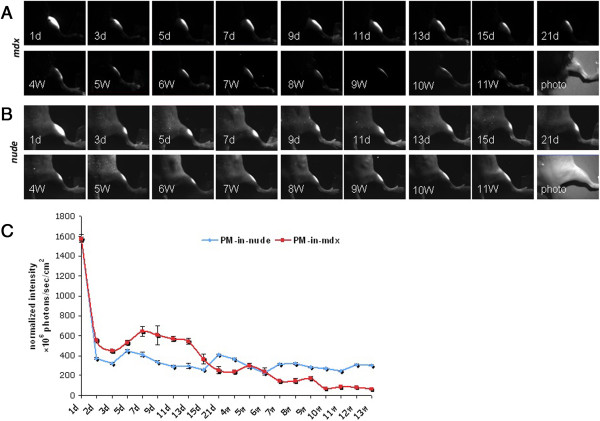
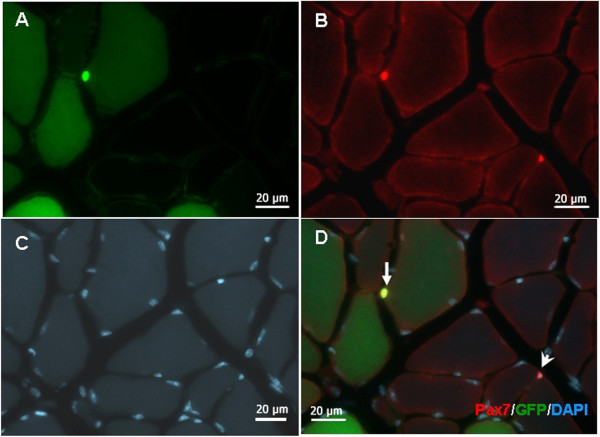
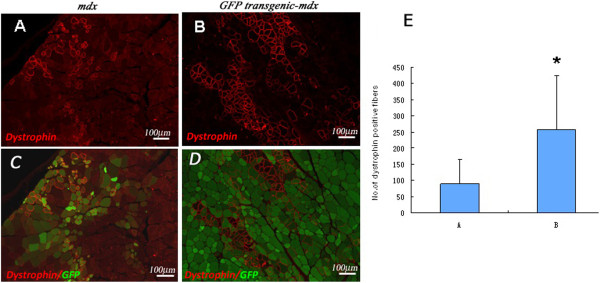
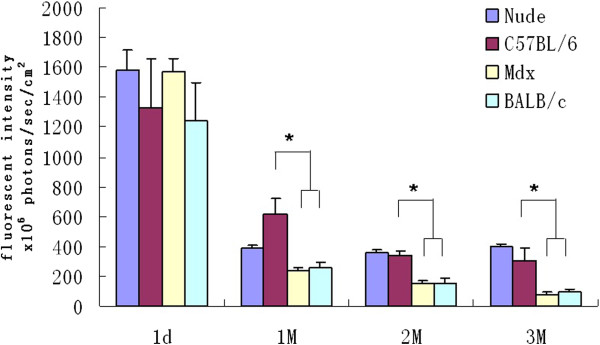
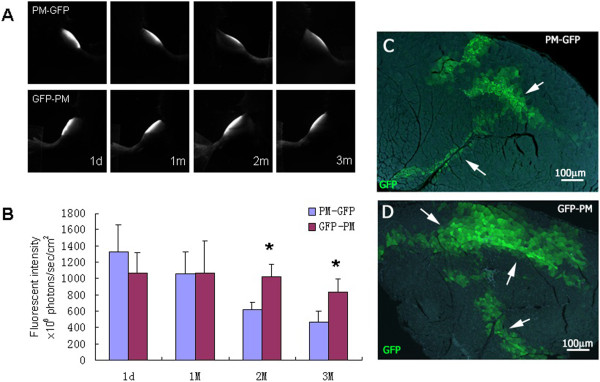
By using a fluorescent imaging (FLI) system, we investigated the dynamic cell behavior of GFP-transduced myoblasts in tibialis anterior (TA) muscles of immunocompetent mdx mice and immuno-compromised nude mice over a period of three months. The results suggested an apparent underlying host immunorejection in the mdx mice. Dystrophin immunostaining showed that the engraftment of wild type myoblasts was much more effective than that of the GFP-labeled counterparts in the mdx mice, further confirming an antigen role of GFP in this process. We tracked the GFP-transduced myoblasts in C57BL/6 mice and found GFP to be minimally immunogenic in these animals, as indicated by the GFP signal maintaining a much stronger level than that found in mdx and BALB/c mice at parallel time points. We also compared the in vivo cell behavior differences between myoblasts from virally GFP-transduced and GFP transgenic mice. The latter displayed much better engraftment, as determined both biomaging and histological observations.
Our results not only demonstrated the immunogenicity of GFP in immunocompetent mice, but determined the optimized conditions for GFP-based in vivo stem cells tracking, that can potentially be extrapolated to human biomedical research.
绿色荧光蛋白(GFP)是一种有用的生物标志物,广泛应用于生物医学研究,用于追踪移植后的干细胞和/或评估治疗性转基因的表达。然而,GFP和治疗性基因产物本身都可能对受体具有免疫原性。本研究的主要目的是使用动物模型评估GFP对细胞植入的潜在影响,并在移植前优化追踪策略。
通过使用荧光成像(FLI)系统,我们在三个月的时间内研究了免疫活性mdx小鼠和免疫缺陷裸鼠的胫前肌(TA)中GFP转导的成肌细胞的动态细胞行为。结果表明mdx小鼠中存在明显的潜在宿主免疫排斥反应。肌营养不良蛋白免疫染色显示,野生型成肌细胞在mdx小鼠中的植入比GFP标记的成肌细胞更有效,进一步证实了GFP在此过程中的抗原作用。我们在C57BL/6小鼠中追踪了GFP转导的成肌细胞,发现GFP在这些动物中的免疫原性极低,平行时间点的GFP信号强度远高于mdx和BALB/c小鼠。我们还比较了病毒GFP转导小鼠和成肌细胞与GFP转基因小鼠成肌细胞在体内的细胞行为差异。通过生物成像和组织学观察确定,后者的植入效果要好得多。
我们的结果不仅证明了GFP在免疫活性小鼠中的免疫原性,还确定了基于GFP的体内干细胞追踪的优化条件,这可能会外推到人类生物医学研究中。