Niu Yunfei, Dong Wei, Guo Han, Deng Yuhu, Guo Lieping, An Xiaofei, He Dawei, Wei Jie, Li Ming
Department of Orthopedic Surgery, Changhai Hospital, Second Military Medical University, Shanghai, People's Republic of China.
Shanghai Synchrotron Radiation Facility, Shanghai Institute of Applied Physics, Chinese Academy of Sciences, Shanghai, People's Republic of China.
Int J Nanomedicine. 2014 May 27;9:2665-75. doi: 10.2147/IJN.S59040. eCollection 2014.
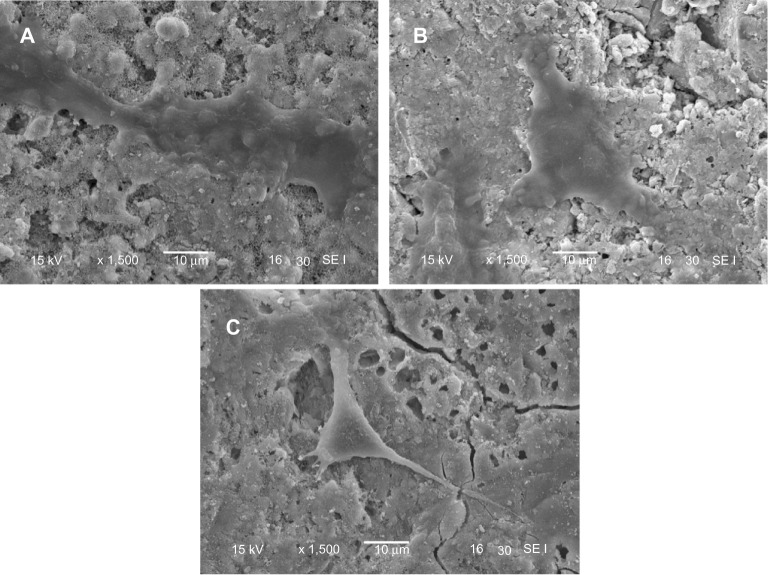
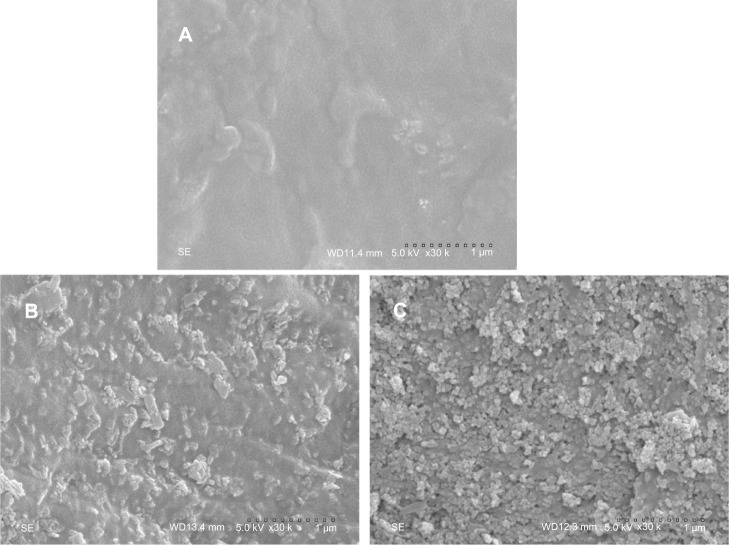
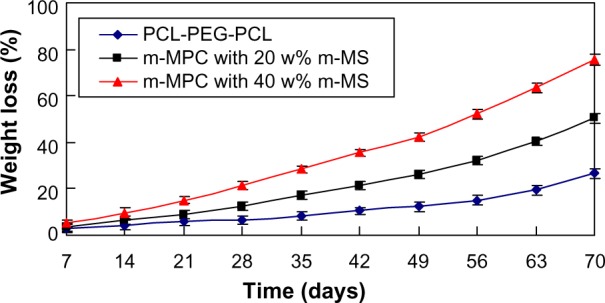
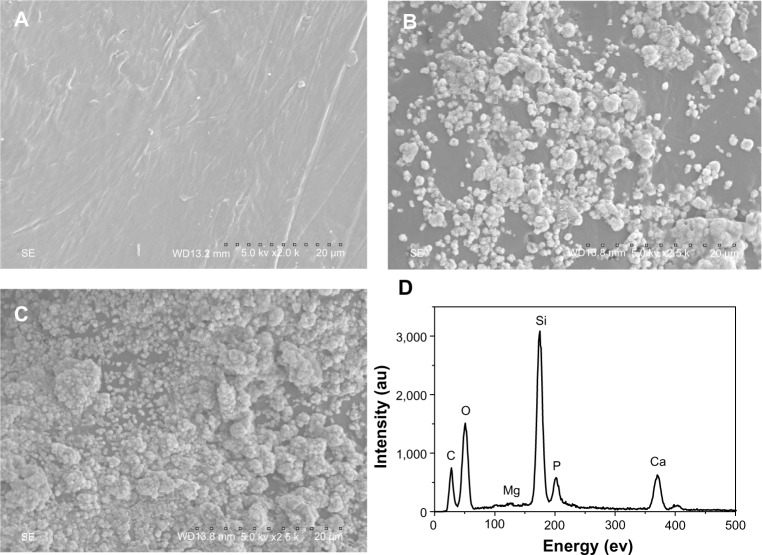
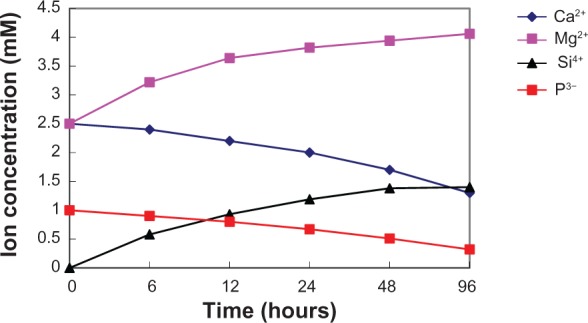
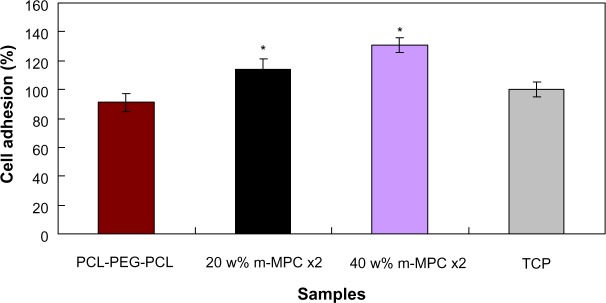
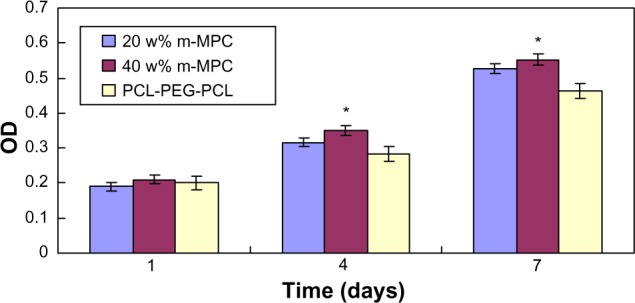
Mesoporous magnesium silicate (m-MS) and poly(ε-caprolactone)-poly(ethylene glycol)-poly(ε-caprolactone) (PCL-PEG-PCL) composite (m-MPC) was synthesized by solvent casting method. The results suggest that the mechanical properties of compressive strength and elastic modulus, as well as hydrophilicity, of the m-MPC increased with increase of m-MS content in the composites. In addition, the weight loss of the m-MPC improved significantly with the increase of m-MS content during composite soaking in phosphate-buffered saline for 10 weeks, indicating that incorporation of m-MS into PCL-PEG-PCL could enhance the degradability of the m-MPC. Moreover, the m-MPC with 40 w% m-MS could induce a dense and continuous apatite layer on its surface after soaking in simulated body fluid for 5 days, which was better than m-MPC 20 w% m-MS, exhibiting excellent in vitro bioactivity. In cell cultural experiments, the results showed that the attachment and viability ratio of MG63 cells on m-MPC increased significantly with the increase of m-MS content, showing that the addition of m-MS into PCL-PEG-PCL could promote cell attachment and proliferation. The results suggest that the incorporation of m-MS into PCL-PEG-PCL could produce bioactive composites with improved hydrophilicity, degradability, bioactivity, and cytocompatibility.
采用溶剂浇铸法合成了介孔硅酸镁(m-MS)与聚(ε-己内酯)-聚(乙二醇)-聚(ε-己内酯)(PCL-PEG-PCL)的复合材料(m-MPC)。结果表明,复合材料m-MPC的抗压强度、弹性模量等力学性能以及亲水性随复合材料中m-MS含量的增加而提高。此外,在磷酸盐缓冲盐溶液中浸泡10周期间,m-MPC的失重随m-MS含量的增加而显著改善,这表明将m-MS掺入PCL-PEG-PCL中可提高m-MPC的降解性。而且,含40 w% m-MS的m-MPC在模拟体液中浸泡5天后,其表面可诱导形成致密且连续的磷灰石层,这比含20 w% m-MS的m-MPC更好,表现出优异的体外生物活性。在细胞培养实验中,结果表明MG63细胞在m-MPC上的附着率和存活率随m-MS含量的增加而显著提高,这表明将m-MS添加到PCL-PEG-PCL中可促进细胞附着和增殖。结果表明,将m-MS掺入PCL-PEG-PCL中可制备出具有改善的亲水性、降解性、生物活性和细胞相容性的生物活性复合材料。