Zhao Fuli, Yao Dan, Guo Ruiwei, Deng Liandong, Dong Anjie, Zhang Jianhua
Department of Polymer Science and Engineering, School of Chemical Engineering and Technology, Tianjin University, Tianjin 300072, China.
Nanomaterials (Basel). 2015 Dec 3;5(4):2054-2130. doi: 10.3390/nano5042054.
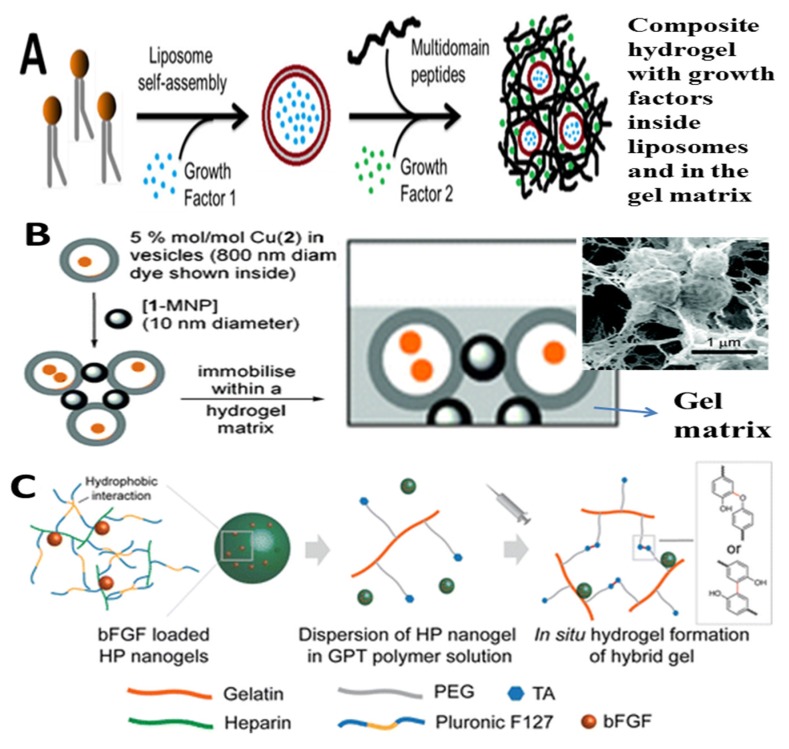
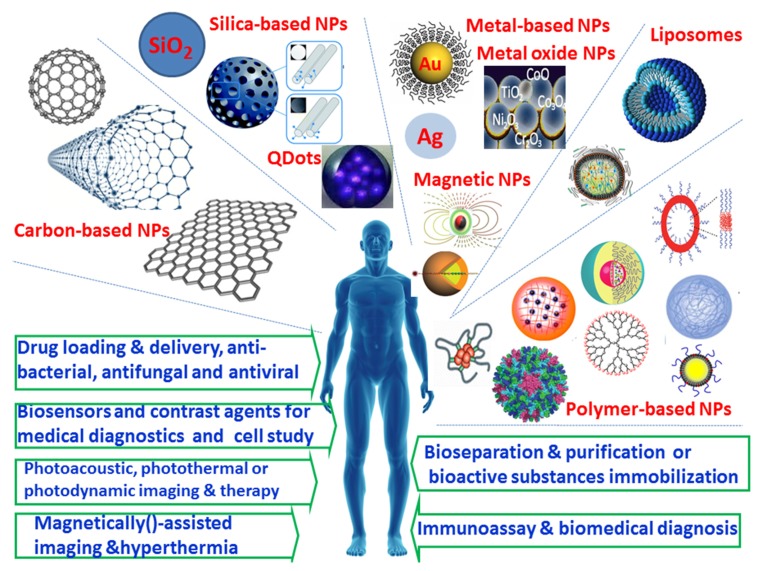
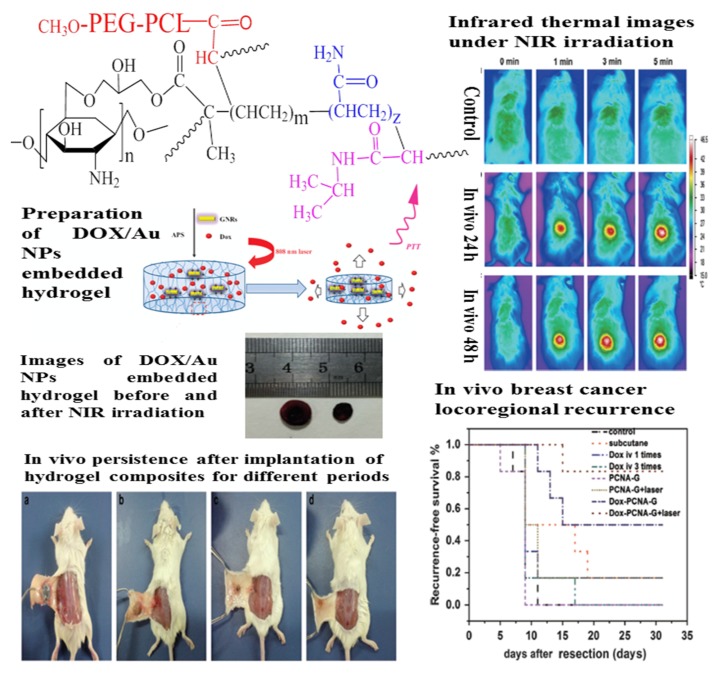
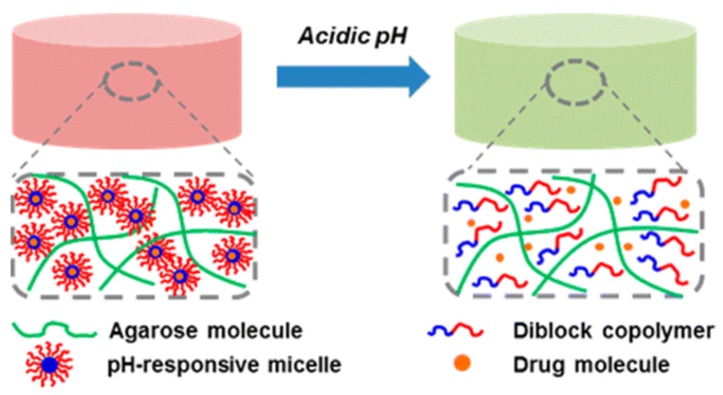
Due to their unique structures and properties, three-dimensional hydrogels and nanostructured particles have been widely studied and shown a very high potential for medical, therapeutic and diagnostic applications. However, hydrogels and nanoparticulate systems have respective disadvantages that limit their widespread applications. Recently, the incorporation of nanostructured fillers into hydrogels has been developed as an innovative means for the creation of novel materials with diverse functionality in order to meet new challenges. In this review, the fundamentals of hydrogels and nanoparticles (NPs) were briefly discussed, and then we comprehensively summarized recent advances in the design, synthesis, functionalization and application of nanocomposite hydrogels with enhanced mechanical, biological and physicochemical properties. Moreover, the current challenges and future opportunities for the use of these promising materials in the biomedical sector, especially the nanocomposite hydrogels produced from hydrogels and polymeric NPs, are discussed.
由于其独特的结构和性质,三维水凝胶和纳米结构颗粒已得到广泛研究,并在医学、治疗和诊断应用中显示出极高的潜力。然而,水凝胶和纳米颗粒系统各自存在一些缺点,限制了它们的广泛应用。最近,将纳米结构填料掺入水凝胶中已被开发为一种创新方法,用于创建具有多种功能的新型材料,以应对新的挑战。在本综述中,简要讨论了水凝胶和纳米颗粒(NPs)的基本原理,然后我们全面总结了具有增强机械、生物学和物理化学性质的纳米复合水凝胶在设计、合成、功能化和应用方面的最新进展。此外,还讨论了在生物医学领域使用这些有前景的材料,特别是由水凝胶和聚合物纳米颗粒制备的纳米复合水凝胶时面临的当前挑战和未来机遇。