Gilani Syed Zulqarnain, Rooney Kathleen, Shafait Faisal, Walters Mark, Mian Ajmal
School of Computer Science and Software Engineering, The University of Western Australia, Perth, Western Australia.
School of Anatomy, Physiology and Human Biology, The University of Western Australia, Perth, Western Australia.
PLoS One. 2014 Jun 12;9(6):e99483. doi: 10.1371/journal.pone.0099483. eCollection 2014.
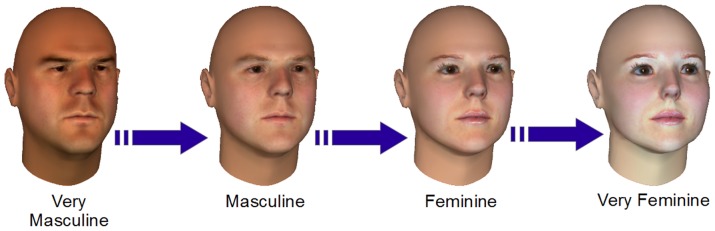
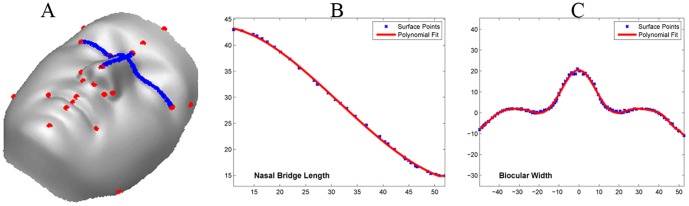
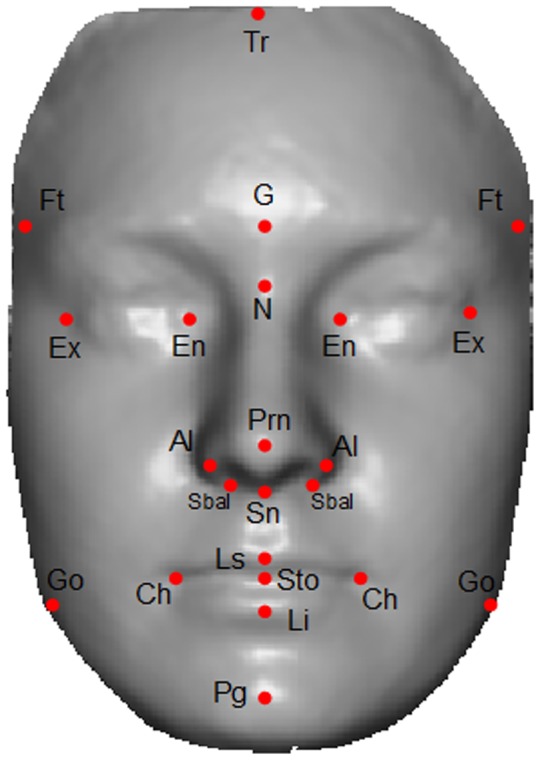
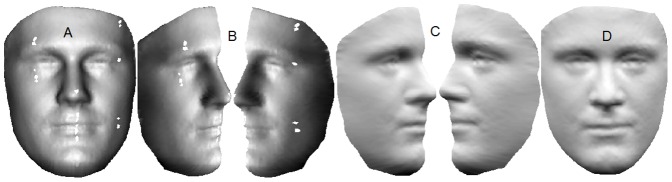
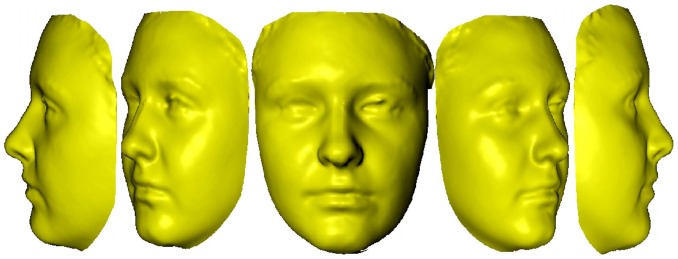
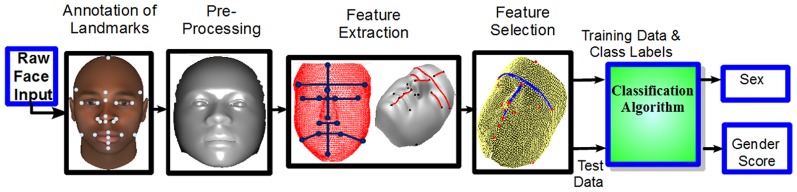
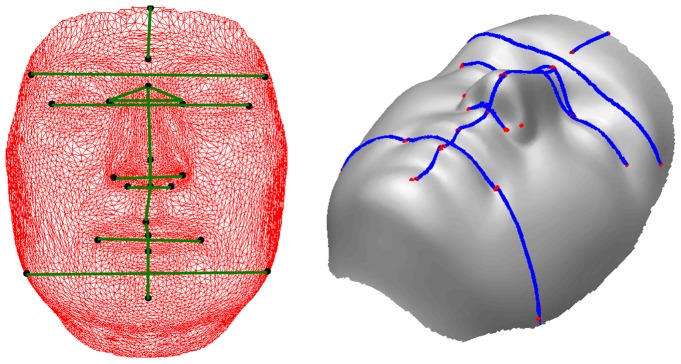
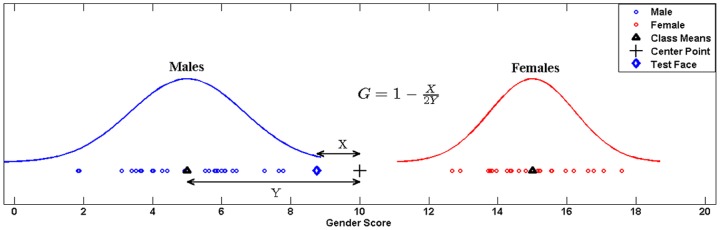
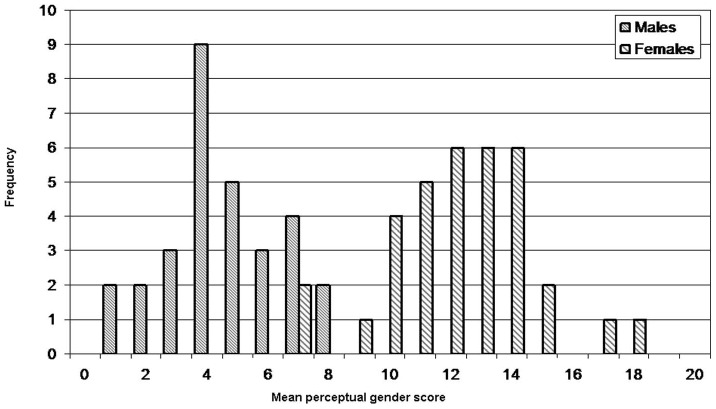
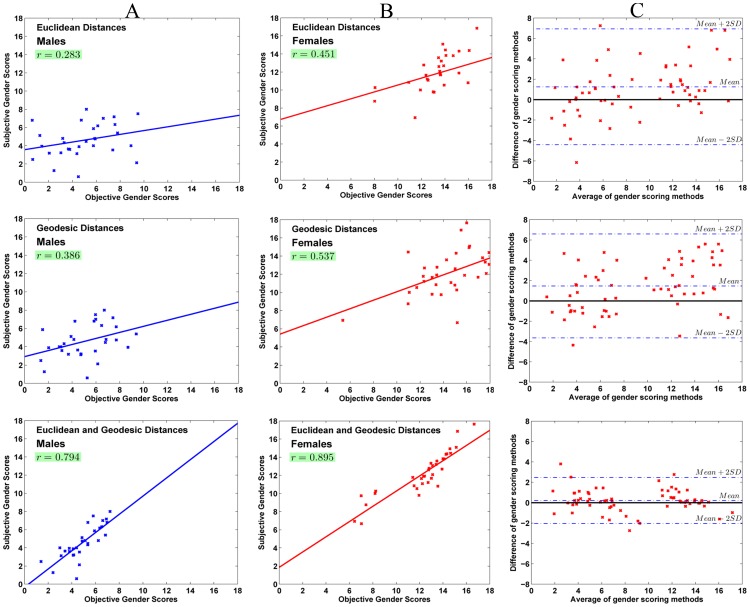
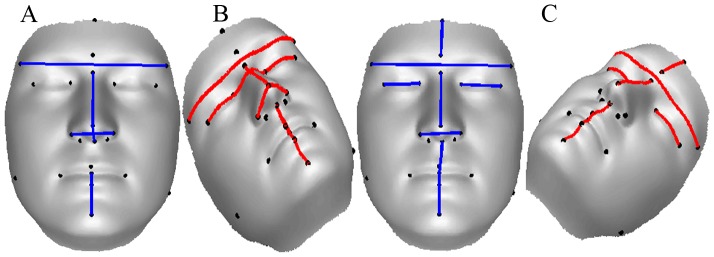
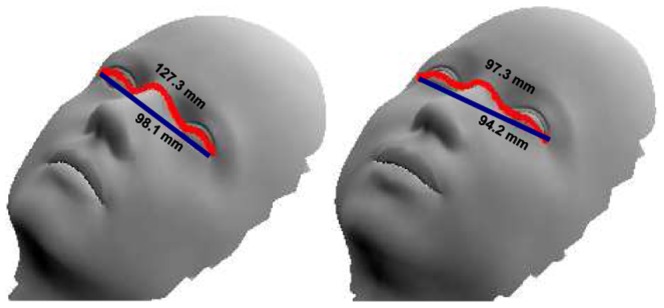
Gender score is the cognitive judgement of the degree of masculinity or femininity of a face which is considered to be a continuum. Gender scores have long been used in psychological studies to understand the complex psychosocial relationships between people. Perceptual scores for gender and attractiveness have been employed for quality assessment and planning of cosmetic facial surgery. Various neurological disorders have been linked to the facial structure in general and the facial gender perception in particular. While, subjective gender scoring by human raters has been a tool of choice for psychological studies for many years, the process is both time and resource consuming. In this study, we investigate the geometric features used by the human cognitive system in perceiving the degree of masculinity/femininity of a 3D face. We then propose a mathematical model that can mimic the human gender perception. For our experiments, we obtained 3D face scans of 64 subjects using the 3dMDface scanner. The textureless 3D face scans of the subjects were then observed in different poses and assigned a gender score by 75 raters of a similar background. Our results suggest that the human cognitive system employs a combination of Euclidean and geodesic distances between biologically significant landmarks of the face for gender scoring. We propose a mathematical model that is able to automatically assign an objective gender score to a 3D face with a correlation of up to 0.895 with the human subjective scores.
性别评分是对面部男性化或女性化程度的认知判断,被认为是一个连续体。性别评分长期以来一直用于心理学研究,以理解人与人之间复杂的社会心理关系。性别和吸引力的感知评分已被用于面部整形手术的质量评估和规划。各种神经系统疾病一般都与面部结构有关,特别是与面部性别感知有关。虽然多年来,由人类评分者进行的主观性别评分一直是心理学研究的首选工具,但这个过程既耗时又耗费资源。在本研究中,我们调查了人类认知系统在感知三维面部男性化/女性化程度时所使用的几何特征。然后,我们提出了一个可以模拟人类性别感知的数学模型。在我们的实验中,我们使用3dMDface扫描仪获得了64名受试者的三维面部扫描图像。然后,在不同姿势下观察受试者的无纹理三维面部扫描图像,并由75名背景相似的评分者给出性别评分。我们的结果表明,人类认知系统在进行性别评分时,采用了面部生物学上重要地标之间的欧几里得距离和测地距离的组合。我们提出了一个数学模型,该模型能够自动为三维面部分配一个客观的性别评分,与人类主观评分的相关性高达0.895。