Neurocognitive Developmental Unit, School of Psychological Science, University of Western Australia, Perth, 6009, Western Australia, Australia.
Telethon Kids Institute, University of Western Australia, Perth, 6008, Western Australia, Australia.
Sci Rep. 2017 Aug 24;7(1):9348. doi: 10.1038/s41598-017-09939-y.
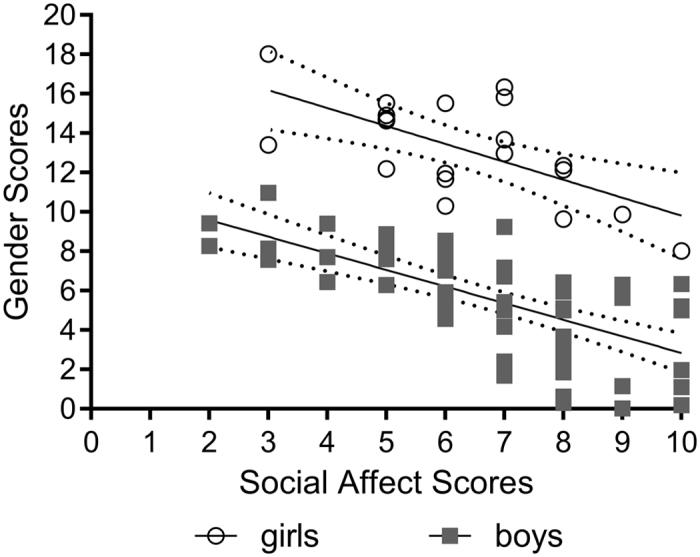
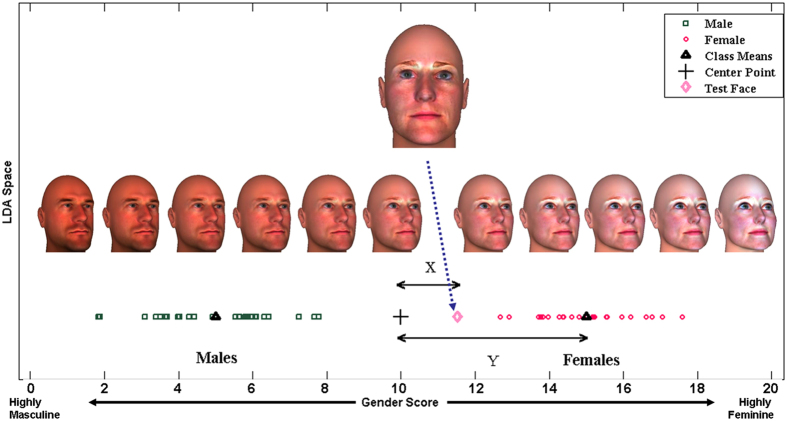
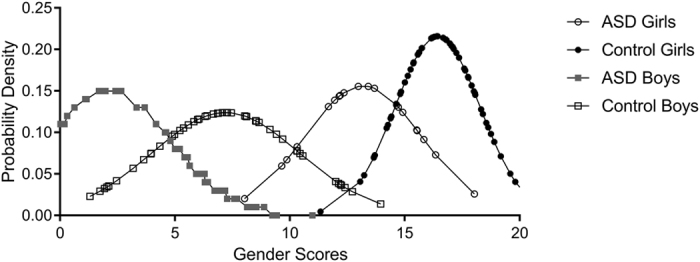
Elevated prenatal testosterone exposure has been associated with Autism Spectrum Disorder (ASD) and facial masculinity. By employing three-dimensional (3D) photogrammetry, the current study investigated whether prepubescent boys and girls with ASD present increased facial masculinity compared to typically-developing controls. There were two phases to this research. 3D facial images were obtained from a normative sample of 48 boys and 53 girls (3.01-12.44 years old) to determine typical facial masculinity/femininity. The sexually dimorphic features were used to create a continuous 'gender score', indexing degree of facial masculinity. Gender scores based on 3D facial images were then compared for 54 autistic and 54 control boys (3.01-12.52 years old), and also for 20 autistic and 60 control girls (4.24-11.78 years). For each sex, increased facial masculinity was observed in the ASD group relative to control group. Further analyses revealed that increased facial masculinity in the ASD group correlated with more social-communication difficulties based on the Social Affect score derived from the Autism Diagnostic Observation Scale-Generic (ADOS-G). There was no association between facial masculinity and the derived Restricted and Repetitive Behaviours score. This is the first study demonstrating facial hypermasculinisation in ASD and its relationship to social-communication difficulties in prepubescent children.
产前睾酮水平升高与自闭症谱系障碍(ASD)和面部男性化有关。本研究采用三维(3D)摄影测量法,调查了青春期前的 ASD 男孩和女孩是否比典型发育的对照组表现出更高的面部男性化。这项研究有两个阶段。从一个 48 名男孩和 53 名女孩(3.01-12.44 岁)的正常样本中获取 3D 面部图像,以确定典型的面部男性化/女性化。使用这些性别二态性特征来创建一个连续的“性别评分”,指标面部男性化程度。然后,根据 3D 面部图像为 54 名自闭症男孩和 54 名对照组男孩(3.01-12.52 岁)以及 20 名自闭症女孩和 60 名对照组女孩(4.24-11.78 岁)比较性别评分。对于每个性别,与对照组相比,ASD 组的面部男性化程度更高。进一步的分析表明,ASD 组中面部男性化程度的增加与社会情感得分(源自自闭症诊断观察量表通用版(ADOS-G))所反映的社交沟通困难程度增加有关。面部男性化与衍生的受限和重复行为评分之间没有关联。这是第一项研究表明 ASD 中存在面部过度男性化及其与青春期前儿童社交沟通困难的关系。