Department of Neurobiology and Behavior, Stony Brook University Stony Brook, NY, USA.
Front Neural Circuits. 2014 Jun 5;8:59. doi: 10.3389/fncir.2014.00059. eCollection 2014.
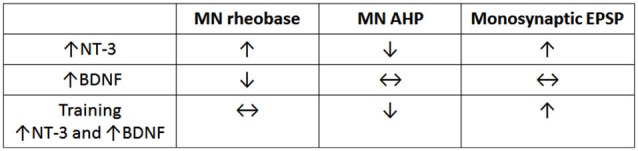
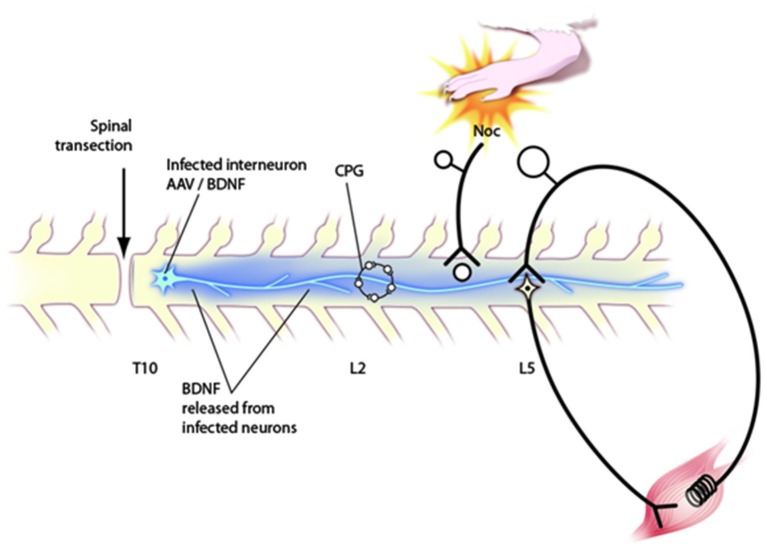
Work early in the last century emphasized the stereotyped activity of spinal circuits based on studies of reflexes. However, the last several decades have focused on the plasticity of these spinal circuits. These considerations began with studies of the effects of monoamines on descending and reflex circuits. In recent years new classes of compounds called growth factors that are found in peripheral nerves and the spinal cord have been shown to affect circuit behavior in the spinal cord. In this review we will focus on the effects of neurotrophins, particularly nerve growth factor (NGF), brain derived neurotrophic factor (BDNF) and neurotrophin-3 (NT-3), on spinal circuits. We also discuss evidence that these molecules can modify functions including nociceptive behavior, motor reflexes and stepping behavior. Since these substances and their receptors are normally present in the spinal cord, they could potentially be useful in improving function in disease states and after injury. Here we review recent findings relevant to these translational issues.
上个世纪早期的研究工作强调了基于反射研究的脊髓回路的刻板活动。然而,过去几十年的研究重点是这些脊髓回路的可塑性。这些考虑始于对单胺类物质对下行和反射回路的影响的研究。近年来,发现存在于外周神经和脊髓中的称为生长因子的新类化合物已被证明会影响脊髓中的回路行为。在这篇综述中,我们将重点介绍神经营养因子(特别是神经生长因子(NGF)、脑源性神经营养因子(BDNF)和神经营养因子-3(NT-3))对脊髓回路的影响。我们还讨论了这些分子可以修饰包括痛觉行为、运动反射和步态行为在内的功能的证据。由于这些物质及其受体通常存在于脊髓中,因此它们有可能在疾病状态和损伤后改善功能。在这里,我们回顾了与这些转化问题相关的最新发现。