Rehabilitation Medicine, University of Alberta , Edmonton, AB , Canada.
Front Neurol. 2013 Nov 19;4:187. doi: 10.3389/fneur.2013.00187. eCollection 2013.
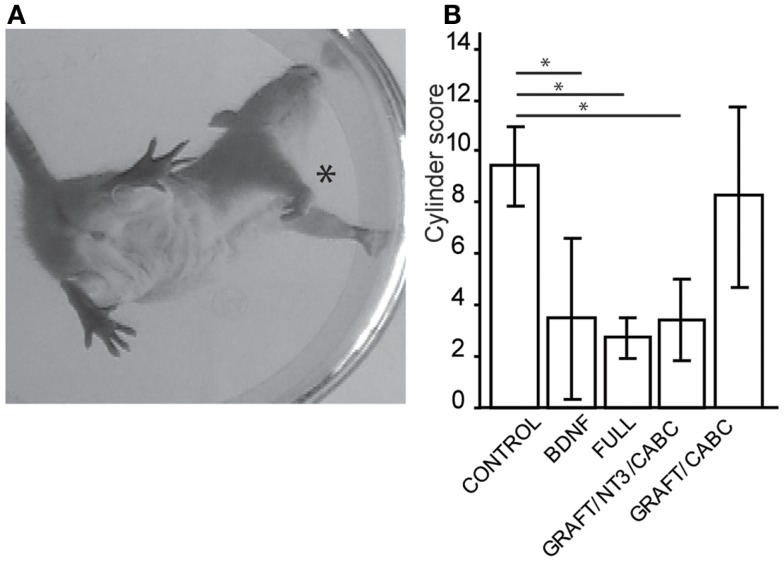
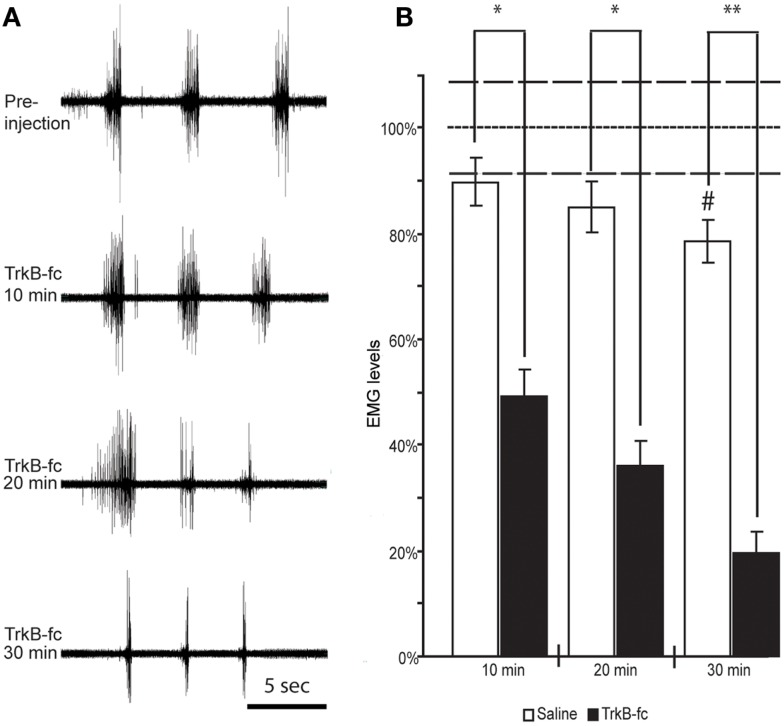
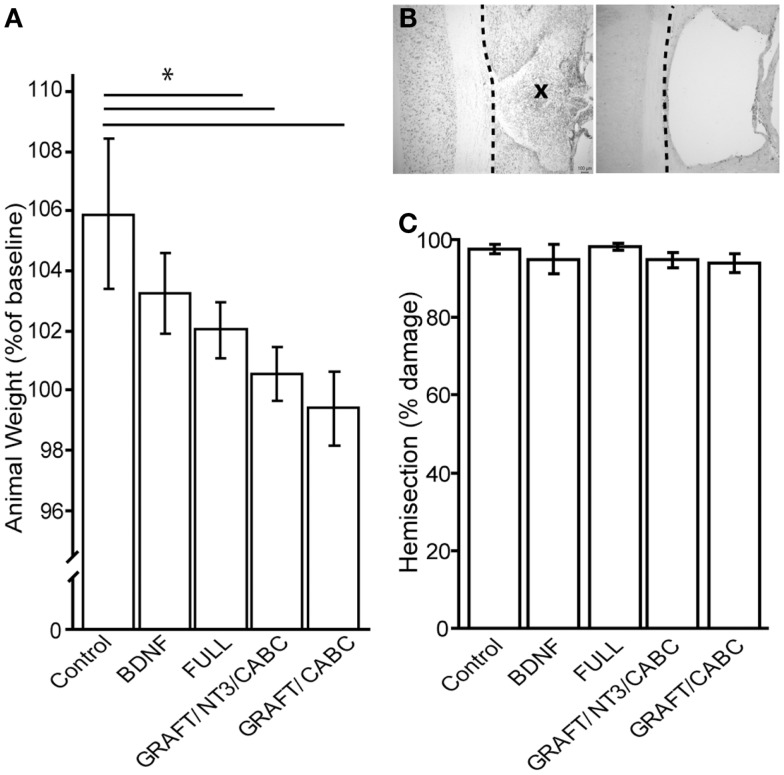
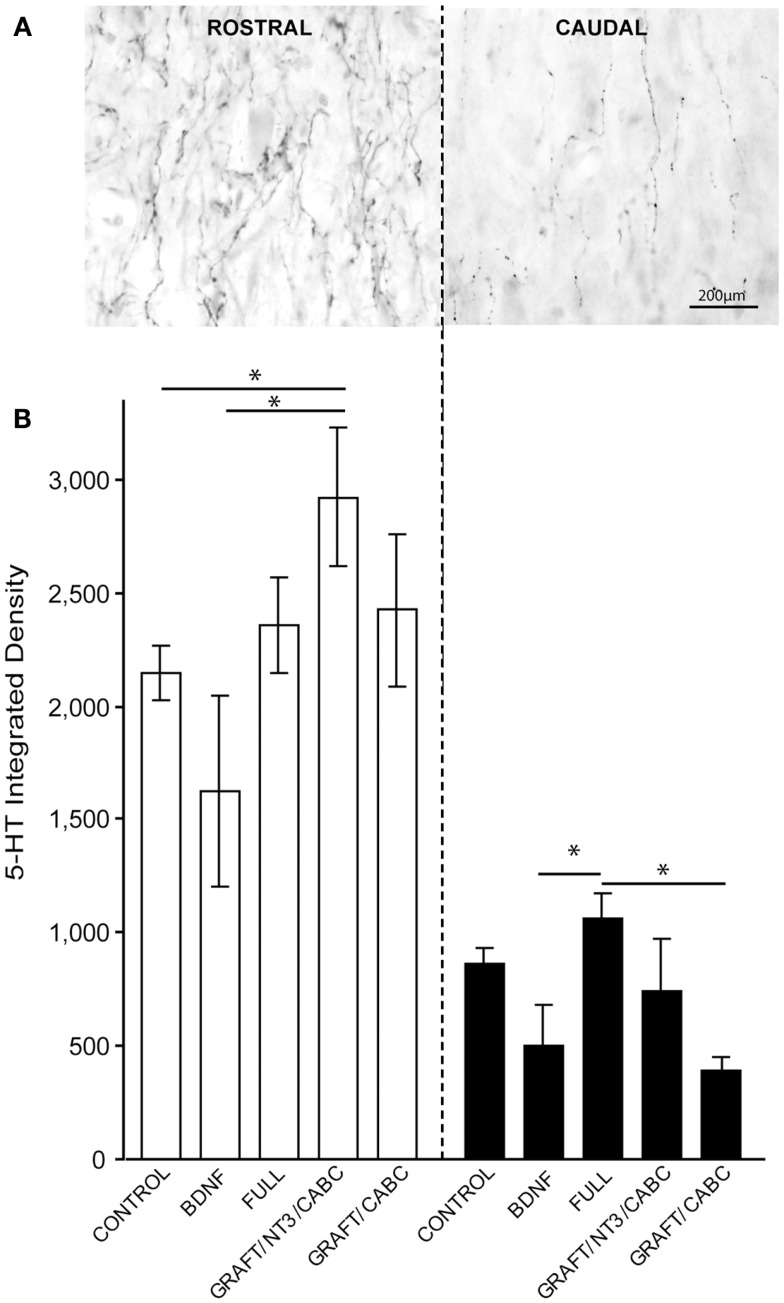
We have recently reported that rats with complete thoracic spinal cord injury (SCI) that received a combinatorial treatment, including viral brain-derived neurotrophic factor (BDNF) delivery in the spinal cord, not only showed enhanced axonal regeneration, but also deterioration of hind-limb motor function. By demonstrating that BDNF over-expression can trigger spasticity-like symptoms in a rat model of sacral SCI, we proposed a causal relationship between the observed spasticity-like symptoms (i.e., resistance to passive range of motion) and the over-expression of BDNF. The current study was originally designed to evaluate a comparable combined treatment for cervical SCI in the rat to improve motor recovery. Once again we found similar signs of spasticity involving clenching of the paws and wrist flexion. This finding changed the focus of the study and, we then explored whether this spasticity-like symptom is directly related to the over-expression of BDNF by administering a BDNF antagonist. Using electromyographic measurements we showed that this treatment gradually diminished the resistance to overcome forelimb flexion in an acute experiment. Thus, we conclude that neuro-excitatory effects of chronic BDNF delivery together with diminished descending control after SCI can result in adverse effects.
我们最近报道称,接受包括脊髓内脑源性神经营养因子(BDNF)递送来的联合治疗的完全性胸髓损伤(SCI)大鼠不仅表现出增强的轴突再生,而且后肢运动功能恶化。通过证明 BDNF 的过表达可以在骶部 SCI 的大鼠模型中引发痉挛样症状,我们提出了观察到的痉挛样症状(即对被动运动范围的抵抗)与 BDNF 过表达之间的因果关系。本研究最初旨在评估大鼠颈髓 SCI 的可比联合治疗方法,以改善运动功能恢复。我们再次发现类似的痉挛样迹象,包括爪子紧握和手腕弯曲。这一发现改变了研究的重点,然后我们探讨了这种痉挛样症状是否与 BDNF 的过表达直接相关,方法是给予 BDNF 拮抗剂。通过肌电图测量,我们表明这种治疗方法在急性实验中逐渐减轻了克服前肢弯曲的阻力。因此,我们得出结论,慢性 BDNF 递送达后的神经兴奋性作用以及 SCI 后下降控制的减弱可能会导致不良影响。