Cartier Flora, Marcq Ingrid, Douam Florian, Ossart Christèle, Regnier Aline, Debuysscher Véronique, Lavillette Dimitri, Bouhlal Hicham
EA 4666, UFR de Médecine, CAP-Santé (FED 4231), Université de Picardie Jules Verne, Amiens, France; INSERM U1053, Laboratoire de Physiologie du Cancer du Foie, Université Bordeaux Segalen, Bordeaux, France.
EA 4666, UFR de Médecine, CAP-Santé (FED 4231), Université de Picardie Jules Verne, Amiens, France.
PLoS One. 2014 Jun 13;9(6):e99601. doi: 10.1371/journal.pone.0099601. eCollection 2014.
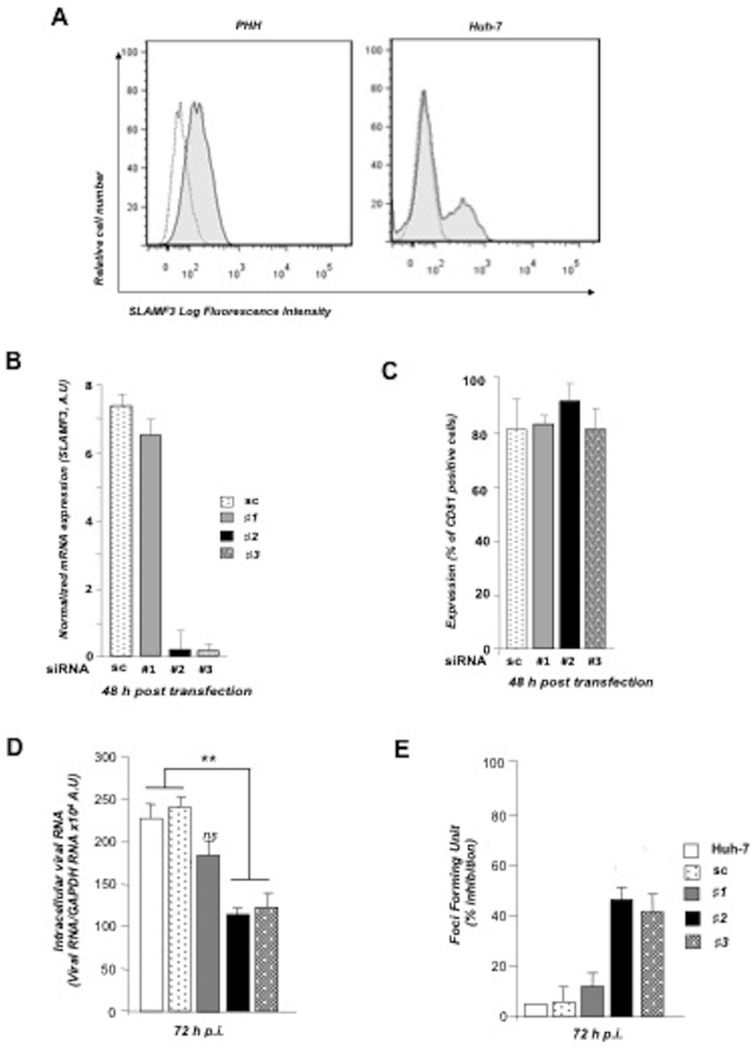
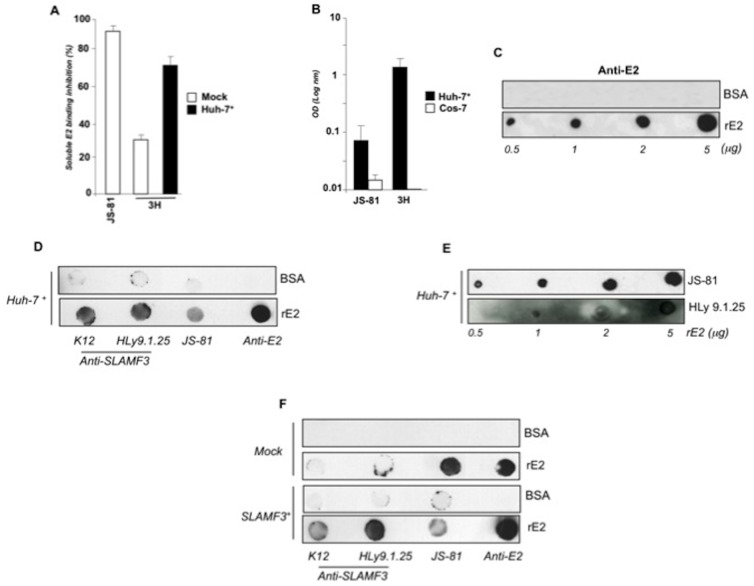
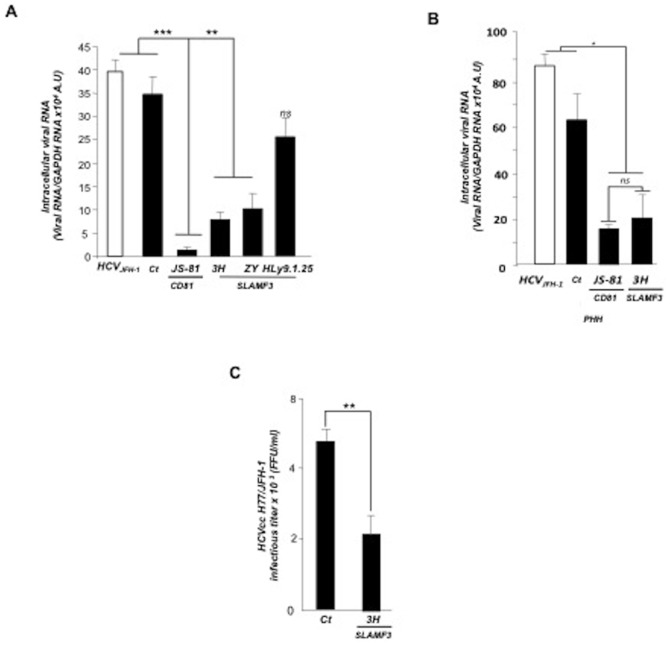
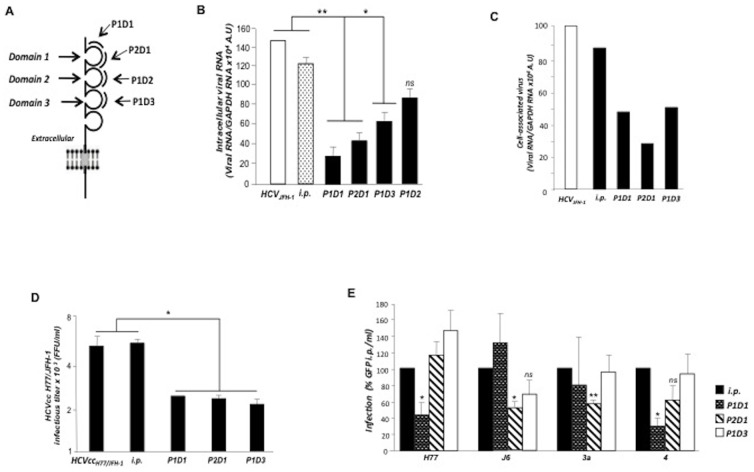
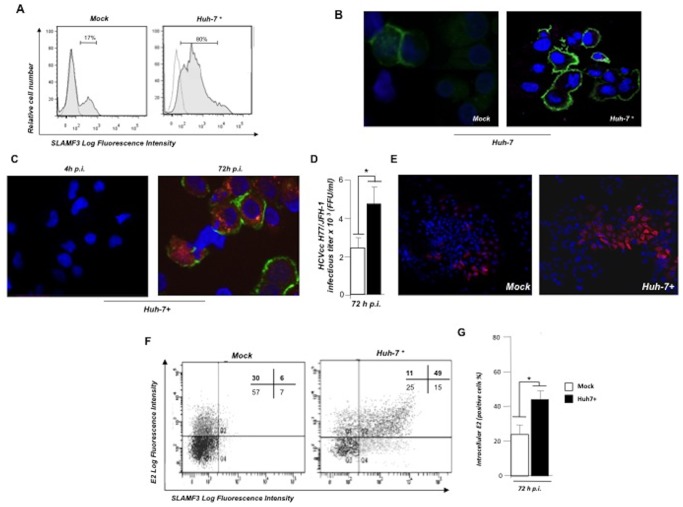
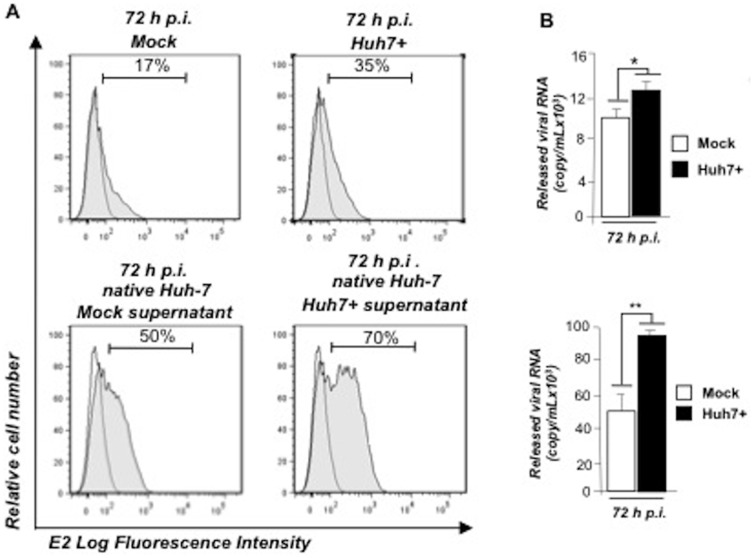
Hepatitis C virus (HCV) is a leading cause of cirrhosis and liver cancer worldwide. We recently characterized for the first time the expression of Signaling Lymphocyte Activating Molecule 3 (SLAMF3) in human hepatocytes and here, we report that SLAMF3 interacts with the HCV viral protein E2 and is implicated in HCV entry process. We found a strong correlation between SLAMF3 expression level and hepatocyte susceptibility to HCV infection. The use of specific siRNAs to down-modulate SLAMF3 expression and SLAMF3-blocking antibodies both decreased the hepatocytes susceptibility to HCV infection. Moreover, SLAMF3 over-expression significantly increased susceptibility to HCV infection. Interestingly, experiments with peptides derived from each SLAMF3 domain showed that the first N-terminal extracellular domain is essential for interaction with HCV particles. Finally, we showed that recombinant HCV envelop protein E2 can bind SLAMF3 and that anti-SLAMF3 antibodies inhibited specifically this interaction. Overall, our results revealed that SLAMF3 plays a role during HCV entry, likely by enhancing entry of viral particle within hepatocytes.
丙型肝炎病毒(HCV)是全球肝硬化和肝癌的主要病因。我们最近首次对人类肝细胞中信号淋巴细胞激活分子3(SLAMF3)的表达进行了表征,在此我们报告SLAMF3与HCV病毒蛋白E2相互作用,并参与HCV进入过程。我们发现SLAMF3表达水平与肝细胞对HCV感染的易感性之间存在强烈相关性。使用特异性siRNA下调SLAMF3表达以及使用SLAMF3阻断抗体均降低了肝细胞对HCV感染的易感性。此外,SLAMF3过表达显著增加了对HCV感染的易感性。有趣的是,对源自每个SLAMF3结构域的肽进行的实验表明,第一个N端细胞外结构域对于与HCV颗粒相互作用至关重要。最后,我们表明重组HCV包膜蛋白E2可以结合SLAMF3,并且抗SLAMF3抗体特异性抑制这种相互作用。总体而言,我们的结果表明SLAMF3在HCV进入过程中发挥作用,可能是通过增强病毒颗粒进入肝细胞。