Tumor Immunology Lab, Hematology and Oncology, Medical University Innsbruck and Tyrolean Cancer Research Institute, Innsbruck, Austria.
Pathology Unit, German Primate Center, Leibniz Institute for Primate Research, Goettingen, Germany.
J Gen Virol. 2014 Oct;95(Pt 10):2273-2284. doi: 10.1099/vir.0.066563-0. Epub 2014 Jun 13.
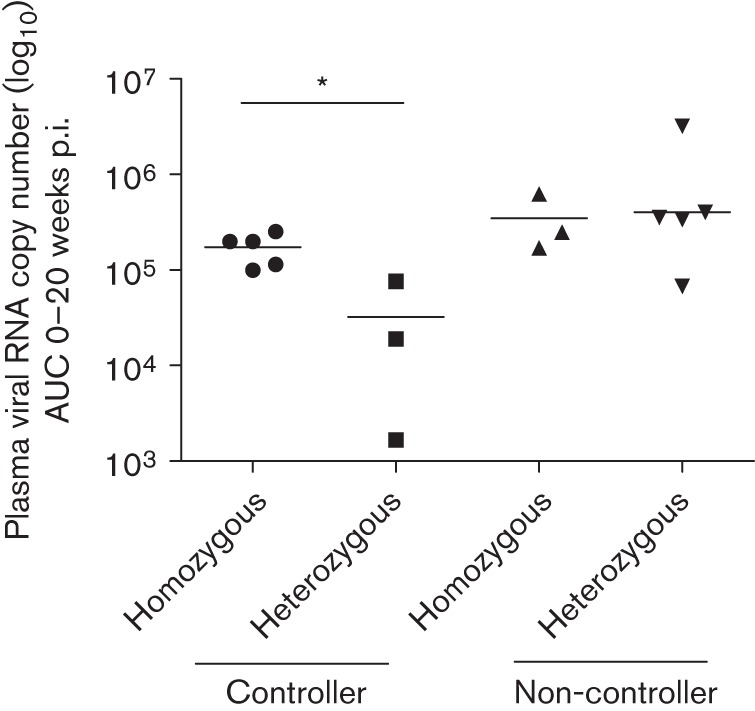
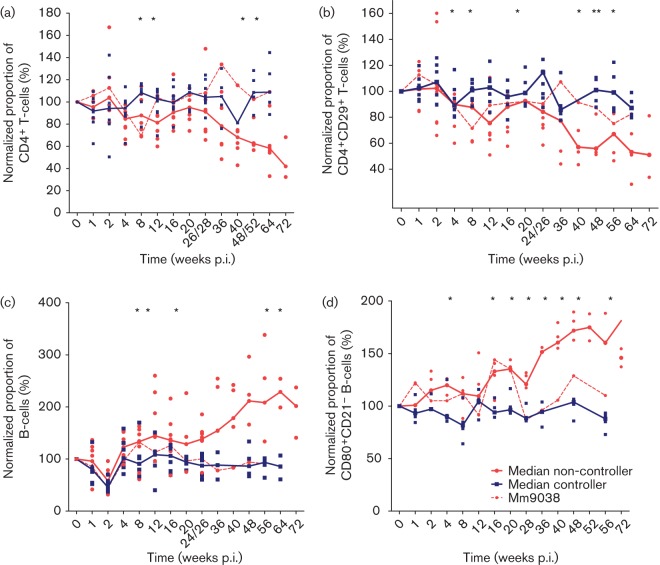
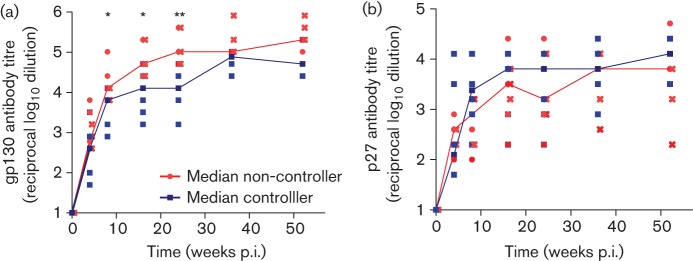
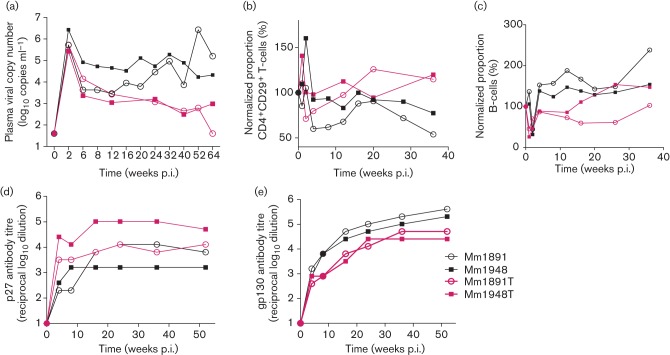
Infection of macaques with live attenuated simian immunodeficiency virus (SIV) usually results in long-lasting efficient protection against infection with pathogenic immunodeficiency viruses. However, attenuation by deletion of regulatory genes such as nef is not complete, leading to a high viral load and fatal disease in some animals. To characterize immunological parameters and polymorphic host factors, we studied 17 rhesus macaques infected with attenuated SIVmac239ΔNU. Eight animals were able to control viral replication, whereas the remaining animals (non-controllers) displayed variable set-point viral loads. Peak viral load at 2 weeks post-infection (p.i.) correlated significantly with set-point viral load (P<0.0001). CD4(+) T-cell frequencies differed significantly soon after infection between controllers and non-controllers. Abnormal B-cell activation previously ascribed to Nef function could already be observed in non-controllers 8 weeks after infection despite the absence of Nef. Two non-controllers developed an AIDS-like disease within 102 weeks p.i. Virus from these animals transmitted to naïve animals replicated at low levels and the recipients did not develop immunodeficiency. This suggested that host factors determined differential viral load and subsequent disease course. Known Mhc class I alleles associated with disease progression in SIV WT infection only marginally influenced the viral load in Δnef-infected animals. Protection from SIVmac251 was associated with homozygosity for MHC class II in conjunction with a TLR7 polymorphism and showed a trend with initial viral replication. We speculated that host factors whose effects were usually masked by Nef were responsible for the different disease courses in individual animals upon infection with nef-deleted viruses.
感染活减毒猴免疫缺陷病毒(SIV)通常会导致对致病性免疫缺陷病毒感染的长期有效保护。然而,通过缺失调节基因(如 nef)的衰减并不完全,导致一些动物的病毒载量高且疾病致命。为了描述免疫参数和多态性宿主因素,我们研究了 17 只感染减毒 SIVmac239ΔNU 的恒河猴。8 只动物能够控制病毒复制,而其余动物(非控制者)表现出可变的病毒载量。感染后 2 周的峰值病毒载量与病毒载量的设定点显著相关(P<0.0001)。感染后控制器和非控制器之间的 CD4+T 细胞频率在早期就有显著差异。尽管缺乏 nef,但早在感染后 8 周,非控制器中先前归因于 nef 功能的异常 B 细胞激活就已经可以观察到。2 只非控制器在感染后 102 周内发展为艾滋病样疾病。来自这些动物的病毒传播给天真的动物,复制水平较低,接受者没有发展为免疫缺陷。这表明宿主因素决定了不同的病毒载量和随后的疾病过程。与 SIV WT 感染中疾病进展相关的已知 MHC 类 I 等位基因仅对 Δnef 感染动物的病毒载量有轻微影响。对 SIVmac251 的保护与 MHC 类 II 的纯合性以及 TLR7 多态性有关,并与初始病毒复制呈趋势。我们推测,在感染 nef 缺失病毒时,那些通常被 nef 掩盖的宿主因素是导致个体动物不同疾病过程的原因。