Department of Pharmacy, Unit of PharmacoEpidemiology & PharmacoEconomics, University of Groningen, Antonius Deusinglaan 1, 9713 AV Groningen, The Netherlands.
Respir Res. 2014 Jun 14;15(1):66. doi: 10.1186/1465-9921-15-66.
The PHARMACOP-intervention significantly improved medication adherence and inhalation technique for patients with COPD compared with usual care. This study aimed to evaluate its cost-effectiveness.
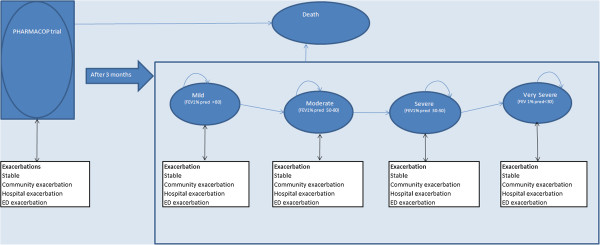
An economic analysis was performed from the Belgian healthcare payer's perspective. A Markov model was constructed in which a representative group of patients with COPD (mean age of 70 years, 66% male, 43% current smokers and mean Forced Expiratory Volume in 1 second of % predicted of 50), was followed for either receiving the 3-month PHARMACOP-intervention or usual care. Three types of costs were calculated: intervention costs, medication costs and exacerbation costs. Outcome measures included the number of hospital-treated exacerbations, cost per prevented hospital-treated exacerbation and cost per Quality Adjusted Life-Year. Follow-up was 1 year in the basecase analysis. Sensitivity and scenario analyses (including long-term follow-up) were performed to assess uncertainty.
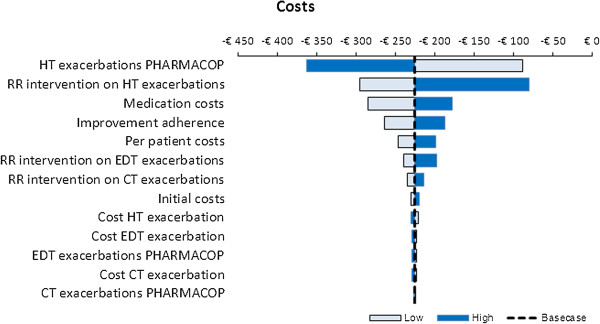
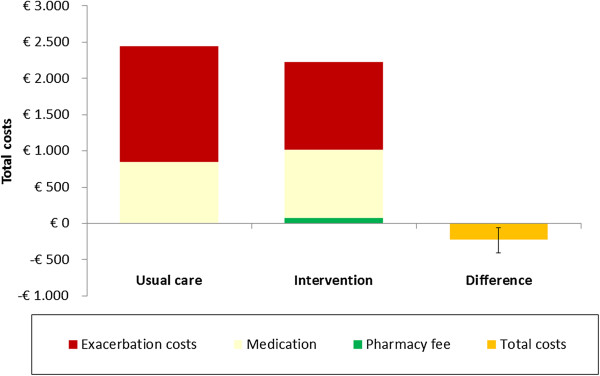
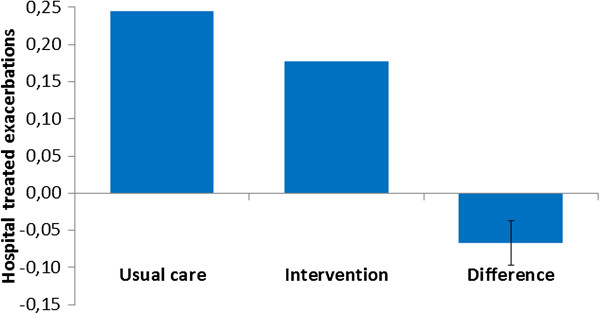
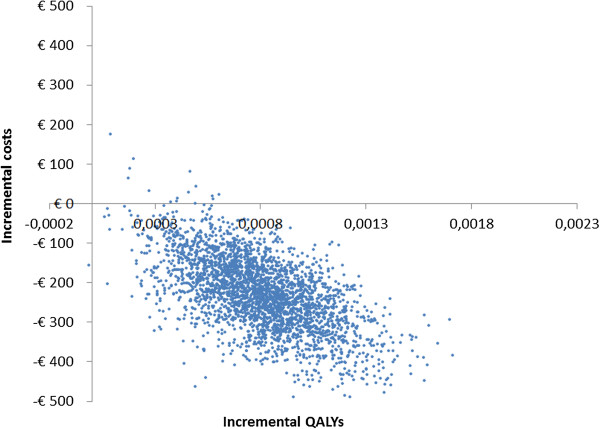
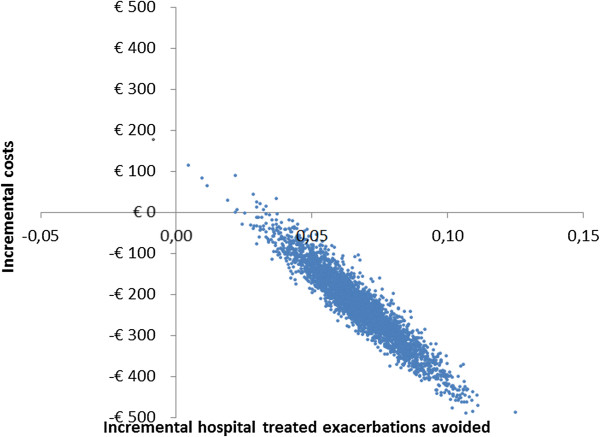
In the basecase analysis, the average overall costs per patient for the PHARMACOP-intervention and usual care were €2,221 and €2,448, respectively within the 1-year time horizon. This reflects cost savings of €227 for the PHARMACOP-intervention. The PHARMACOP-intervention resulted in the prevention of 0.07 hospital-treated exacerbations per patient (0.177 for PHARMACOP versus 0.244 for usual care). Results showed robust cost-savings in various sensitivity analyses.
Optimization of current pharmacotherapy (e.g. close monitoring of inhalation technique and medication adherence) has been shown to be cost-saving and should be considered before adding new therapies.
与常规护理相比,PHARMACOP 干预显著提高了 COPD 患者的药物依从性和吸入技术。本研究旨在评估其成本效益。
从比利时医疗保健支付者的角度进行了经济分析。构建了一个马尔可夫模型,其中包括一个具有代表性的 COPD 患者群体(平均年龄 70 岁,66%为男性,43%为当前吸烟者,1 秒用力呼气量占预计值的百分比为 50%),他们要么接受为期 3 个月的 PHARMACOP 干预,要么接受常规护理。计算了三种类型的成本:干预成本、药物成本和加重成本。结果指标包括医院治疗加重的次数、每预防一次医院治疗加重的成本和每质量调整生命年的成本。在基线分析中,随访时间为 1 年。进行了敏感性和情景分析(包括长期随访),以评估不确定性。
在基线分析中,在 1 年的时间内,PHARMACOP 干预和常规护理的每位患者的总体平均成本分别为 2221 欧元和 2448 欧元。这反映了 PHARMACOP 干预的成本节约了 227 欧元。PHARMACOP 干预使每位患者的医院治疗加重次数减少了 0.07 次(PHARMACOP 为 0.177 次,常规护理为 0.244 次)。在各种敏感性分析中,结果均显示出成本节约。
优化当前的药物治疗(例如密切监测吸入技术和药物依从性)已被证明是节省成本的,在添加新疗法之前应予以考虑。