Macintyre Andrew N, Gerriets Valerie A, Nichols Amanda G, Michalek Ryan D, Rudolph Michael C, Deoliveira Divino, Anderson Steven M, Abel E Dale, Chen Benny J, Hale Laura P, Rathmell Jeffrey C
Department of Pharmacology and Cancer Biology, Immunology, Sarah W. Stedman Nutrition and Metabolism Center, Duke University, Durham, NC 27710, USA.
Department of Pathology, University of Colorado Anschutz Medical Campus, Aurora, CO 80045, USA.
Cell Metab. 2014 Jul 1;20(1):61-72. doi: 10.1016/j.cmet.2014.05.004. Epub 2014 Jun 12.
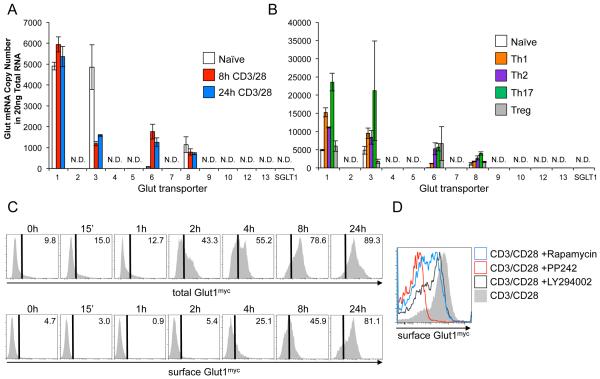
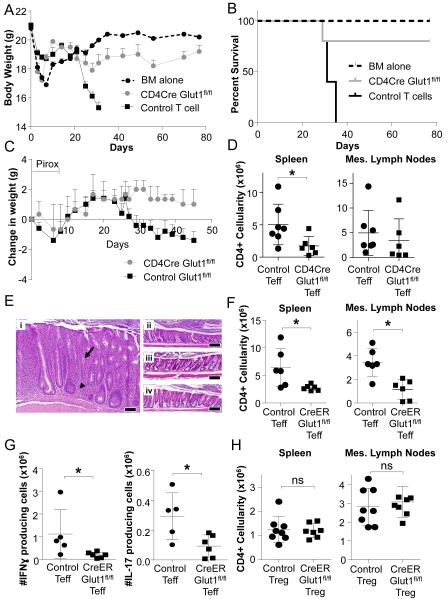
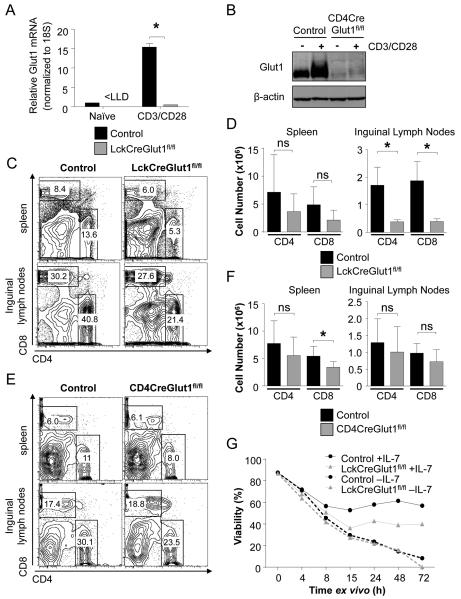
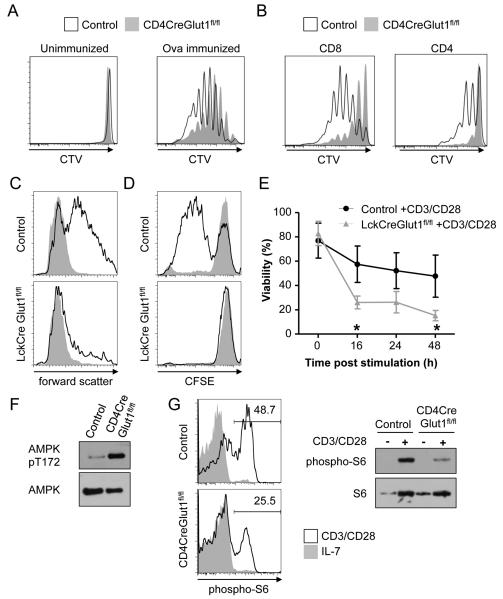
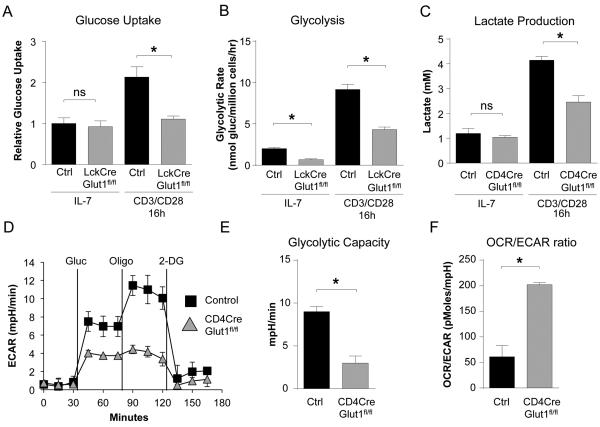
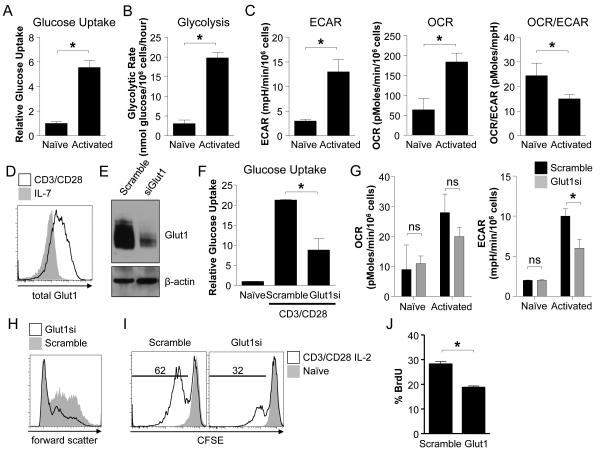
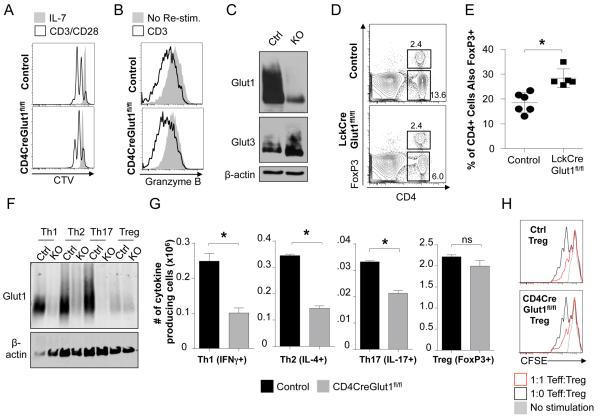
CD4 T cell activation leads to proliferation and differentiation into effector (Teff) or regulatory (Treg) cells that mediate or control immunity. While each subset prefers distinct glycolytic or oxidative metabolic programs in vitro, requirements and mechanisms that control T cell glucose uptake and metabolism in vivo are uncertain. Despite expression of multiple glucose transporters, Glut1 deficiency selectively impaired metabolism and function of thymocytes and Teff. Resting T cells were normal until activated, when Glut1 deficiency prevented increased glucose uptake and glycolysis, growth, proliferation, and decreased Teff survival and differentiation. Importantly, Glut1 deficiency decreased Teff expansion and the ability to induce inflammatory disease in vivo. Treg cells, in contrast, were enriched in vivo and appeared functionally unaffected and able to suppress Teff, irrespective of Glut1 expression. These data show a selective in vivo requirement for Glut1 in metabolic reprogramming of CD4 T cell activation and Teff expansion and survival.
CD4 T细胞活化会导致其增殖并分化为效应T细胞(Teff)或调节性T细胞(Treg),这些细胞介导或控制免疫反应。虽然每个亚群在体外更喜欢不同的糖酵解或氧化代谢程序,但体内控制T细胞葡萄糖摄取和代谢的需求及机制尚不清楚。尽管表达了多种葡萄糖转运蛋白,但Glut1缺陷选择性地损害了胸腺细胞和Teff的代谢及功能。静息T细胞在激活前是正常的,而当Glut1缺陷时,激活过程中葡萄糖摄取和糖酵解增加受阻,细胞生长、增殖受到影响,Teff的存活和分化能力下降。重要的是,Glut1缺陷降低了Teff在体内的扩增以及诱导炎症性疾病的能力。相比之下,Treg细胞在体内数量增多,功能上似乎未受影响,并且无论Glut1表达情况如何都能够抑制Teff。这些数据表明,在CD4 T细胞活化、Teff扩增和存活的代谢重编程过程中,体内对Glut1有选择性需求。