Department of Molecular and Cellular Biology, Beckman Research Institute of City of Hope National Medical Center, 1500 East Duarte Road, Duarte, California 91010, USA.
Cancer Cell Int. 2014 May 28;14:45. doi: 10.1186/1475-2867-14-45. eCollection 2014.
We have reported that the glucosamine suppressed the proliferation of the human prostate carcinoma cell line DU145 through inhibition of STAT3 signaling. DU145 cells autonomously express IL-6 and the IL-6/STAT3 signaling is activated. IL-6 receptor subunits are subject to N-glycosylation, a posttranslational modification which is important for protein stability and function. We speculated that the inhibition of STAT3 phosphorylation by glucosamine might be a functional consequence of the reduced N-glycosylation of gp130.
The human prostate cancer cell lines DU145 and PC-3 and human melanoma cell line A2058 were used in this study. Glucosamine effects on N-glycosylation of glycoproteins were determined by Western blot analysis. IL-6 binding to DU145 cells was analyzed by flow cytometry. The cell proliferation suppression was investigated by colorimetric Janus green staining method.
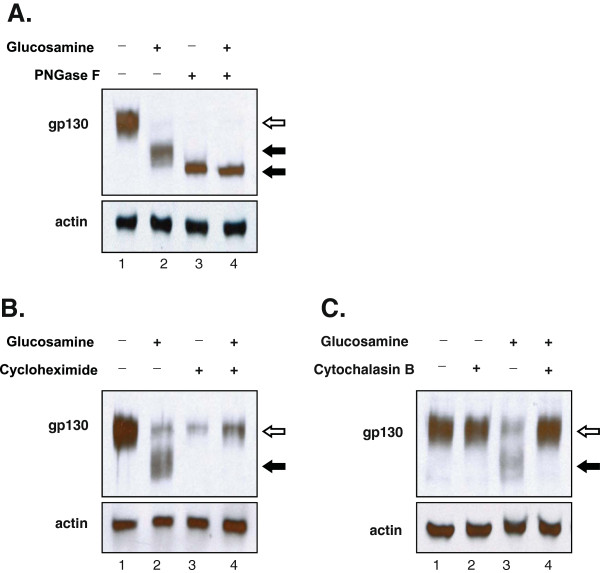
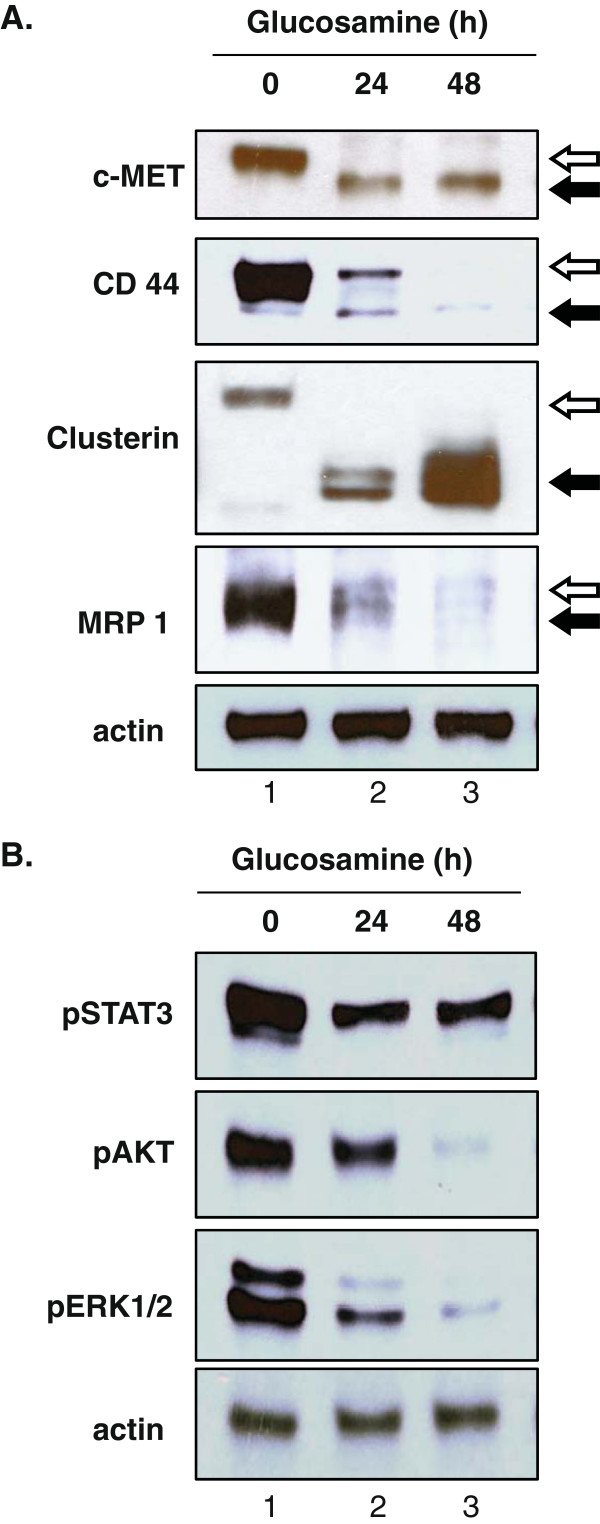
In DU145 cells glucosamine reduced the N-glycosylation of gp130, decreased IL-6 binding to cells and impaired the phosphorylation of JAK2, SHP2 and STAT3. Glucosamine acts in a very similar manner to tunicamycin, an inhibitor of protein N-glycosylation. Glucosamine-mediated inhibition of N-glycosylation was neither protein- nor cell-specific. Sensitivity of DU145, A2058 and PC-3 cells to glucosamine-induced inhibition of N-glycosylation were well correlated to glucosamine cytotoxicity in these cells.
Our results suggested that the glucosamine-induced global inhibition of protein N-glycosylation might be the basic mechanism underlying its multiple biochemical and cellular effects.
我们曾报道过氨基葡萄糖通过抑制 STAT3 信号通路来抑制人前列腺癌细胞系 DU145 的增殖。DU145 细胞自主表达 IL-6,IL-6/STAT3 信号通路被激活。IL-6 受体亚基受到 N-糖基化的影响,这是一种翻译后修饰,对于蛋白质的稳定性和功能很重要。我们推测,氨基葡萄糖抑制 STAT3 磷酸化可能是 gp130 的 N-糖基化减少的功能后果。
本研究使用了人前列腺癌细胞系 DU145 和 PC-3 以及人黑色素瘤细胞系 A2058。通过 Western blot 分析确定氨基葡萄糖对糖蛋白 N-糖基化的影响。通过流式细胞术分析 IL-6 与 DU145 细胞的结合。通过比色 Janus 绿染色法研究细胞增殖抑制。
在 DU145 细胞中,氨基葡萄糖降低了 gp130 的 N-糖基化,减少了 IL-6 与细胞的结合,并损害了 JAK2、SHP2 和 STAT3 的磷酸化。氨基葡萄糖的作用与蛋白 N-糖基化抑制剂衣霉素非常相似。氨基葡萄糖介导的 N-糖基化抑制既不是蛋白特异性的,也不是细胞特异性的。DU145、A2058 和 PC-3 细胞对氨基葡萄糖诱导的 N-糖基化抑制的敏感性与这些细胞中氨基葡萄糖的细胞毒性密切相关。
我们的结果表明,氨基葡萄糖诱导的蛋白质 N-糖基化的全局抑制可能是其多种生化和细胞作用的基本机制。