Zhang Ming-Ming, Liu Shui-Bing, Chen Tao, Koga Kohei, Zhang Ting, Li Yun-Qing, Zhuo Min
Department of Anatomy, Histology, Embryology & K, K, Leung Brain Research Centre, The Fourth Military Medical University, Xian, Shanxi 710032, China.
Mol Brain. 2014 Jun 16;7:47. doi: 10.1186/1756-6606-7-47.
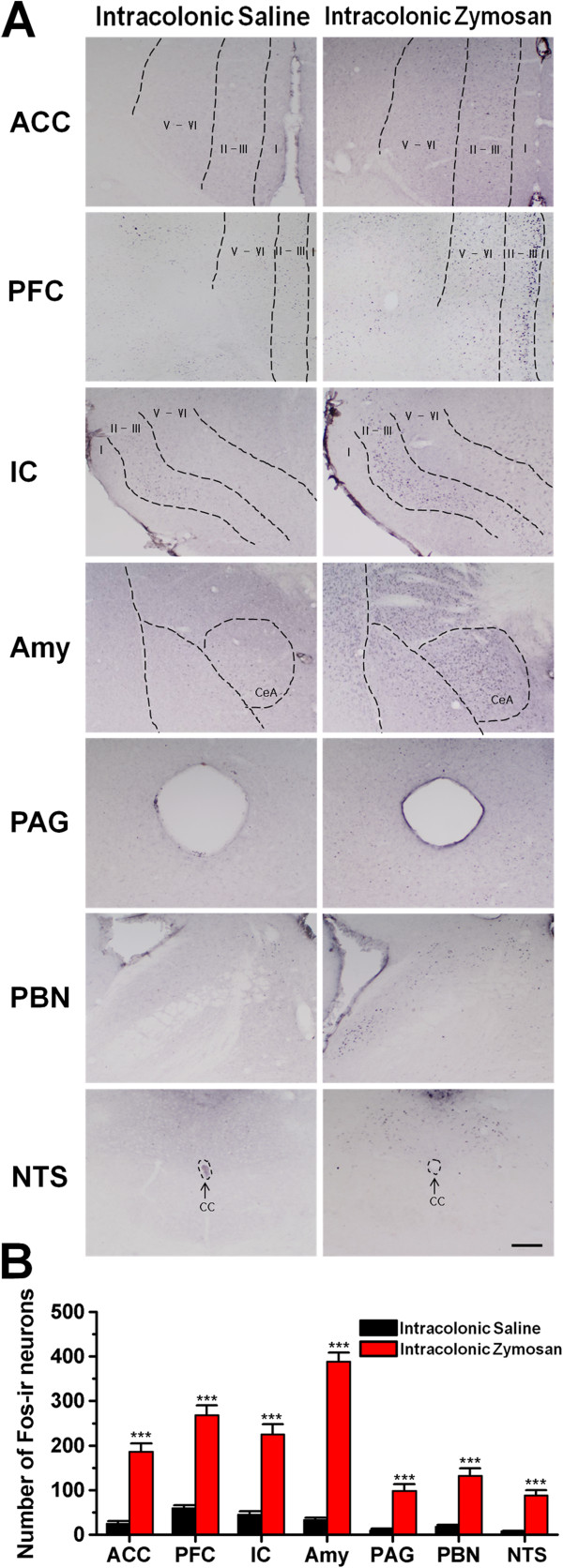
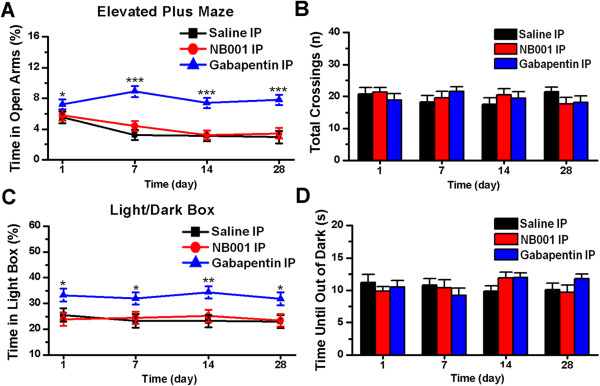
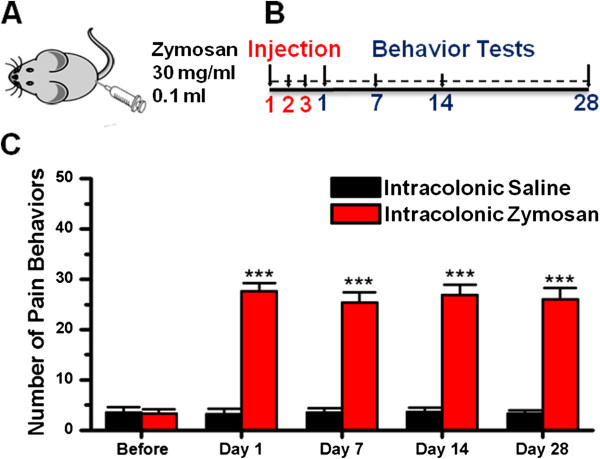
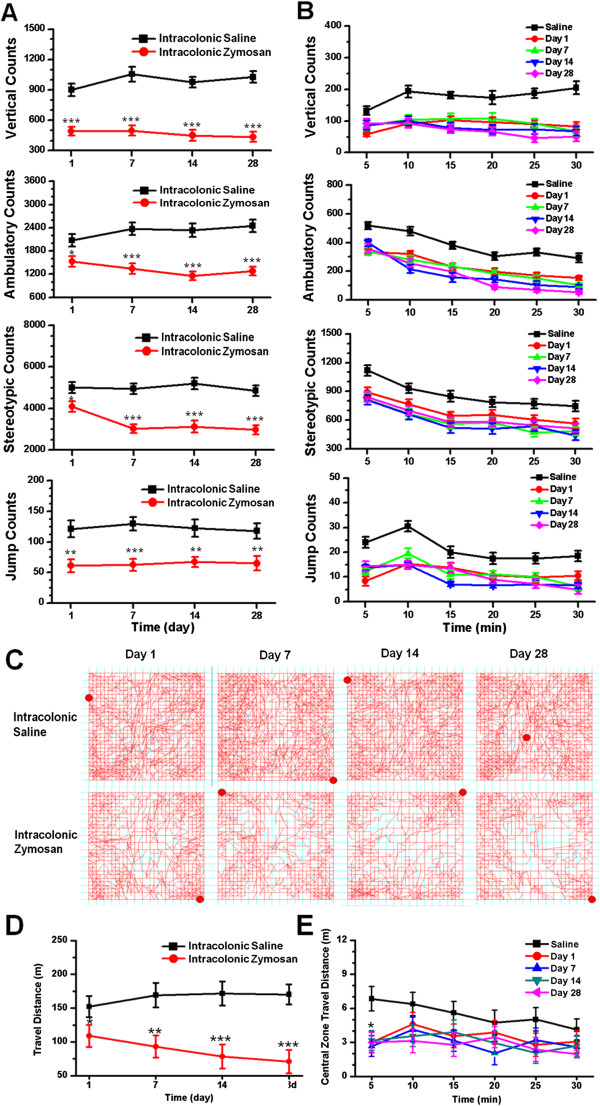
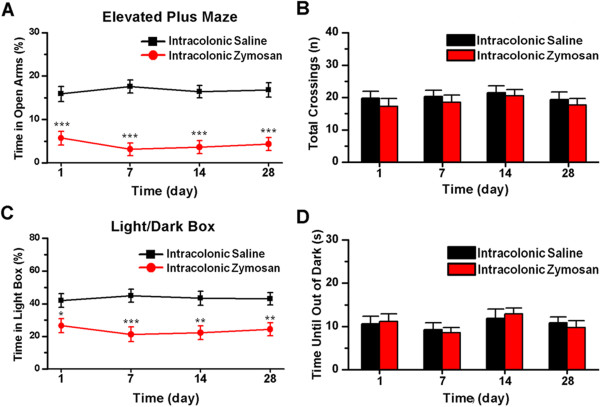
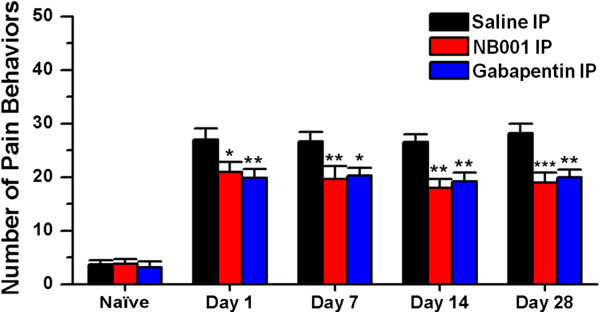
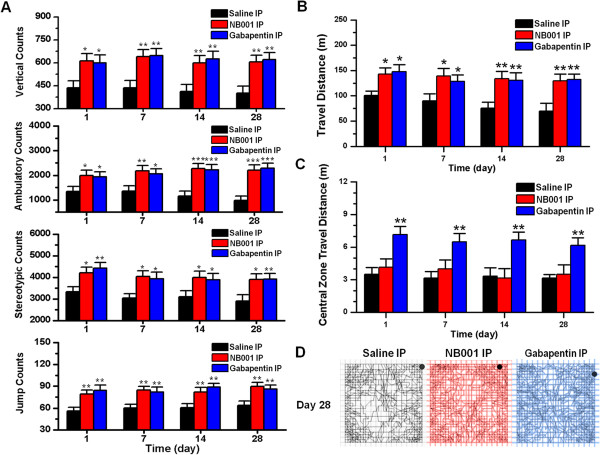
Irritable bowel syndrome (IBS) is characterized by recurrent abdominal discomfort, spontaneous pain, colorectal hypersensitivity and bowel dysfunction. Patients with IBS also suffer from emotional anxiety and depression. However, few animal studies have investigated IBS-induced spontaneous pain and behavioral anxiety. In this study, we assessed spontaneous pain and anxiety behaviors in an adult mouse model of IBS induced by zymosan administration. By using Fos protein as a marker, we found that sensory and emotion related brain regions were activated at day 7 after the treatment with zymosan; these regions include the prefrontal cortex, anterior cingulate cortex, insular cortex and amygdala. Behaviorally, zymosan administration triggered spontaneous pain (decreased spontaneous activities in the open field test) and increased anxiety-like behaviors in three different tests (the open field, elevated plus maze and light/dark box tests). Intraperitoneal injection of NB001, an adenylyl cyclase 1 (AC1) inhibitor, reduced spontaneous pain but had no significant effect on behavioral anxiety. In contrast, gabapentin reduced both spontaneous pain and behavioral anxiety. These results indicate that NB001 and gabapentin may inhibit spontaneous pain and anxiety-like behaviors through different mechanisms.
肠易激综合征(IBS)的特征为反复出现的腹部不适、自发痛、结肠直肠超敏反应和肠道功能障碍。IBS患者还会遭受情绪焦虑和抑郁。然而,很少有动物研究调查IBS诱发的自发痛和行为焦虑。在本研究中,我们评估了酵母聚糖诱导的成年IBS小鼠模型中的自发痛和焦虑行为。通过使用Fos蛋白作为标志物,我们发现在用酵母聚糖治疗后第7天,感觉和情绪相关的脑区被激活;这些区域包括前额叶皮质、前扣带回皮质、岛叶皮质和杏仁核。在行为学上,酵母聚糖给药引发了自发痛(旷场试验中自发活动减少),并在三种不同试验(旷场试验、高架十字迷宫试验和明暗箱试验)中增加了焦虑样行为。腹腔注射腺苷酸环化酶1(AC1)抑制剂NB001可减轻自发痛,但对行为焦虑无显著影响。相比之下,加巴喷丁可同时减轻自发痛和行为焦虑。这些结果表明,NB001和加巴喷丁可能通过不同机制抑制自发痛和焦虑样行为。