Sheffield Cognition and Neuroimaging Laboratory, Academic Clinical Psychiatry, Department of Neuroscience, University of Sheffield Sheffield, UK ; Department of Psychology, University of York York, UK.
Department of Psychology, University of Sheffield Sheffield, UK.
Front Hum Neurosci. 2014 Jun 6;8:376. doi: 10.3389/fnhum.2014.00376. eCollection 2014.
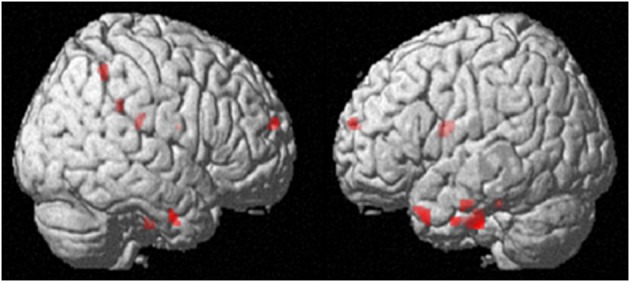
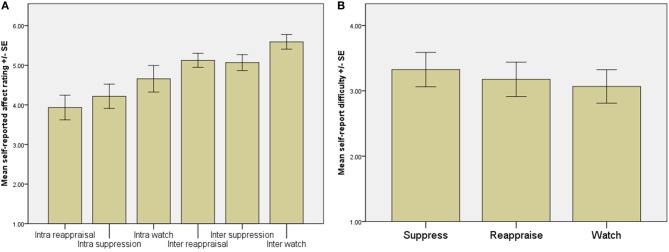
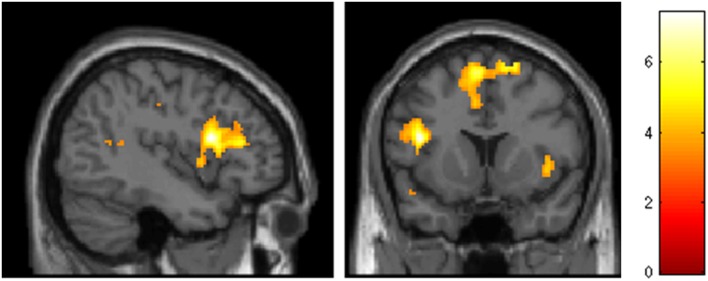
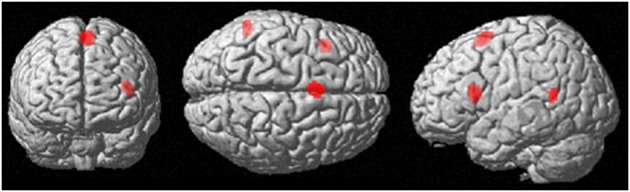
Studies investigating the neurophysiological basis of intrapersonal emotion regulation (control of one's own emotional experience) report that the frontal cortex exerts a modulatory effect on limbic structures such as the amygdala and insula. However, no imaging study to date has examined the neurophysiological processes involved in interpersonal emotion regulation, where the goal is explicitly to regulate another person's emotion. Twenty healthy participants (10 males) underwent fMRI while regulating their own or another person's emotions. Intrapersonal and interpersonal emotion regulation tasks recruited an overlapping network of brain regions including bilateral lateral frontal cortex, pre-supplementary motor area, and left temporo-parietal junction. Activations unique to the interpersonal condition suggest that both affective (emotional simulation) and cognitive (mentalizing) aspects of empathy may be involved in the process of interpersonal emotion regulation. These findings provide an initial insight into the neural correlates of regulating another person's emotions and may be relevant to understanding mental health issues that involve problems with social interaction.
研究调查了人际情绪调节(控制自己的情绪体验)的神经生理学基础,报告称额叶皮层对杏仁核和脑岛等边缘结构施加了调节作用。然而,迄今为止尚无影像学研究检查涉及人际情绪调节的神经生理过程,人际情绪调节的目标是明确调节另一个人的情绪。二十名健康参与者(10 名男性)在进行 fMRI 扫描时调节自己或他人的情绪。人际和自我情绪调节任务招募了一个重叠的脑区网络,包括双侧外侧额叶皮层、补充运动前区和左颞顶联合区。人际条件下特有的激活表明,同理心的情感模拟和认知思维两个方面都可能参与人际情绪调节过程。这些发现为调节他人情绪的神经相关因素提供了初步的见解,可能与理解涉及社交互动问题的心理健康问题有关。