Department of Pharmacology, University of Virginia, Charlottesville, VA 22908, USA.
Department of Genome Sciences, University of Washington, Seattle, WA 98195, USA.
Mol Metab. 2014 Mar 12;3(4):419-31. doi: 10.1016/j.molmet.2014.02.004. eCollection 2014 Jul.
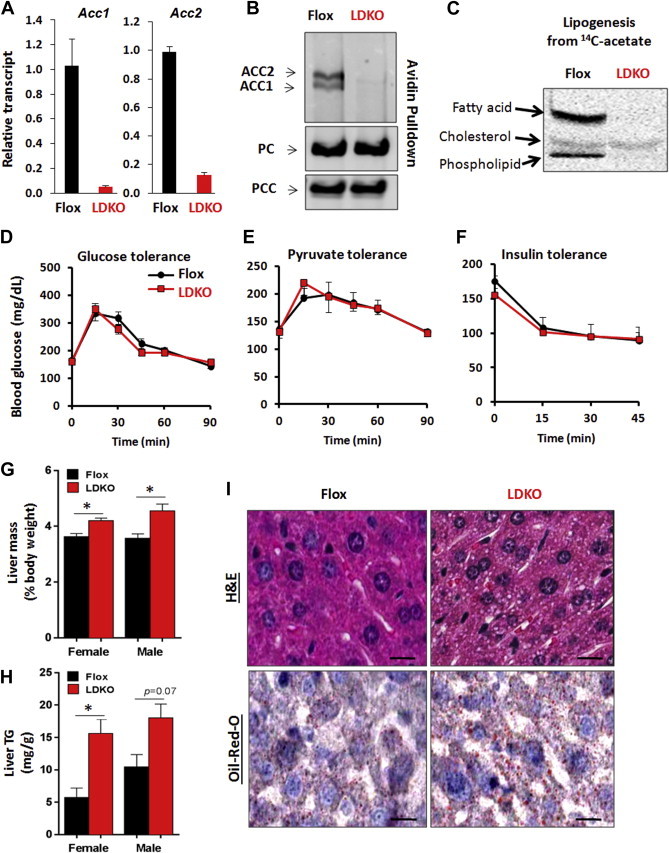
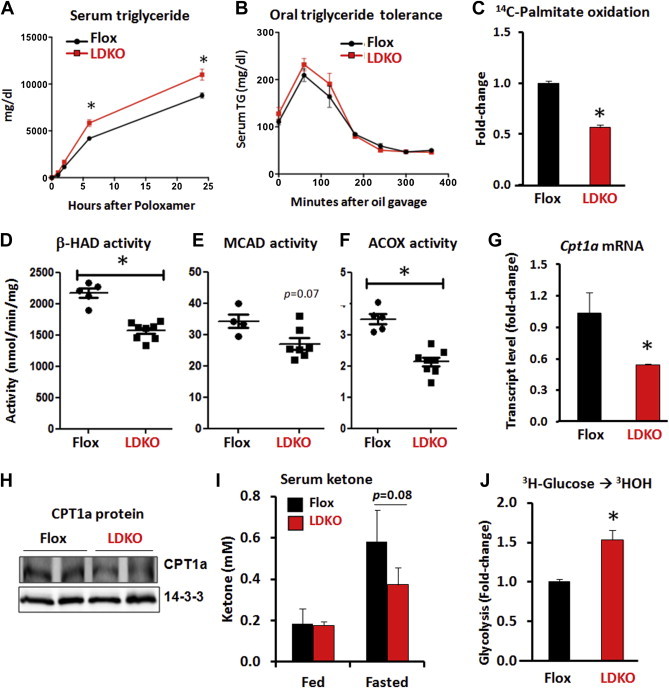
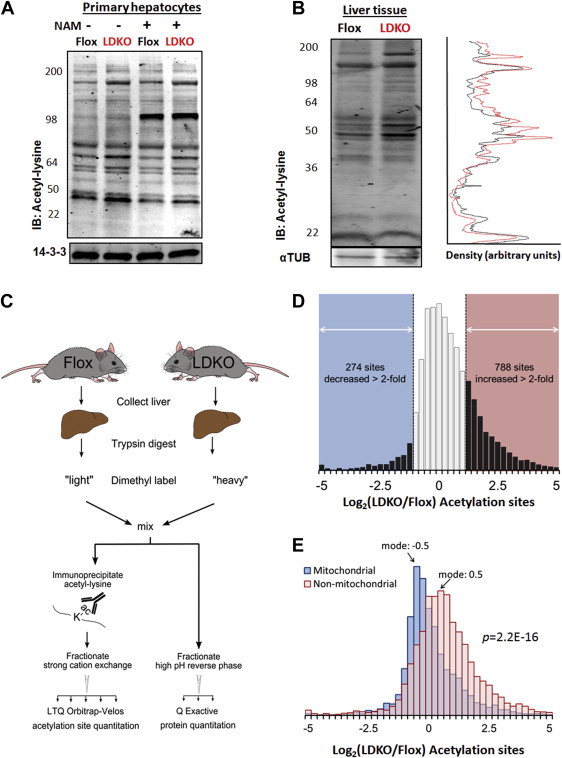
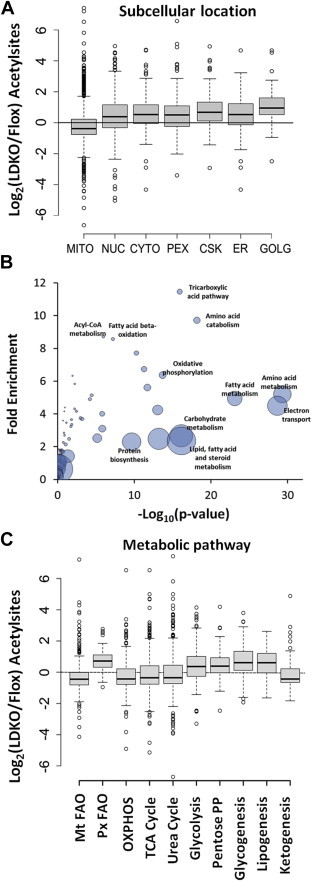
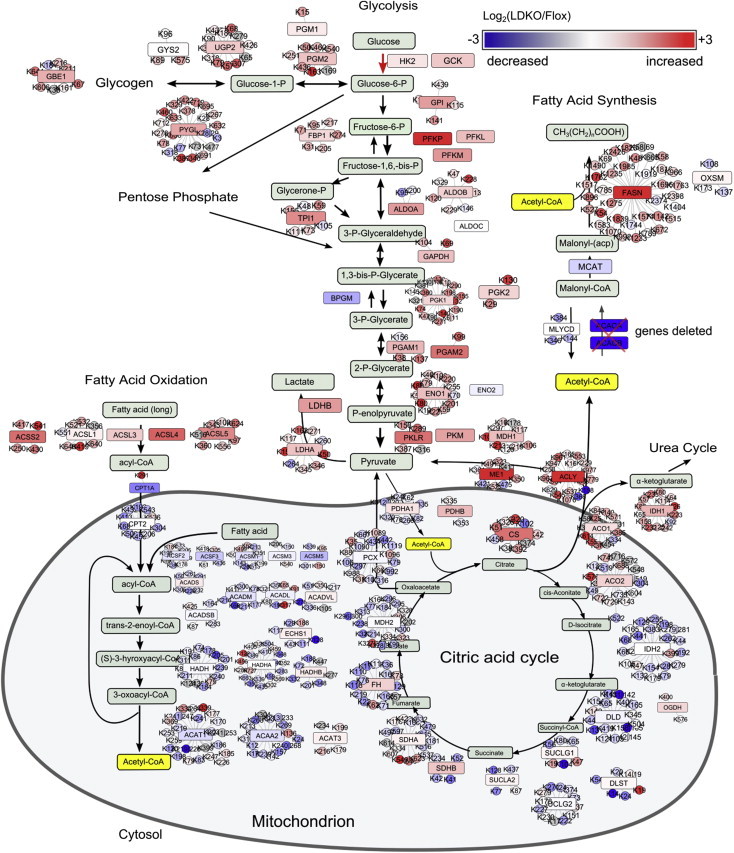
Lipid deposition in the liver is associated with metabolic disorders including fatty liver disease, type II diabetes, and hepatocellular cancer. The enzymes acetyl-CoA carboxylase 1 (ACC1) and ACC2 are powerful regulators of hepatic fat storage; therefore, their inhibition is expected to prevent the development of fatty liver. In this study we generated liver-specific ACC1 and ACC2 double knockout (LDKO) mice to determine how the loss of ACC activity affects liver fat metabolism and whole-body physiology. Characterization of LDKO mice revealed unexpected phenotypes of increased hepatic triglyceride and decreased fat oxidation. We also observed that chronic ACC inhibition led to hyper-acetylation of proteins in the extra-mitochondrial space. In sum, these data reveal the existence of a compensatory pathway that protects hepatic fat stores when ACC enzymes are inhibited. Furthermore, we identified an important role for ACC enzymes in the regulation of protein acetylation in the extra-mitochondrial space.
肝脏中的脂质沉积与代谢紊乱有关,包括脂肪肝、二型糖尿病和肝细胞癌。乙酰辅酶 A 羧化酶 1(ACC1)和 ACC2 是调节肝内脂肪储存的重要酶;因此,抑制它们有望预防脂肪肝的发生。在这项研究中,我们生成了肝脏特异性 ACC1 和 ACC2 双敲除(LDKO)小鼠,以确定 ACC 活性丧失如何影响肝脏脂肪代谢和全身生理学。对 LDKO 小鼠的特征分析揭示了出乎意料的表型,即肝甘油三酯增加和脂肪氧化减少。我们还观察到,慢性 ACC 抑制导致线粒体外空间蛋白的过度乙酰化。总之,这些数据揭示了当 ACC 酶被抑制时,存在一种保护肝脂肪储存的代偿途径。此外,我们还发现 ACC 酶在调节线粒体外空间蛋白质乙酰化中的重要作用。